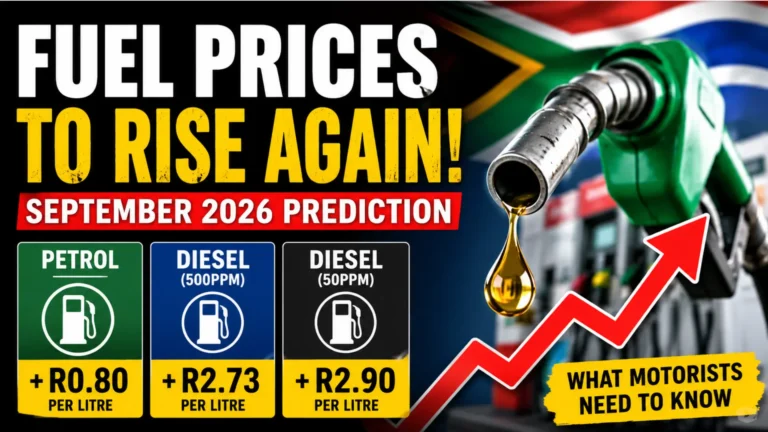
How to Check South African Fuel Station Crisis
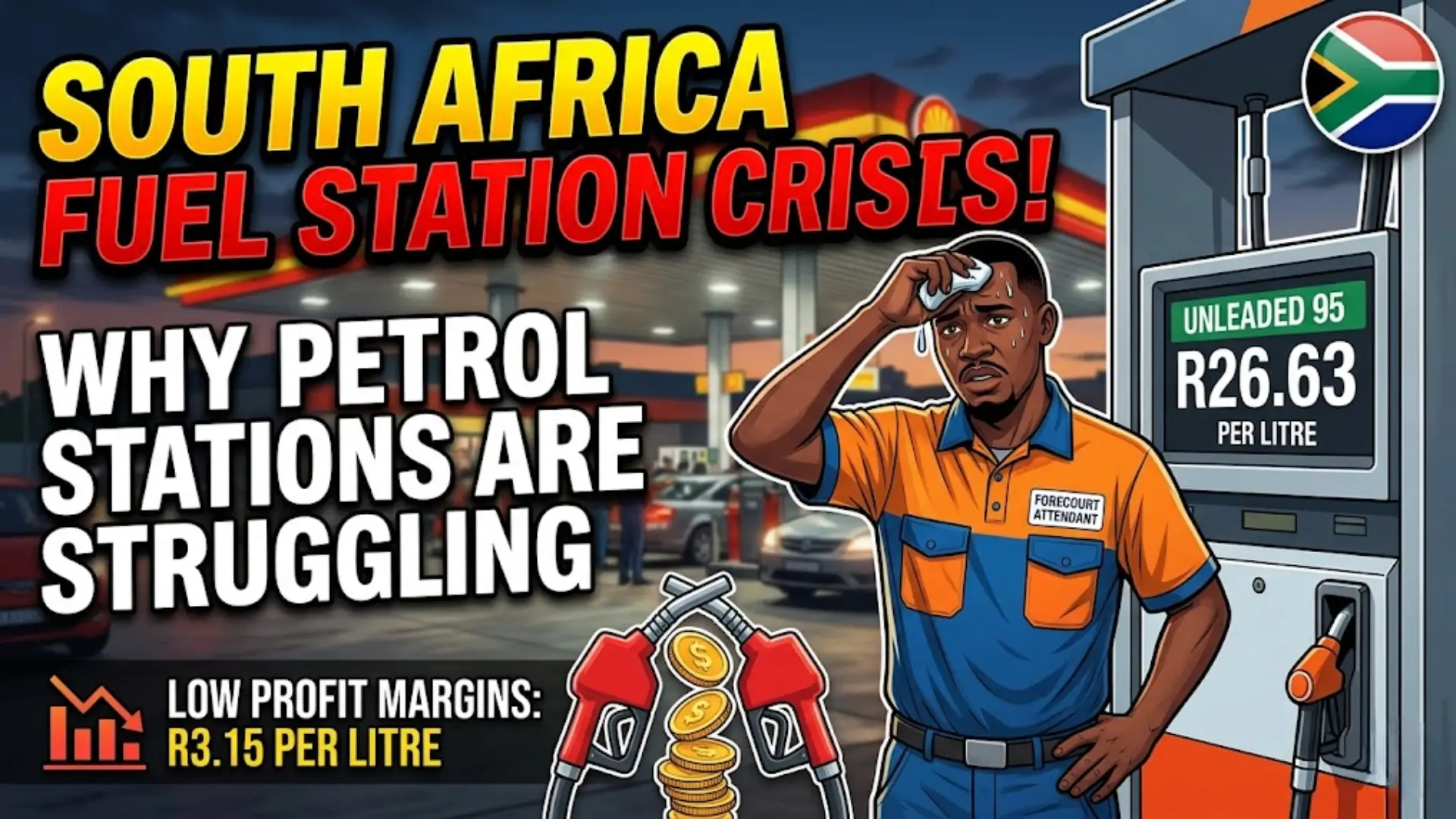
South Africa’s fuel station industry is facing one of its toughest financial periods in years. While many motorists believe petrol stations benefit from rising fuel prices, the reality is very different. Service stations across the country are dealing with higher operating costs, shrinking fuel volumes, and strict government-regulated profit margins.
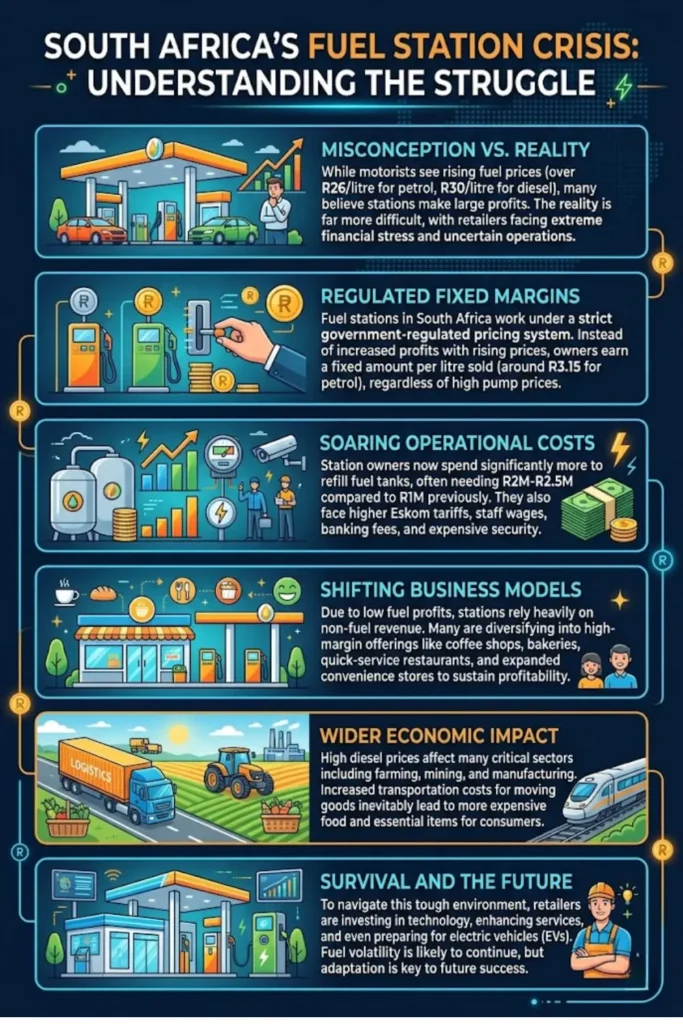
The situation became more serious after major fuel price hikes pushed inland petrol prices above R26 per litre and diesel prices above R30 in some regions. Industry leaders warn that many fuel retailers are struggling just to keep their businesses operating.
Why Fuel Prices Are Increasing in South Africa
Fuel prices in South Africa are heavily influenced by global oil markets, exchange rates, and international political tensions. When Brent crude oil prices rise or the rand weakens against the US dollar, local fuel prices increase almost immediately.
Recent instability in the Middle East and global supply concerns have added extra pressure to fuel markets. As a result, South African motorists have faced consecutive monthly increases in both petrol and diesel prices.
You can also read: NSFAS 2026 TVET Quarter 2 Applications Open?
How Petrol Stations Make Money
Many people assume petrol stations earn large profits every time fuel prices increase. However, fuel retailers in South Africa work under a regulated pricing system controlled by the government.
This means station owners cannot freely increase fuel prices or profit margins. Instead, they earn a fixed amount per litre sold, regardless of how high fuel prices rise.
Average Fuel Retail Margin in South Africa
| Fuel Type | Approximate Selling Price | Retailer Margin |
|---|---|---|
| Petrol | R26.63 per litre | Around R3.15 per litre |
| Diesel | Over R30 per litre | Fixed regulated margin |
| Convenience Store Products | Variable | Higher profit margins |
The table shows why many stations now rely more on convenience stores and food outlets instead of fuel sales alone.
Why Service Stations Are Under Financial Pressure
One of the biggest problems facing petrol stations is the massive increase in operating costs. According to industry representatives, filling underground fuel tanks previously cost around R1 million. Today, some stations need between R2 million and R2.5 million just to refill fuel stock.
At the same time, businesses are also dealing with:
- Higher electricity tariffs from Eskom
- Rising staff salaries and wages
- Increased banking and financing costs
- Lower customer fuel volumes
- Expensive maintenance and security costs
These rising expenses are reducing profitability even further for station owners.
The Impact of Rising Diesel Prices on the Economy
Diesel is essential for transportation, farming, mining, and logistics across South Africa. When diesel prices increase sharply, the cost of moving goods also rises.
This affects multiple sectors including:
- Food production and delivery
- Retail supply chains
- Public transportation
- Agricultural operations
- Manufacturing industries
Higher transport costs usually lead to more expensive food and household products for consumers.
You can also read: Nsfas Application 2027 Opening Date
How Consumers Can Check the Fuel Station Crisis
South Africans can monitor the fuel station crisis by following fuel price announcements, industry reports, and changes happening at local petrol stations.
Here are some key signs to watch:
- Stations reducing operating hours
- Longer queues at busy fuel stations
- Increased focus on convenience stores
- Reduced staff numbers
- Delayed maintenance at forecourts
- Fuel shortages in some areas
Motorists can also monitor monthly fuel price adjustments published by the Department of Mineral and Petroleum Resources.
Signs That Petrol Stations Are Struggling
The pressure on fuel retailers is becoming more visible across the country. Many stations are changing their business models because fuel sales alone are no longer enough to sustain profitability.
Some stations are introducing:
- Quick-service restaurants
- Coffee shops and bakeries
- EV charging stations
- Expanded convenience stores
- Delivery collection points
These additional services help generate better profit margins compared to fuel sales.
Fuel Price Breakdown in South Africa
The final fuel price paid by motorists includes several components beyond the actual fuel cost. Taxes and levies make up a significant portion of the total price.
Main Components of Fuel Prices
| Fuel Price Component | Purpose |
|---|---|
| Basic Fuel Price | International oil and import cost |
| Fuel Levy | Government tax |
| Road Accident Fund Levy | Supports accident compensation |
| Wholesale Margin | Distributor compensation |
| Retail Margin | Petrol station earnings |
| Transport Costs | Fuel delivery expenses |
Understanding these components helps explain why petrol station owners are not necessarily benefiting from higher pump prices.
How Petrol Stations Are Trying to Survive
Fuel retailers are increasingly diversifying their businesses to reduce dependence on petrol and diesel sales. Convenience stores have become one of the most important revenue streams for modern service stations.
You can also read: Western Cape School Closures Check
Many stations are also investing in technology and alternative services to attract customers. Some retailers are preparing for the future by adding electric vehicle charging infrastructure even though EV adoption remains relatively low in South Africa.
Impact on Motorists and Daily Commuters
Consumers are changing their fuel-buying habits because of rising prices. Instead of filling their tanks completely, many motorists now purchase fixed rand amounts of fuel.
This creates a difficult situation for fuel stations because:
- Fuel volumes sold continue declining
- Operating costs remain high
- Cash flow pressure increases
- Profit margins stay limited
Even though turnover may appear higher due to increased prices, actual profits often remain very small.
Common Misconceptions About Fuel Station Profits
One of the biggest misunderstandings is that petrol stations become richer whenever fuel prices increase. In reality, the opposite often happens because station owners need significantly more money to purchase fuel stock.
Fuel retailers also carry major financial risks, especially when borrowing money to maintain inventory. Higher fuel prices increase exposure to debt and operational pressure rather than boosting profits.
What SAPRA Says About the Current Crisis
The South African Petroleum Retailers Association (SAPRA) believes the current regulated fuel pricing model no longer reflects modern operating conditions. Industry representatives argue that the formula used to determine retailer margins is outdated.
SAPRA is currently in discussions with the Department of Mineral and Petroleum Resources to explore possible changes that could help service stations remain sustainable in the long term.
Future Outlook for South African Fuel Prices
Future fuel prices will largely depend on global oil market conditions, geopolitical stability, and the strength of the South African rand. If international crude oil prices stabilize, motorists may eventually see slower fuel price increases.
However, ongoing uncertainty in global energy markets means fuel volatility is likely to continue throughout 2026. Industry experts expect both motorists and retailers to remain under financial pressure for some time.
Tips for Motorists During Rising Fuel Costs
Consumers can take practical steps to reduce the impact of high fuel prices on their monthly budgets.
Fuel Saving Tips
- Avoid aggressive acceleration and speeding
- Keep tyres properly inflated
- Combine trips where possible
- Remove unnecessary vehicle weight
- Service vehicles regularly
- Compare fuel station prices and rewards programs
Small driving habit changes can help reduce fuel consumption over time.
You can also read: SASSA Means Test Works in South Africa
Conclusion
South Africa’s fuel station crisis is not only affecting motorists but also placing serious financial strain on petrol retailers themselves. Despite rising pump prices, service stations continue operating under fixed margins while facing rapidly increasing costs.
The industry is now relying more heavily on convenience stores, restaurants, and alternative services to survive. As fuel prices remain unpredictable, both consumers and station owners will need to adapt to an increasingly challenging economic environment.