Attacks on Foreign Nationals: Check the Cause of the Attacks
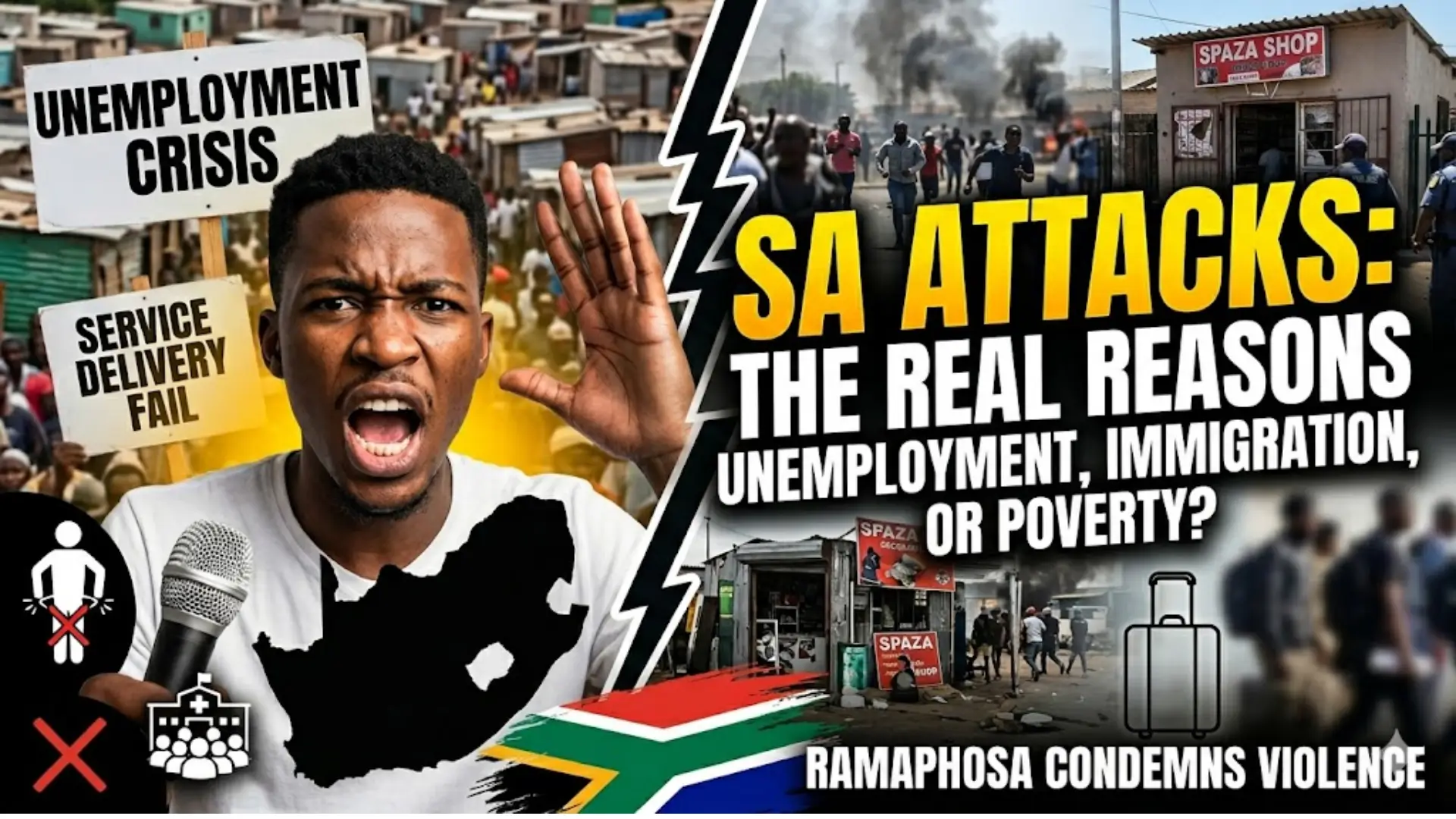
South Africa has once again witnessed violent protests and attacks targeting foreign nationals in different parts of the country. President Cyril Ramaphosa recently condemned these actions, calling them criminal and opportunistic rather than genuine community activism. His statement comes amid growing tensions around illegal immigration, unemployment, poverty, and pressure on public services.
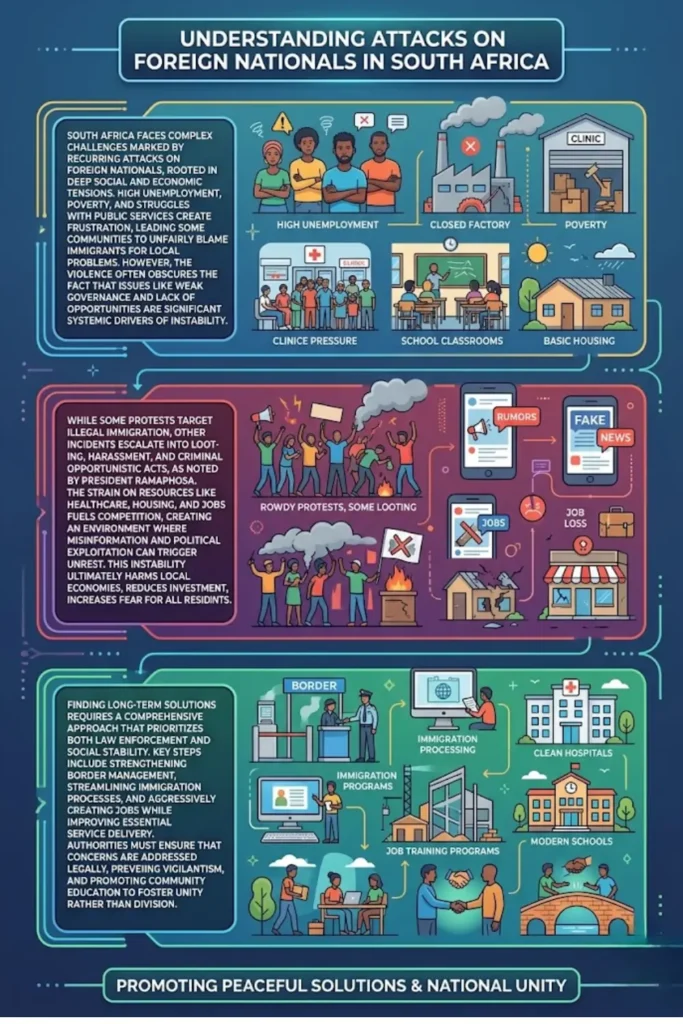
The attacks have sparked national debate about what is truly driving the violence. While many communities argue they are frustrated by crime, lack of jobs, and poor service delivery, others warn that blaming foreigners for South Africa’s problems only increases division and instability. Understanding the real causes behind these attacks is important for finding long-term solutions and preventing further violence.
What Are the Attacks on Foreign Nationals?
Attacks on foreign nationals refer to violent protests, looting, intimidation, and harassment directed at immigrants living in South Africa. Many victims come from countries such as Zimbabwe, Mozambique, Nigeria, Somalia, Ethiopia, and Malawi. These incidents often involve businesses being targeted, people being forced from communities, or undocumented migrants being blamed for local problems.
You can also read: Nsfas Application 2027 Opening
In recent weeks, anti-illegal immigration protests have intensified in several areas. Some groups claim they are protecting local communities, while authorities argue that many actions have crossed into lawlessness. President Ramaphosa warned that ordinary citizens cannot take over duties that belong to law enforcement officials, including checking IDs or searching homes.
Main Causes Behind the Attacks on Foreign Nationals
1. High Unemployment and Poverty
South Africa continues to struggle with extremely high unemployment levels, especially among young people. Many citizens feel frustrated because jobs are limited, wages are low, and the cost of living keeps increasing.
In poor communities, foreign nationals are sometimes unfairly blamed for taking jobs or accepting lower salaries. This creates anger and tension, even though economic experts say unemployment is mainly linked to slow economic growth, weak infrastructure, corruption, and lack of investment rather than immigration alone.
How unemployment fuels tensions
- Competition for low-income jobs
- Rising frustration among unemployed youth
- Informal businesses competing in local markets
- Growing inequality in poor communities
- Political groups using public anger for support
These pressures often make vulnerable communities easier to influence during protests or social unrest.
Pressure on Public Services
One of the biggest concerns raised by government leaders is the strain on healthcare, housing, schools, and municipal services. Many South Africans believe undocumented migrants increase pressure on already struggling public systems.
Hospitals, clinics, and housing projects in some areas are overcrowded, leading communities to feel resources are becoming harder to access. However, experts also point out that poor governance, corruption, budget problems, and population growth have contributed heavily to service delivery failures over many years.
| Public Service | Community Concern | Larger Underlying Problem |
|---|---|---|
| Healthcare | Overcrowded clinics | Staff shortages and funding issues |
| Housing | Long waiting lists | Slow housing development |
| Education | Full classrooms | Limited school infrastructure |
| Municipal Services | Water and electricity shortages | Poor management and aging systems |
The issue is complex because both illegal immigration and weak governance affect service delivery challenges.
The Role of Crime and Security Concerns
Many communities connect illegal immigration with crime, drug trafficking, and undocumented activity. This perception has increased support for anti-illegal immigration protests in some areas.
However, security experts warn against generalizing all foreign nationals as criminals. Most immigrants come to South Africa seeking safety, employment, or business opportunities. Law enforcement agencies have repeatedly stated that criminal behavior should be handled through legal processes rather than mob action or violence.
Common security concerns raised during protests
- Human trafficking allegations
- Drug-related crime fears
- Fake documentation networks
- Border control weaknesses
- Illegal employment practices
Authorities continue calling for stronger border management while warning citizens against taking the law into their own hands.
Political Frustration and Community Anger
Many analysts believe the attacks are also driven by wider frustration with political leadership and economic inequality. Communities facing poor living conditions often feel ignored by government officials for years.
In such situations, foreign nationals can become easy targets because they are seen as outsiders. Political activists and protest groups sometimes use immigration issues to gain attention or public support during periods of social tension.
President Ramaphosa described many of the recent violent acts as opportunistic and criminal rather than legitimate activism. He stressed that South Africa’s laws must be respected and that illegal immigration concerns should be addressed legally.
You can also read: Western Cape School Closures Check
Social Media and Misinformation
Social media has played a major role in spreading anger, rumors, and misinformation about foreign nationals. False claims about jobs, crime, or government support for immigrants can spread quickly online and increase public hostility.
In some cases, viral videos and unverified posts have encouraged protests or violence before authorities could confirm the facts. Experts warn that misinformation can easily inflame tensions in already frustrated communities.
Common misinformation problems
- False crime accusations
- Fake immigration statistics
- Misleading videos shared out of context
- Rumors about government benefits
- Hate speech targeting foreigners
Communities are increasingly being encouraged to verify information before sharing content online.
Economic Impact of the Violence
Violent protests and attacks on foreign nationals damage local economies and create fear among both immigrants and South African citizens. Small businesses are often looted or destroyed, affecting jobs and income in already struggling communities.
The violence also harms South Africa’s international reputation. Investors may become concerned about instability, while neighboring countries may criticize the treatment of their citizens living in South Africa.
Major economic consequences
- Business closures
- Loss of jobs
- Reduced investor confidence
- Increased policing costs
- Lower tourism confidence
Economic instability can worsen social tensions, creating a cycle that becomes harder to control over time.
What the Government Is Saying
President Cyril Ramaphosa has strongly condemned the attacks and warned that lawlessness will not be tolerated. He emphasized that only government officials and law enforcement agencies are legally allowed to conduct immigration enforcement activities.
The government has acknowledged concerns about undocumented migration but insists solutions must follow the law. Officials are also under pressure to improve border security, speed up immigration processes, strengthen policing, and improve service delivery in struggling communities.
Possible Solutions to Prevent Future Attacks
South Africa faces a difficult challenge that requires both stronger governance and community stability. Experts believe the solution cannot focus only on immigration enforcement because economic and social issues also play a major role.
Key solutions experts recommend
- Stronger border management systems
- Faster immigration documentation processes
- More job creation programs
- Improved local service delivery
- Community education against xenophobia
- Better policing and crime prevention
- Stricter action against violence and hate crimes
Long-term stability will likely depend on reducing poverty, improving governance, and rebuilding trust between communities and authorities.
Common Mistakes People Make About the Issue
Many discussions about foreign nationals become emotional and oversimplified. This often leads to harmful assumptions and misinformation.
Common misunderstandings
- Believing all immigrants are undocumented
- Assuming foreigners are responsible for unemployment
- Treating all immigrants as criminals
- Ignoring government failures and corruption
- Supporting vigilante-style actions
Understanding the broader economic and political context is important before blaming one group for complex national problems.
You can also read: SASSA Means Test Works
Conclusion
The recent attacks on foreign nationals in South Africa highlight deep social and economic frustrations within the country. High unemployment, poverty, pressure on public services, weak governance, and concerns about illegal immigration have all contributed to rising tensions.
However, violence and lawlessness are not legal or effective solutions. President Cyril Ramaphosa has made it clear that immigration concerns must be handled through proper legal channels rather than community-led attacks. Moving forward, South Africa will need balanced policies, stronger governance, economic growth, and community unity to reduce tensions and prevent future violence.