SARS Digital VAT System Changes in 2026: What Taxpayers and Businesses Need to Know
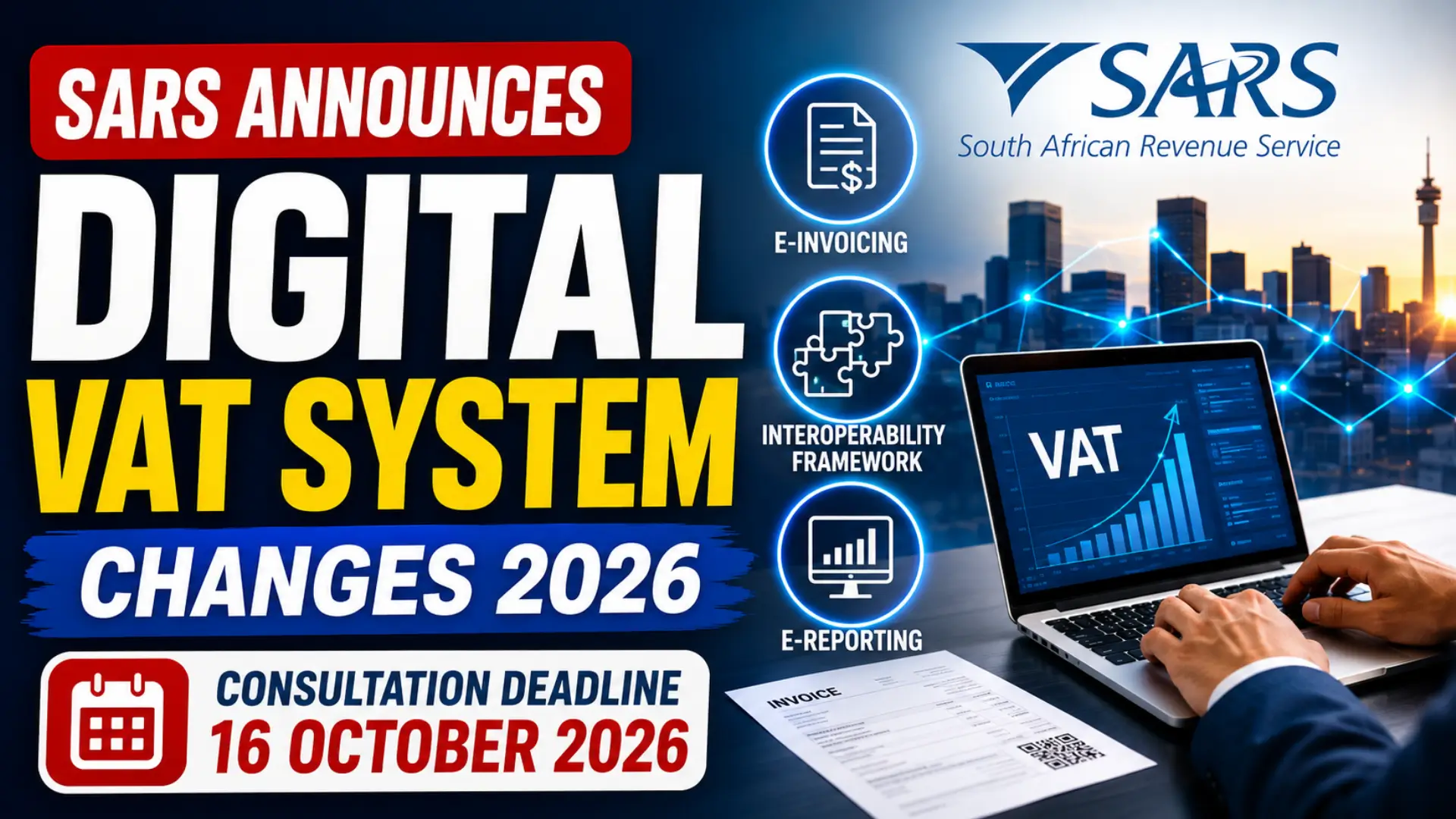
The South African Revenue Service (SARS) has announced an important step towards modernising VAT administration in South Africa. On 17 August 2026, SARS released its VAT Modernisation Consultation Paper, inviting businesses, tax professionals, software providers and other interested stakeholders to provide feedback on a proposed Digital VAT Model.
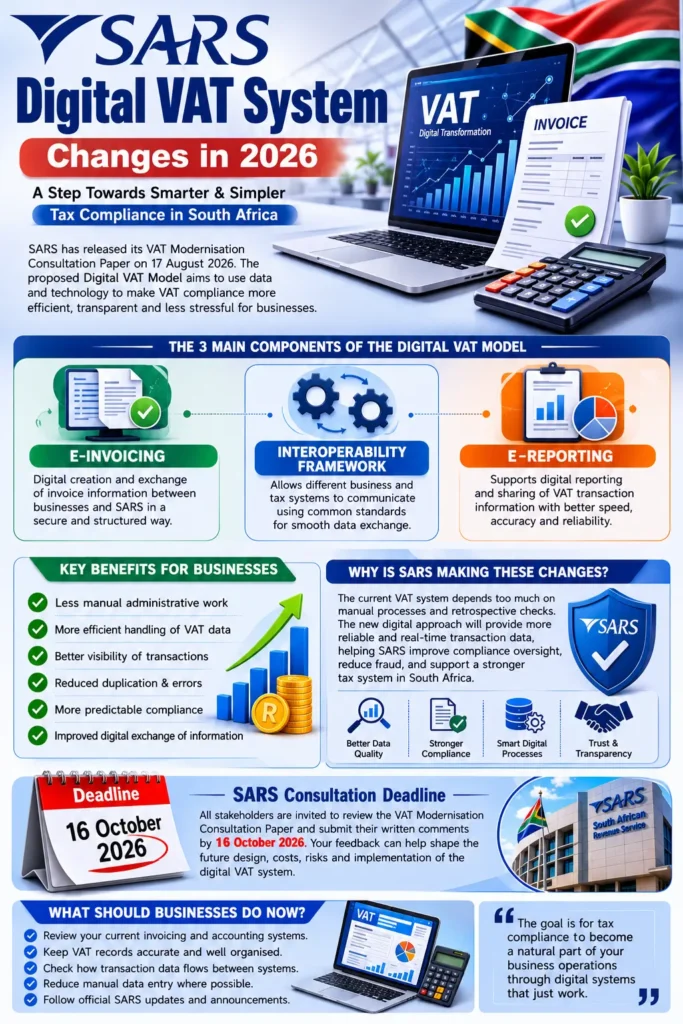
The proposal forms part of SARS Modernisation 3.0 and aims to use data and technology to make VAT compliance simpler, more transparent and more efficient. SARS says its long-term vision is for tax to increasingly become something that “just happens” through the systems businesses already use.
What Is the SARS Digital VAT System?
The proposed Digital VAT Model is designed to connect different parts of the VAT value chain through digital technology. SARS wants to move away from a system that relies heavily on manual processes and retrospective verification towards one where reliable transaction information can move securely and in a structured way.
You can also read: NSFAS Funding Under Scrutiny as More Than 40,000
The proposed model focuses on e-Invoicing, an Interoperability Framework and e-Reporting. SARS says these elements could enable trusted, near real-time VAT transaction data flows and eventually make VAT compliance a more natural part of everyday business operations.
Three Main Parts of the Proposed VAT Model
The consultation paper centres on three important digital components:
| Proposed component | Main purpose |
|---|---|
| e-Invoicing | Digital creation and exchange of invoice information |
| Interoperability Framework | Allows different business and tax systems to communicate using common standards |
| e-Reporting | Supports digital reporting and sharing of VAT transaction information |
Together, these components are intended to improve the quality and speed of VAT information available to businesses and SARS.
What Does This Mean for Businesses?
For VAT vendors, the proposed changes could eventually affect how invoices are created, exchanged, stored and reported. Businesses may increasingly need accounting and invoicing systems that can work with the digital standards eventually adopted by SARS.
However, businesses should understand that the final system has not yet been implemented. SARS is consulting stakeholders before finalising important issues such as technical design, implementation sequencing, readiness requirements, costs, risks and safeguards.
How Could Taxpayers Benefit?
SARS expects the modernisation to reduce administrative effort for compliant VAT vendors. Better digital data could reduce duplication, improve the handling of VAT information and make compliance more predictable.
The wider business environment could also benefit from improved data quality and trusted digital exchange between businesses, service providers and SARS. SARS says the ultimate goal is a simpler and more efficient VAT ecosystem.
Expected Benefits for VAT Vendors
- Less manual administrative work
- More efficient handling of VAT information
- Better visibility of transactions
- Reduced duplication
- More predictable compliance
- Improved digital exchange of information
The actual benefits will depend on how the final model is designed and introduced.
Why Is SARS Making These Changes?
SARS says the current VAT administration system remains too dependent on manual processes and retrospective verification. The proposed digital approach is intended to provide SARS with more reliable and timely transaction information.
This could help SARS improve risk-based compliance oversight, identify possible fraud more effectively and strengthen efforts to close the VAT compliance gap. The agency also expects better-quality data to support more accurate compliance decisions.
SARS Commissioner Explains the Reform
SARS Commissioner Dr Johnstone Makhubu described the consultation paper as an important milestone in reshaping VAT administration. He said the modernisation aims to make VAT compliance part of the systems businesses already use instead of depending so heavily on manual processes.
According to SARS, the long-term objective is a VAT system where compliance becomes a seamless part of ordinary business activity while maintaining appropriate security, inclusion and safeguards.
Will the New Digital VAT System Start Immediately?
No. One of the most important points for businesses is that SARS has proposed a phased and consultative implementation approach. The consultation process will help SARS determine how the model should work in practice. Stakeholder feedback is expected to influence the technical design, standards, costs, risks, governance arrangements, implementation sequence and business readiness requirements.
Therefore, businesses should not treat the consultation proposals as final mandatory requirements yet.
What Should Businesses Do Now?
Businesses do not need to make major changes based on rumours or assumptions about the final system. Instead, they can use this period to review their existing VAT and digital record-keeping processes.
It is sensible to ensure that invoices, accounting records and VAT information are accurate, organised and easily accessible. Businesses can also monitor official SARS updates and discuss potential system changes with their accountant or tax professional where necessary.
Simple Preparation Steps
- Review current invoicing and accounting systems.
- Keep VAT records accurate and properly organised.
- Check how transaction data moves between software systems.
- Reduce unnecessary manual data entry where possible.
- Monitor official SARS VAT Modernisation announcements.
- Avoid purchasing software solely because of unofficial claims about the new system.
These steps can improve general VAT administration without assuming what the final SARS technical requirements will be.
You can also read: SASSA September 2026 Grants
What About Costs and Technical Challenges?
Digital modernisation may reduce administrative work in the long term, but businesses could face technology, training and implementation costs during the transition. The impact may be different for large companies, small businesses and software providers.
SARS has specifically asked stakeholders to provide practical, evidence-based feedback on costs, risks, benefits and readiness. This consultation is therefore an opportunity for affected businesses and industry participants to highlight real-world challenges before the final approach is established.
SARS VAT Consultation Deadline 2026
SARS is asking all impacted and interested stakeholders to review the VAT Modernisation Consultation Paper and submit written comments.
The deadline for comments is 16 October 2026. Responses must be submitted through the response mechanism provided in the consultation paper. SARS says stakeholder feedback will help shape the final direction of the VAT modernisation programme.
What Happens Next?
The August 2026 consultation is the beginning of a longer-term VAT reform process. SARS has not presented the Digital VAT Model as a single immediate system change; instead, it is intended to be developed and implemented progressively.
Businesses should therefore continue following the official SARS VAT Modernisation information as further decisions, technical requirements and implementation details become available.
Conclusion
The SARS Digital VAT System changes in 2026 are focused on transforming VAT administration through e-Invoicing, interoperability and e-Reporting. The aim is to create a more digital, transparent and data-driven system while reducing unnecessary compliance work for businesses.
For now, the key point is that the model is still under consultation. Businesses should not assume that every proposed requirement is already mandatory. The most useful step is to keep accurate digital VAT records, review existing systems and follow official SARS updates.
You can also read: SRD SASSA Gov Za SC19 Status Check Online
With the consultation deadline set for 16 October 2026, stakeholders still have an opportunity to provide feedback that could influence the technical design, costs, implementation process and safeguards of South Africa’s future Digital VAT Model.