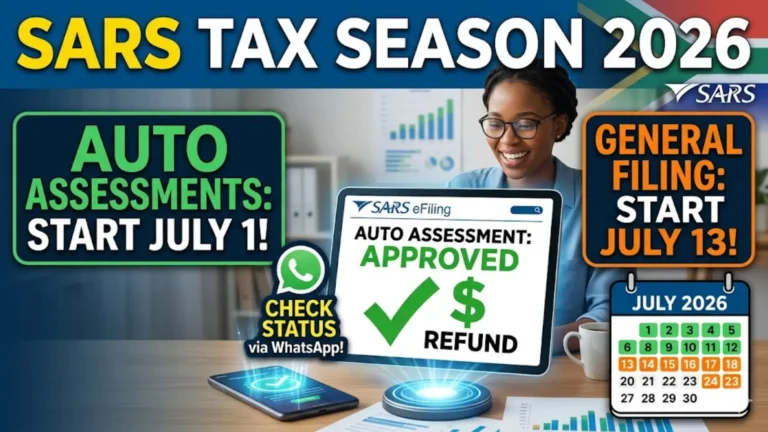
Sars Announces 2026 Tax Filing Dates and Upcoming Auto-Assessment Procedures

The South African Revenue Service (SARS) has officially announced the filing dates for the 2026 tax season, giving taxpayers a clear timeline to prepare their submissions. The tax authority will once again rely heavily on its expanding auto-assessment system to simplify filing and reduce administrative burdens for millions of taxpayers.
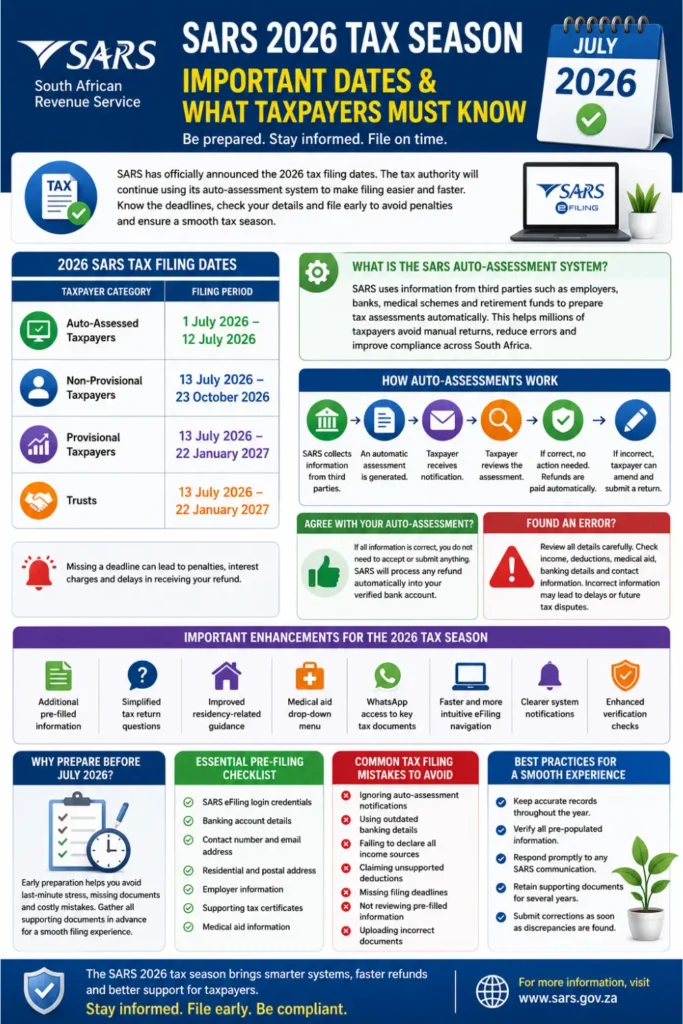
The 2026 filing season introduces several improvements, including enhanced pre-filled tax information, easier navigation on the SARS eFiling platform, updated verification tools, and new digital services. Taxpayers are encouraged to understand the important deadlines and ensure their personal details are updated before filing begins.
2026 SARS Tax Filing Dates You Need to Know
SARS has divided the filing season into different periods based on taxpayer categories.
| Taxpayer Category | Filing Period |
|---|---|
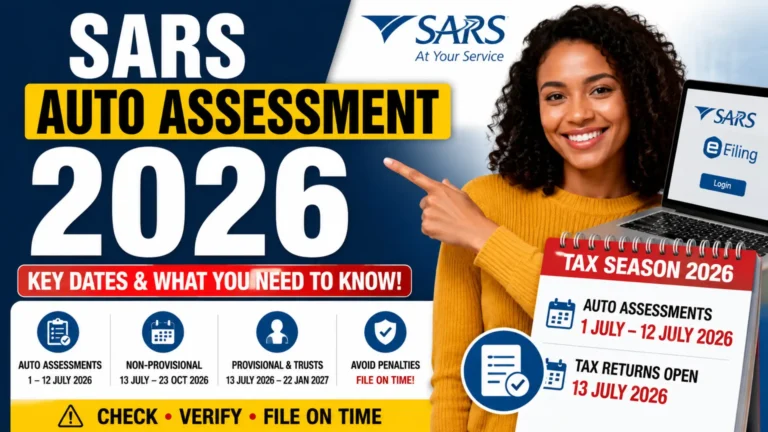
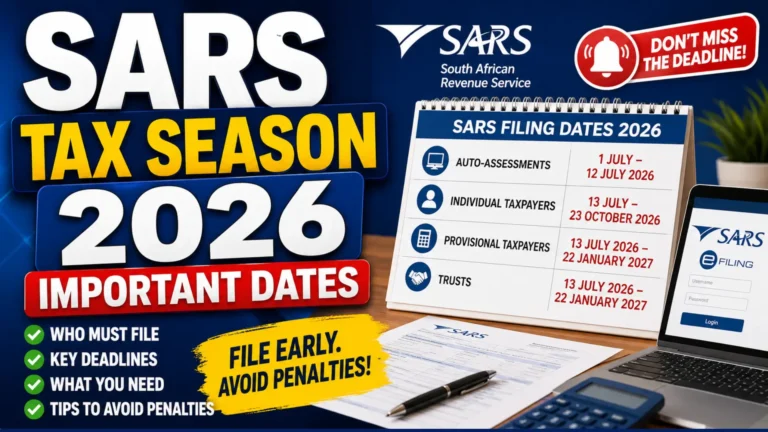
| Auto-Assessed Taxpayers | 1 July 2026 – 12 July 2026 |
| Non-Provisional Taxpayers | 13 July 2026 – 23 October 2026 |
| Provisional Taxpayers | 13 July 2026 – 22 January 2027 |
| Trusts | 13 July 2026 – 22 January 2027 |
These dates are important because missing a filing deadline can lead to penalties, interest charges, and unnecessary delays in refunds.
You can also read: SARS 2026 Tax Filing Dates
What Is the SARS Auto-Assessment System?
The SARS auto-assessment system uses information collected from third parties such as employers, banks, retirement funds, medical schemes, and investment providers to prepare tax assessments automatically. This allows many taxpayers to avoid completing a manual tax return.
If your tax affairs are relatively simple, SARS may generate an assessment using the information already available in its system. The goal is to make filing faster, reduce errors, and improve compliance across South Africa’s tax system.
How Auto-Assessments Work
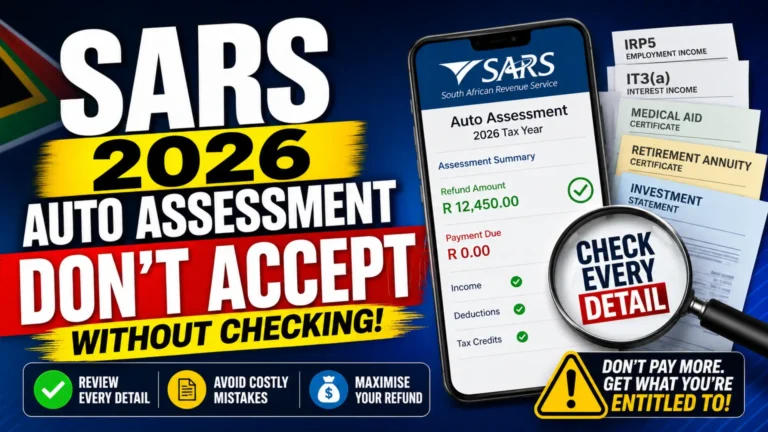
Taxpayers selected for auto-assessment should carefully review the information provided before deciding whether any corrections are necessary.
The process generally follows these steps:
- SARS collects information from third-party institutions.
- An automatic assessment is generated.
- The taxpayer receives notification from SARS.
- The taxpayer reviews the assessment details.
- If everything is correct, no further action is required.
- Refunds are automatically paid into the registered bank account.
- If information is missing or incorrect, the taxpayer can amend and submit a return.
Reviewing the assessment remains extremely important because SARS relies on information received from external sources.
What Happens If You Agree With Your Auto-Assessment?
Taxpayers who agree with their auto-assessment do not need to accept or submit anything further. SARS has confirmed that no additional action is required when all information is accurate and complete.
Where a refund is due, SARS will process payment automatically into the taxpayer’s verified bank account. This streamlined approach saves time and reduces the need for manual interaction with SARS systems.
What If Your Auto-Assessment Contains Errors?
Although the auto-assessment system continues to improve, errors can still occur if third-party information is incomplete, outdated, or submitted late. Taxpayers should therefore verify every detail carefully.
Check important information such as:
- Employment income
- Retirement fund contributions
- Medical aid information
- Banking details
- Investment income
- Contact information
- Tax deductions and credits
Failing to correct inaccurate information could result in underpayments, overpayments, verification delays, or future tax disputes.
You can also read: South Africa Fuel Price Decrease
Important Enhancements for the 2026 Tax Season
SARS has announced several upgrades designed to improve the filing experience and reduce taxpayer mistakes. These enhancements support the revenue service’s ongoing digital transformation strategy.
Key improvements include:
- Additional pre-filled taxpayer information
- Simplified tax return questions
- Improved residency-related guidance
- Medical aid drop-down selection menu
- WhatsApp access to key tax documents
- Faster and more intuitive eFiling navigation
- Clearer system notifications
- Enhanced verification checks during filing
These updates aim to make filing more efficient while improving the accuracy of submitted returns.
Why Taxpayers Should Prepare Before July 2026
Early preparation remains one of the best ways to avoid problems during tax season. Waiting until deadlines approach often leads to missing documents, filing mistakes, and processing delays.
Taxpayers should gather all supporting documentation before filing opens. This includes IRP5 certificates, medical aid certificates, retirement annuity records, investment statements, and any documentation supporting tax deductions or credits.
Essential Pre-Filing Checklist
Before the tax season begins, make sure the following information is up to date:
- SARS eFiling login credentials
- Banking account details
- Contact number and email address
- Residential and postal address
- Employer information
- Supporting tax certificates
- Medical aid information
Completing this checklist early can significantly reduce filing complications later in the season.
Common Tax Filing Mistakes to Avoid
Many taxpayers experience delays because of avoidable errors during the filing process. Even with improved automation, careful review remains essential.
Some of the most common mistakes include:
- Ignoring auto-assessment notifications
- Using outdated banking details
- Failing to declare all income sources
- Claiming unsupported deductions
- Missing filing deadlines
- Not reviewing pre-filled information
- Uploading incorrect supporting documents
Avoiding these mistakes can help ensure faster processing and reduce the likelihood of verification requests.
Best Practices for a Smooth SARS Filing Experience
Following a few simple practices can make the filing process easier and more efficient. SARS recommends maintaining accurate records throughout the year and responding promptly to any communication from the revenue service.
You can also read: Sassa July Grant Dates
Taxpayers should regularly monitor their SARS profile, verify all pre-populated information, retain supporting documents for several years, and submit corrections as soon as discrepancies are identified. These habits can help prevent compliance issues and future penalties.
Final Thoughts
The SARS 2026 tax season introduces another major step toward a more automated and user-friendly tax filing system. With auto-assessments running from 1 July to 12 July 2026 and standard filing opening on 13 July, taxpayers have ample time to prepare and meet their obligations.
Whether you receive an auto-assessment or need to submit a manual return, reviewing your information carefully remains essential. By updating personal details, gathering supporting documents early, and understanding the filing deadlines, South Africans can enjoy a smoother and more efficient tax season in 2026.