How to Check Sars 2026 Tax Fling Deadlines
Understanding tax deadlines is essential if you want to stay compliant and avoid penalties. For the 2026 tax year, the South African Revenue Service (SARS) has already confirmed key filing dates, giving taxpayers enough time to prepare. This guide explains how to check deadlines, who must file, and what steps you should take to stay on track.
SARS 2026 Tax Filing Deadlines
The deadlines for the 2026 tax season are clearly defined, even though the filing season has not officially opened yet. These dates were announced in advance to help taxpayers prepare early and avoid last-minute stress.
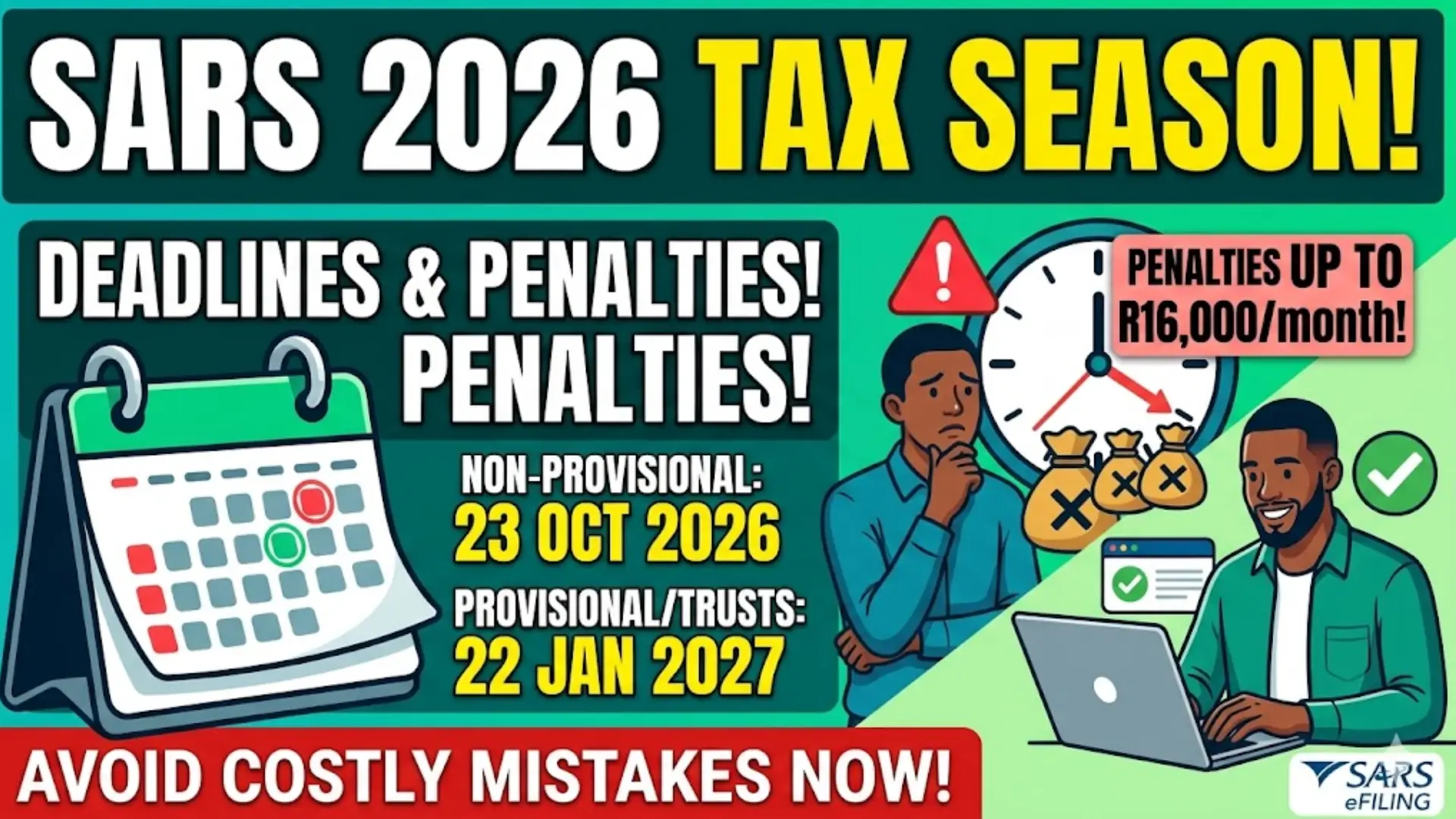
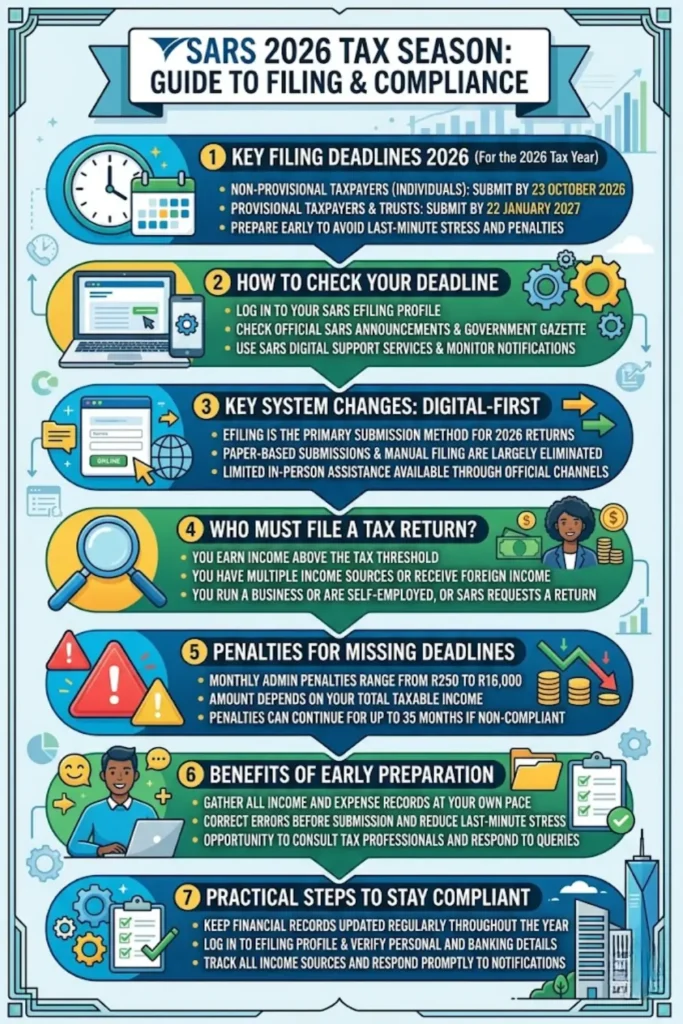
Non-provisional taxpayers must submit their returns by 23 October 2026, while provisional taxpayers and trusts have a later deadline of 22 January 2027. Missing these deadlines can result in penalties that increase over time, so it is important to mark them clearly.
You can also read: SASSA May 2026 Disability Grant Status
The early announcement gives individuals and businesses time to review their financial records, confirm their filing obligations, and seek professional help if needed.
How to Check SARS 2026 Filing Deadlines
Checking your tax deadlines is simple if you use the right channels. SARS has moved toward a digital-first system, which means most updates and services are now online.
You can confirm deadlines and your filing status using the following methods:
- Log in to your SARS eFiling profile
- Check official SARS announcements and Government Gazette notices
- Use SARS digital support services for guidance
- Contact SARS directly if your situation is unclear
Digital access makes it easier to stay updated, but it also means taxpayers must be more proactive in monitoring their accounts and notifications.
Key Changes in the 2026 Tax Filing System
One of the most important updates for 2026 is the shift toward a fully digital tax system. SARS has reduced manual submission options, making electronic filing the primary method.
Previously, taxpayers had multiple ways to submit returns, including:
- Postal submissions
- Physical delivery at SARS offices
- Online eFiling
For 2026, the system has been streamlined:
- eFiling is now the main submission method
- Limited in-person assistance is available through official channels
- Paper-based submissions are largely removed
This change aims to improve efficiency, reduce errors, and speed up processing times.
Who Needs to File a Tax Return in 2026?
Not everyone is required to submit a tax return, but you should not assume you are exempt without checking. SARS has specific rules that determine who must file.
You are generally required to file if:
- You earn income above the tax threshold
- You have multiple income sources
- You receive foreign income or hold foreign assets
- You run a business or are self-employed
- SARS specifically requests a return from you
Even if you believe you are exempt, it is safer to confirm your status. If SARS records show an outstanding return, penalties may still apply.
You can also read: Nsfas Under Administration Buti Manamela
Penalties for Missing the Deadline
Failing to submit your tax return on time can lead to automatic administrative penalties. These penalties are designed to encourage compliance and increase over time.
Here’s how penalties work:
- Monthly fines range from R250 to R16,000
- The amount depends on your taxable income
- Penalties continue for up to 35 months if you remain non-compliant
- Additional enforcement actions may apply for repeated non-compliance
Penalty Structure Overview
| Taxable Income Range | Monthly Penalty (ZAR) |
|---|---|
| Low income | R250 |
| Moderate income | R500 – R2,000 |
| Higher income | R2,000 – R8,000 |
| Very high income | Up to R16,000 |
These penalties can quickly add up, making it important to file on time even if you cannot pay immediately.
Why Early Preparation Matters
Starting early gives you a clear advantage. Instead of rushing near the deadline, you can review your finances carefully and avoid costly mistakes.
Benefits of early preparation include:
- Time to gather all income and expense records
- Ability to correct errors before submission
- Reduced stress and last-minute pressure
- Opportunity to consult tax professionals
Preparing ahead also helps you respond quickly to any queries from SARS, which can delay your filing if left unresolved.
Practical Steps to Stay Compliant
Staying compliant does not have to be complicated. With a structured approach, you can manage your tax responsibilities efficiently.
Here are practical steps to follow:
- Keep your financial records updated throughout the year
- Regularly log in to your eFiling account
- Verify your personal and banking details
- Track all income sources, including investments
- Respond promptly to SARS notifications
Taking these steps ensures you are always ready when the filing season begins.
Conclusion
The SARS 2026 tax filing deadlines are already set, giving taxpayers a valuable opportunity to prepare in advance. With the shift to digital systems and stricter enforcement, staying informed and organized is more important than ever.
You can also read: May Fuel Price Higher than Expected
By understanding your obligations, checking your deadlines regularly, and preparing early, you can avoid penalties and ensure a smooth filing experience.