SASSA SRD Grant 2026 Check Eligibility, How to Apply Online For Grant R370
The SASSA Social Relief of Distress (SRD) Grant remains one of South Africa’s most important support programs for unemployed adults. In 2026, eligible applicants can receive R370 per month to help cover basic living expenses while they search for employment or other income opportunities.
Millions of South Africans rely on this grant every month. However, many applications are declined because applicants do not fully understand the eligibility rules, income threshold, monthly assessments, or appeal process. This guide explains everything you need to know about the SASSA SRD Grant 2026, including who qualifies, how to apply online, payment rules, common decline reasons, and how to appeal successfully.
What Is the SASSA SRD Grant?
The Social Relief of Distress (SRD) Grant is a temporary financial assistance program administered by SASSA for unemployed adults who have little or no income. It was originally introduced during the COVID-19 pandemic and continues to support millions of vulnerable South Africans.
You can also read: Sassa July Grant Payment Dates 2026
Although many people still refer to it as the R350 Grant, the payment amount increased to R370 per month and remains unchanged in 2026. Unlike permanent social grants, SRD beneficiaries are reassessed every month to determine whether they still qualify.
SRD Grant Amount for 2026
The SRD grant pays a fixed amount of R370 per month to approved beneficiaries. Applicants either qualify for the full amount or receive nothing if they fail any eligibility checks.
| Grant Type | Monthly Amount (2026) |
|---|---|
| SRD Grant | R370 |
| Child Support Grant | R580 |
| Disability Grant | R2,400 |
| Older Persons Grant (60–74) | R2,400 |
The SRD grant does not use a sliding scale. Monthly eligibility determines whether payment is made.
Why the SRD Grant Is Important
The grant serves as a financial safety net for unemployed adults who do not qualify for other government support programs. For many households, it helps cover basic expenses such as food, transport, and essential services.
The government has allocated billions of rand to continue funding the SRD grant through March 2027 while discussions continue regarding a future Basic Income Support (BIS) program.
Who Qualifies for the SASSA SRD Grant?
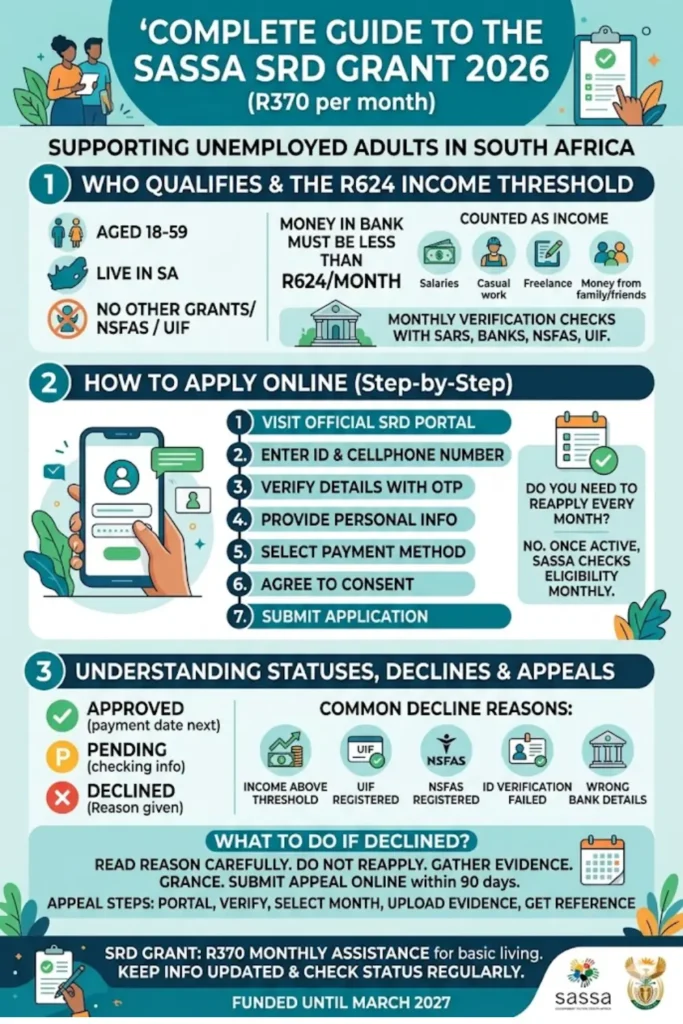
To receive the SRD grant, applicants must meet all SASSA eligibility requirements. Failing even one requirement can result in a decline.
Applicants must:
- Be between 18 and 59 years old
- Be living in South Africa
- Be a South African citizen, permanent resident, refugee, asylum seeker, or special permit holder
- Have little or no income
- Not receive another social grant for themselves
- Not receive NSFAS funding
- Not be eligible for UIF benefits
- Not reside in a government-funded institution
Meeting these requirements does not guarantee approval because SASSA performs monthly verification checks.
You can also read: South Africa Fuel Price Decrease June 2026
Understanding the R624 Income Threshold
The income threshold is one of the most misunderstood SRD rules. SASSA currently uses an income limit of R624 per month when assessing eligibility.
Every month, SASSA performs automated checks using information from banks, SARS, UIF, NSFAS, Home Affairs, and other government databases. If deposits into your bank account exceed the threshold during the assessment period, your application may be declined.
What Counts as Income?
Many applicants incorrectly assume only salaries are counted. In reality, most deposits may be considered during assessments.
Examples include:
- Salary payments
- Casual work income
- Freelance earnings
- Family transfers
- Money sent by friends
- Other bank deposits
Even a once-off payment can potentially trigger a decline for that month.
How the SRD Grant Differs from Other SASSA Grants
Many beneficiaries expect the SRD grant to work like the Older Persons Grant or Disability Grant. However, there are major differences.
| Feature | SRD Grant | Other SASSA Grants |
| Monthly Reassessment | Yes | No |
| Payment Amount | Fixed R370 | Varies |
| Income Verification | Monthly Digital Checks | Application Stage |
| Personal Payday | Yes | Fixed Schedule |
| Medical Assessment | No | Required for Disability Grant |
Understanding these differences helps avoid confusion regarding approvals and payments.
How to Apply Online for the SASSA SRD Grant
The SRD application process is completed online through the official SASSA SRD portal. Applicants should ensure all personal information matches official government records.
Before starting, prepare:
- South African ID number or permit details
- Active cellphone number
- Personal bank account details
- Accurate personal information
Any mismatch between your application and government records may delay processing or result in a decline.
Step-by-Step SRD Application Process
Follow these steps to submit your application:
- Visit the official SRD application portal.
- Enter your ID number and cellphone number.
- Verify your details using the OTP received.
- Provide your personal information.
- Select your preferred payment method.
- Confirm declarations and consent.
- Submit the application.
After submission, SASSA begins monthly verification checks.
Do You Need to Reapply Every Month?
No. Once an application is active, applicants do not need to submit a new application every month.
However, beneficiaries should regularly check their monthly status because approval is reassessed each month. A person can be approved one month and declined the next depending on verification results.
How Monthly SRD Assessments Work
The SRD grant uses a monthly assessment model. This means eligibility is reviewed every month using updated information from various government databases.
The process generally includes:
- Identity verification
- Income verification
- UIF checks
- NSFAS checks
- Banking verification
- Residency verification
These checks determine whether a beneficiary qualifies for a particular month.
You can also read: Sassa July Grant Dates
Understanding SRD Status Results
When checking your application status, you may see different outcomes. Understanding these statuses helps you know what action to take.
Approved
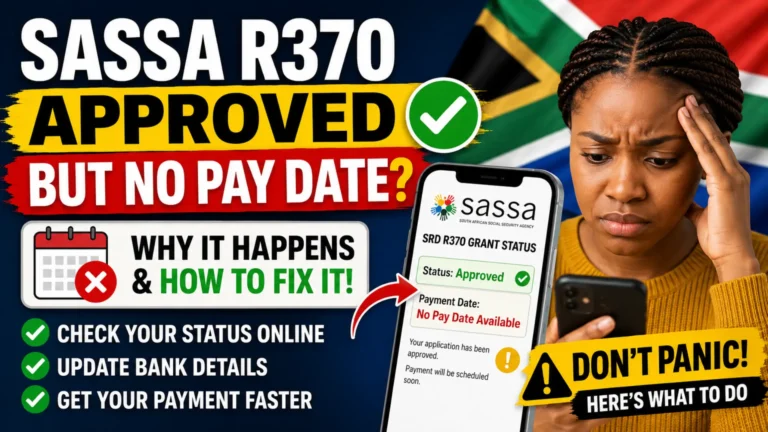
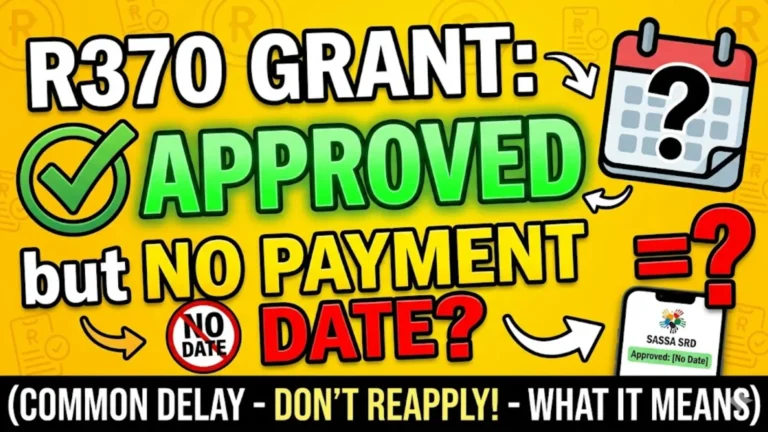
An approved status means you qualified for that specific month. A payment date will usually be assigned afterward.
Pending
Pending means SASSA is still processing verification checks. Applicants should wait until the assessment cycle is completed.
Declined
A decline indicates that one or more eligibility requirements were not met during that month’s assessment.
Bank Details Pending
Your banking information is still being verified. Payments cannot be processed until verification is completed.
No Record Found
SASSA could not locate an active application using the details entered.
Common Reasons SRD Applications Are Declined
Many declined applications result from verification matches rather than application errors.
Common decline reasons include:
- Income above R624 threshold
- UIF registration match
- NSFAS registration match
- Another SASSA grant linked to your ID
- Identity verification failure
- Incorrect banking information
Understanding the exact reason helps determine the correct next step.
What to Do If Your SRD Grant Is Declined
Do not immediately submit a new application. Reapplying usually does not fix a declined monthly assessment.
Instead:
- Read the decline reason carefully
- Correct any errors where possible
- Gather supporting evidence
- Submit an appeal for the declined month
Addressing the root cause significantly improves your chances of success.
How to Appeal an SRD Decline
SASSA allows applicants to appeal declined monthly decisions. Appeals must be submitted within 90 days of the decline notification.
Before appealing, ensure you understand exactly why the application was declined and collect any supporting documentation that proves the decision was incorrect.
SRD Appeal Steps
The appeal process typically involves:
- Accessing the official appeal portal
- Entering your ID number
- Verifying your cellphone number
- Selecting the declined month
- Submitting supporting evidence
- Keeping the appeal reference number
Appeal outcomes can take several weeks to process.
How SRD Payments Work
Unlike other grants, SRD payments do not follow a fixed national payment schedule. Every approved beneficiary receives an individual payment date.
You can also read: Sars Announces 2026 Tax Filing Dates
Payment dates are generally assigned after approval and may vary between recipients. Applicants should always check their personal payment date through the official SRD status system.
Banking Details Requirements
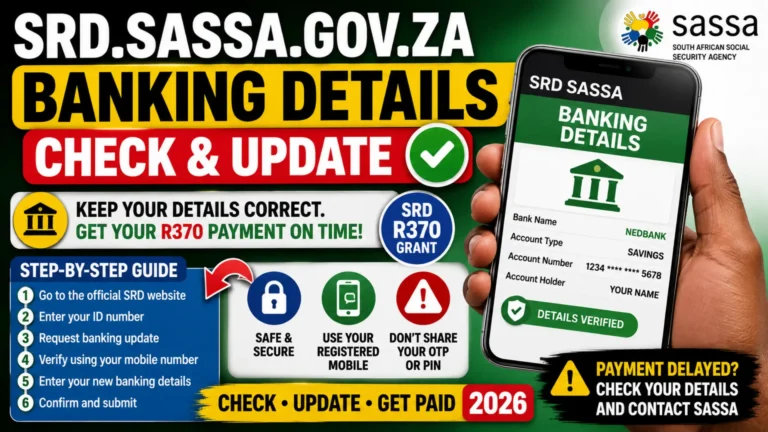
Banking issues are among the most common reasons for delayed SRD payments. The bank account used must belong to the applicant.
To avoid payment delays:
- Use your own bank account
- Keep banking information updated
- Ensure the account is active
- Verify account numbers carefully
- Update changes immediately
Incorrect banking details can delay payments even after approval.
Important Tips to Avoid SRD Problems
Many applicants unknowingly create issues that delay payments or cause declines.
Follow these best practices:
- Use accurate personal details
- Keep your cellphone number active
- Monitor monthly status updates
- Avoid unnecessary bank deposits
- Update banking information promptly
- Appeal incorrect decisions quickly
- Use only official SASSA platforms
These simple steps can help prevent common application problems.
SRD Scams and Fraud Warnings
Scammers often target SRD beneficiaries through fake websites, social media pages, and fraudulent messages.
Never:
- Pay anyone to process your application
- Share OTP codes with strangers
- Use unofficial websites
- Provide banking details through social media
- Trust promises of guaranteed approval
All legitimate SRD services are free through official SASSA channels.
Future of the SRD Grant
The SRD grant is currently funded until 31 March 2027. Government discussions continue regarding a possible Basic Income Support (BIS) program that may replace or expand current assistance measures.
While future changes are still being developed, the SRD grant remains available throughout 2026 for qualifying applicants.
Frequently Asked Questions
How much is the SASSA SRD Grant in 2026?
The SRD Grant pays R370 per month to approved beneficiaries.
What is the SRD income threshold?
Applicants must generally have less than R624 in monthly income to qualify.
Can I receive SRD if I get NSFAS funding?
No. Applicants registered with NSFAS are not eligible for the SRD grant.
Do I need to apply every month?
No. Once your application is active, SASSA performs monthly reassessments automatically.
How long do SRD appeals take?
Appeals may take several weeks and sometimes up to 60–90 days depending on the case.
Can a family member’s money cause a decline?
Yes. Deposits received from family members may be included in monthly income assessments and could trigger a decline if they exceed the threshold.
You can also read: Will Bafana Bafana Shock the World at FIFA 2026?
Final Thoughts
The SASSA SRD Grant 2026 continues to provide critical financial assistance to millions of unemployed South Africans. Understanding the eligibility rules, monthly income checks, application process, payment system, and appeal procedures can greatly improve your chances of receiving the R370 grant without unnecessary delays.
Always use official SASSA platforms, keep your information updated, and check your status regularly. By understanding how the monthly assessment system works, you can avoid common mistakes and take the correct action whenever issues arise.