Government Employees Pension Fund Check Payments Taxed South Africa
The Government Employees Pension Fund (GEPF) has explained why pension payments are taxed in South Africa, clarifying that pension income is treated like normal taxable income by the South African Revenue Service (SARS).
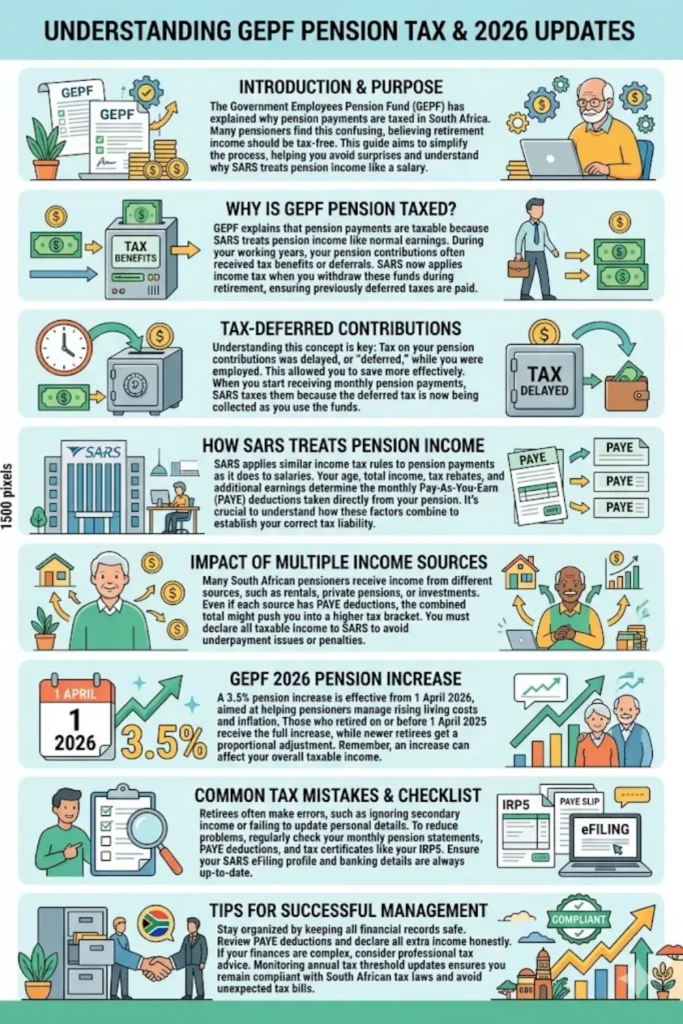
Many pensioners are often confused when they notice tax deductions from their monthly pension payments. Some believe retirement income should be tax-free because they already worked for many years in government service. However, South African tax laws work differently.
Understanding how pension tax works is important because it helps pensioners avoid tax surprises, penalties, and confusion when receiving retirement income. This guide explains everything in simple language, including how GEPF pension tax works, why SARS taxes pensions, how multiple income sources affect tax, and what pensioners should know about the latest 2026 updates.
Why GEPF Pension Payments Are Taxed in South Africa
The GEPF recently explained that pension payments are taxed because SARS classifies pension income as taxable income. Once a government employee retires and starts receiving monthly pension payments, those payments are treated similarly to a salary.
During employment years, government workers contribute money toward their pension fund. In many cases, these contributions are tax-deductible or tax-deferred. This means workers receive tax benefits while employed because they do not immediately pay full tax on pension contributions.
When retirement begins, SARS then taxes the pension payments because the funds are now being withdrawn as income. This system ensures tax is eventually paid on money that previously received tax advantages. Some pensioners misunderstand this process and assume the government is “double taxing” them. In reality, the tax was postponed during working years and becomes payable later during retirement.
Important points to understand
- Pension income is legally treated as taxable income in South Africa
- Pension contributions during employment usually receive tax benefits
- SARS taxes pension payouts after retirement begins
- Tax rates depend on total income and tax brackets
- Monthly pension tax deductions are normal under SARS regulations
You can also read: South Africa Adulterated Diesel Warning
How SARS Treats Pension Income
The South African Revenue Service applies income tax rules to pension payments in much the same way it applies tax to salaries and wages.
This means pensioners may have monthly Pay-As-You-Earn (PAYE) tax deductions taken directly from their pension before payment is made. The amount deducted depends on several factors, including age, total income, tax rebates, and additional earnings.
SARS also considers whether the pensioner receives income from other sources. For example, a retired government employee may also receive rental income, private pension income, investment earnings, or part-time employment income. All taxable income generally needs to be declared.
Pensioners should remember that tax rules can change yearly depending on South Africa’s national budget and SARS updates. This is why checking annual tax thresholds and pension statements is important.
SARS may tax the following income sources
- GEPF monthly pension payments
- Private retirement annuities
- Rental property income
- Investment income above thresholds
- Business income
- Part-time employment salaries
Understanding Tax-Deferred Pension Contributions
One of the most important concepts pensioners need to understand is “tax-deferred contributions.” This simply means tax is delayed until later. While government employees are actively working, pension contributions are often deducted before full tax is applied. This gives employees tax relief and encourages long-term retirement saving.
Because employees benefited from reduced taxable income during employment, SARS later taxes the pension when the money is paid out during retirement. This is a standard retirement taxation system used in many countries. For many pensioners, this explanation clears up confusion about why pension money is not fully tax-free.
Example of how tax deferral works
| Stage | What Happens |
|---|---|
| During employment | Pension contributions receive tax benefits |
| While money stays invested | Tax is deferred |
| After retirement | Pension payments become taxable income |
| Monthly payouts begin | SARS deducts applicable tax |
Who Pays Tax on GEPF Pension Payments?
Not every pensioner pays the same amount of tax. The tax liability depends on individual financial circumstances. Some pensioners may fall below the annual tax threshold and pay little or no tax, while others with larger pensions or multiple income sources may pay higher rates.
Older pensioners may also qualify for additional tax rebates based on age. SARS provides separate rebates for individuals over certain age categories, which can reduce overall tax liability. The GEPF explained that the tax deducted from its pension payments only applies to the pension income it pays directly. If a pensioner earns income elsewhere, those earnings may still need separate tax declarations.
Factors affecting pension tax
- Total annual pension income
- Age-related tax rebates
- Additional income sources
- SARS tax brackets
- Medical tax credits
- Retirement lump sum withdrawals
You can also read: Sars Announced 2026 Tax Season
What Happens If You Have More Than One Income Source?
Many South African pensioners receive money from different places after retirement. This can sometimes create tax complications.
For example, a pensioner may receive:
- GEPF pension income
- Private pension income
- Rental income
- Investment income
- Side business income
Even if each income source deducts some tax individually, the total combined income may place the pensioner into a higher tax bracket. This can result in additional tax being owed when filing annual returns. A common mistake is assuming that because PAYE is already deducted from the pension, no further tax responsibilities exist. However, SARS still requires full disclosure of all taxable income.
Pensioners should carefully keep records of all earnings and tax certificates throughout the year to avoid penalties or underpayment problems.
How Pension Tax Is Calculated in South Africa
South Africa uses a progressive income tax system. This means higher earners pay higher tax rates. Pension income is added to other taxable income and assessed according to SARS tax brackets. Tax rebates and credits are then applied where applicable. Although exact calculations differ per person, pensioners should understand the following general process:
Basic pension tax calculation process
- SARS calculates total annual income
- Tax brackets determine the applicable rate
- Age rebates are applied
- Medical credits may reduce tax
- PAYE deductions are compared against total liability
- Refunds or additional payments are determined
Many pensioners use tax practitioners or eFiling services to ensure calculations are correct, especially if they have multiple income streams.
GEPF Pension Increase for 2026 Explained
The GEPF also confirmed a 3.5% pension increase effective from 1 April 2026. This increase was introduced to help pensioners manage rising living costs and inflation.
Pensioners who retired on or before 1 April 2025 qualify for the full 3.5% increase. Those who retired after that date receive a proportional increase based on the number of months they have received their pension.
Inflation-linked increases are important because they help protect pensioners from losing purchasing power over time. Rising food prices, transport costs, electricity tariffs, and healthcare expenses can significantly affect retirees.
However, pensioners should remember that an increase in pension income may slightly affect tax calculations depending on their total annual earnings.
Key details about the 2026 increase
- Effective date: 1 April 2026
- Full increase: 3.5%
- Full qualification: Pensioners retired before 1 April 2025
- Partial increase: Applies to newer retirees proportionally
- Purpose: Assist with inflation and cost-of-living pressures
GEPF Pension Tax and Increase Comparison Table
| Topic | Explanation |
|---|---|
| Why pensions are taxed | SARS treats pension income as taxable income |
| Pension contribution benefit | Contributions were tax-deferred during employment |
| Who deducts tax | PAYE may be deducted directly from GEPF payments |
| Multiple income sources | All taxable income must be declared |
| 2026 pension increase | 3.5% effective from April 2026 |
| New retirees | Receive proportional increase |
| Tax threshold impact | Depends on total annual income |
| Possible tax rebates | Older pensioners may qualify for additional rebates |
Important Things Pensioners Should Check Regularly
Many tax problems happen because pensioners do not regularly monitor their financial records. Small mistakes can later result in penalties or delayed tax refunds. Pensioners should regularly review monthly pension slips, annual tax certificates, and SARS communication. Checking information early helps avoid complications during tax season.
It is also important to update banking details, contact information, and tax records whenever personal circumstances change.
Pensioners should regularly check
- Monthly pension statements
- PAYE deductions
- IRP5 or tax certificates
- SARS eFiling profile information
- Banking details
- Additional income declarations
Common Mistakes Pensioners Make With Tax
Many retired government employees unintentionally create tax issues because they misunderstand how pension taxation works. One common mistake is ignoring secondary income. Another is failing to register or update SARS information after retirement. Some pensioners also assume their pension increase will not affect tax brackets.
Late filing is another serious issue. Even pensioners who believe no extra tax is owed may still need to submit returns depending on their circumstances.
Common pension tax mistakes
- Not declaring all income sources
- Ignoring SARS notices
- Filing returns late
- Assuming pension income is tax-free
- Forgetting to update personal details
- Losing tax documentation
You can also read: Coinvest NSFAS Login Portal
Tips to Reduce Pension Tax Problems
Managing pension tax becomes easier when pensioners stay organized and informed.
Keeping proper financial records can save time and reduce stress during tax season. Pensioners with complicated finances should also consider professional tax advice to prevent costly mistakes.
It is helpful to estimate annual income early so unexpected tax bills do not arise later.
Useful tax management tips
- Keep all pension and income documents safely stored
- Review PAYE deductions regularly
- Use SARS eFiling for easier record management
- Seek professional tax advice if unsure
- Declare all additional income honestly
- Monitor annual tax threshold updates
Latest GEPF and SARS Updates for 2026
The latest GEPF update confirms that pension increases remain linked to inflation and cost-of-living pressures affecting South African retirees.
At the same time, SARS continues emphasizing tax compliance for all income earners, including pensioners. Retirees receiving multiple income streams are especially encouraged to ensure proper tax declarations.
Economic conditions, inflation, and national budget changes may continue influencing pension adjustments and tax rules throughout 2026. Pensioners should therefore stay updated through official GEPF and SARS announcements.
Frequently Asked Questions
Are GEPF pension payments taxable in South Africa?
Yes. SARS treats pension payments as taxable income, similar to salaries earned during employment.
Why does SARS tax pension income?
Because pension contributions during employment were generally tax-deferred or tax-deductible, the tax becomes payable when pension funds are paid out during retirement.
Does every pensioner pay the same tax rate?
No. Tax depends on total annual income, age rebates, tax brackets, and additional income sources.
Can pensioners receive tax rebates?
Yes. Older taxpayers may qualify for additional age-related rebates and medical tax credits.
Does the 3.5% pension increase affect tax?
It can. A higher pension may slightly increase taxable income depending on the pensioner’s overall earnings.
Must pensioners declare other income?
Yes. Rental income, private pensions, investments, and other earnings generally need to be declared to SARS.
Final Thoughts
The Government Employees Pension Fund has clarified that pension payments are taxed because SARS considers them taxable income after retirement. While many pensioners initially find this confusing, the system exists because pension contributions received tax benefits during employment years.
Understanding how pension tax works can help retirees avoid financial stress, filing mistakes, and unexpected SARS penalties. Pensioners should monitor all income sources carefully, stay updated on tax rules, and regularly review their pension statements and tax records.
The recent 3.5% pension increase for 2026 offers some relief against inflation, but pensioners should also remain aware of how income adjustments may affect their tax position. Proper planning, accurate declarations, and staying informed are the best ways to manage pension finances successfully in South Africa.