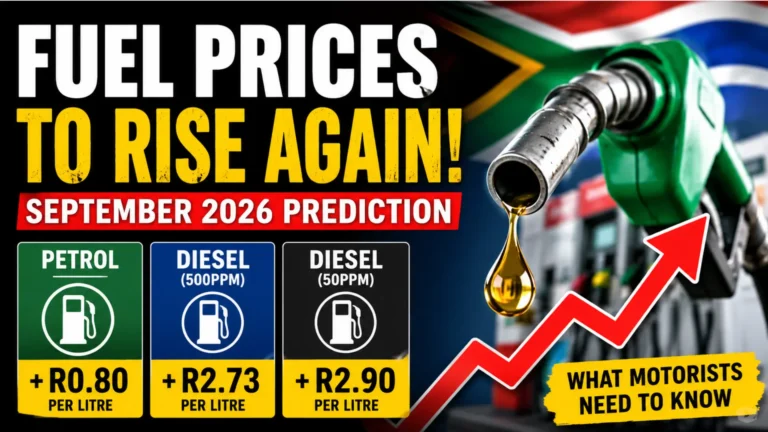
How to Check Fuel Price June 2026 in South Africa: Latest Petrol and Diesel Updates

South African motorists have been closely monitoring fuel prices throughout 2026 after months of significant increases driven by global oil market disruptions and geopolitical tensions. As June approaches, many drivers are looking for accurate ways to check the latest petrol and diesel prices and understand what changes to expect at the pumps.
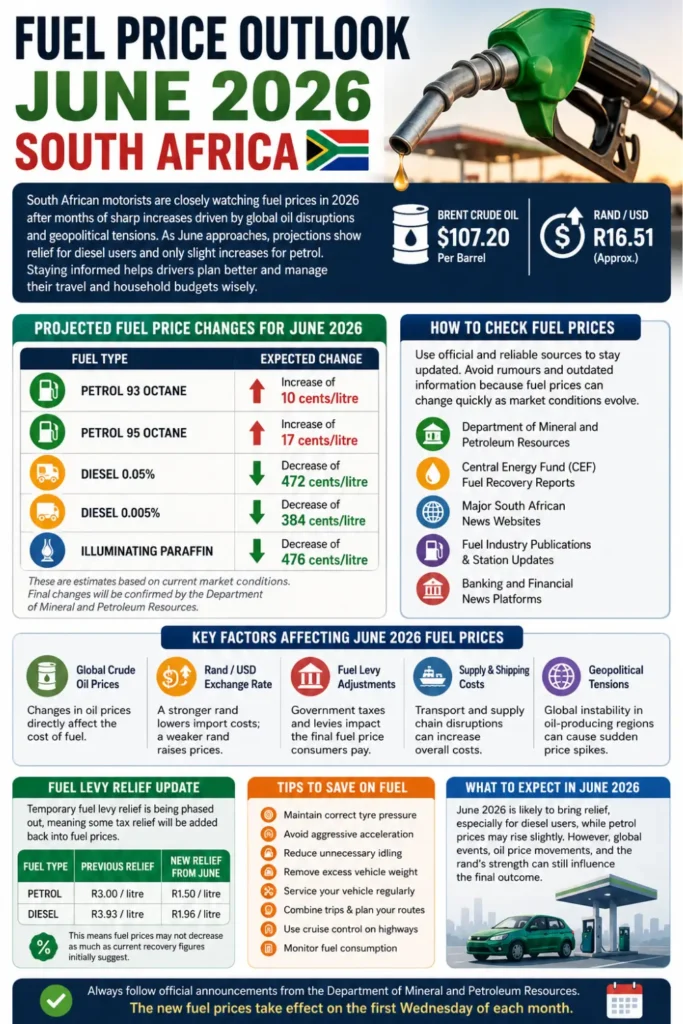
The latest data from the Central Energy Fund (CEF) suggests that diesel users could receive substantial relief, while petrol prices may increase only slightly. Knowing how to check fuel prices correctly can help motorists plan travel expenses, manage household budgets, and make informed decisions before filling up their vehicles.
June 2026 Fuel Price Outlook in South Africa
Fuel price projections for June 2026 indicate a much more stable environment compared to the sharp increases experienced during April and May. International oil prices have eased from their extreme volatility, while the rand has remained relatively stable against the US dollar.
You can also read: SASSA Grant Administrator Vacancies
Current projections suggest that petrol prices may rise modestly, while diesel and illuminating paraffin could see significant reductions. However, final adjustments depend on market movements and government levy changes before the official announcement.
Latest Projected Fuel Price Changes for June 2026
| Fuel Type | Expected Change |
|---|---|
| Petrol 93 Octane | Increase of approximately 10 cents/litre |
| Petrol 95 Octane | Increase of approximately 17 cents/litre |
| Diesel 0.05% | Decrease of approximately 472 cents/litre |
| Diesel 0.005% | Decrease of approximately 384 cents/litre |
| Illuminating Paraffin | Decrease of approximately 476 cents/litre |
These figures remain estimates until the Department of Mineral and Petroleum Resources publishes the official fuel price adjustment.
How to Check Fuel Price June 2026 in South Africa
Checking fuel prices is simple when using official and reliable sources. Motorists should avoid relying on social media rumours or outdated information because fuel prices can change quickly as market conditions evolve.
The most reliable way is to monitor official government announcements and trusted fuel price reports published each month. The official fuel prices are usually confirmed near the end of the month and take effect on the first Wednesday of the following month.
Best Sources to Check Fuel Prices
You can stay updated through:
- Department of Mineral and Petroleum Resources announcements
- Central Energy Fund (CEF) fuel recovery reports
- Major South African news websites
- Fuel industry publications
- Petrol station network updates
- Banking and financial news platforms
Checking multiple trusted sources helps ensure you receive the most accurate and current information.
Why Fuel Prices Change Every Month
South Africa adjusts fuel prices based on a regulated pricing formula. Two major factors influence the final petrol and diesel price consumers pay.
The international oil market determines the base cost of fuel products, while the rand-dollar exchange rate affects import costs. Since South Africa imports most of its crude oil and petroleum products, global events can have a direct impact on local fuel prices.
Main Factors Affecting June 2026 Fuel Prices
The current fuel price outlook is influenced by:
- Global crude oil prices
- Rand to US dollar exchange rate
- Fuel levy adjustments
- International supply disruptions
- Shipping and transport costs
- Geopolitical tensions in oil-producing regions
Even small movements in these factors can lead to noticeable fuel price changes.
Current Oil Price and Exchange Rate Impact
At the time of the latest projections, Brent crude oil is trading around $107.20 per barrel. Although still elevated, this is more stable than the dramatic fluctuations seen earlier in the year.
The rand has also shown resilience, trading near R16.51 against the US dollar. A stronger rand generally helps reduce fuel import costs, while a weaker rand usually pushes fuel prices higher for consumers.
This combination of a relatively stable currency and more predictable oil prices has contributed to the improved fuel outlook for June 2026.
Fuel Levy Changes Affecting June 2026 Prices
While fuel recoveries indicate significant diesel reductions, motorists should understand that government levy adjustments will reduce part of the expected savings.
You can also read: Western Cape School Closures Details
The temporary fuel levy relief introduced earlier in 2026 is being phased out, meaning some tax relief previously enjoyed by consumers will now be added back into fuel prices.
Updated Fuel Levy Relief
| Fuel Type | Previous Relief | New Relief from June |
| Petrol | R3.00/litre | R1.50/litre |
| Diesel | R3.93/litre | R1.96/litre |
The reduction in levy relief means fuel prices may not decrease as much as current recovery figures initially suggest.
Why Diesel Prices Are Expected to Drop
Diesel users stand to benefit the most from June’s projected fuel price adjustments. Recent diesel recoveries show substantial over-recoveries after months of exceptionally high prices.
Transport companies, logistics businesses, farmers, and commercial vehicle operators could experience meaningful cost relief if the projected decreases remain close to current estimates.
Lower diesel costs can also indirectly benefit consumers by reducing transportation expenses throughout supply chains, although these savings often take time to reach retail prices.
When Will the Official June 2026 Fuel Prices Be Announced?
The Department of Mineral and Petroleum Resources typically confirms fuel price adjustments during the final days of each month. Once announced, the new prices generally take effect at midnight on the first Wednesday of the new month.
Motorists planning long-distance travel or large fuel purchases should monitor official announcements closely as projections can still change before the final calculation is completed.
Waiting for the official announcement ensures that drivers make decisions based on confirmed prices rather than preliminary estimates.
Tips for Saving Money on Fuel in 2026
Even when fuel prices stabilize, motorists can take practical steps to reduce monthly fuel expenses.
Simple driving habits often make a noticeable difference in fuel consumption over time.
Fuel-Saving Best Practices
- Maintain correct tyre pressure
- Avoid aggressive acceleration
- Reduce unnecessary idling
- Remove excess vehicle weight
- Service your vehicle regularly
- Combine multiple trips into one journey
- Use cruise control on highways where appropriate
- Monitor fuel consumption regularly
Small improvements in driving efficiency can generate meaningful savings over several months.
Common Mistakes When Checking Fuel Prices
Many motorists accidentally rely on outdated projections or unofficial social media posts. Fuel prices can change significantly during the final days before official publication.
Avoid these common mistakes:
- Using old fuel price articles
- Trusting unverified social media claims
- Ignoring fuel levy changes
- Looking only at oil prices
- Forgetting exchange rate impacts
- Assuming projections are final prices
Always verify information through official sources before making financial decisions.
You can also read: South Africa Fuel Price Crisis
What South African Motorists Should Expect in June 2026
June 2026 appears likely to bring some welcome relief after a difficult period of rising fuel costs. Petrol users may face only modest increases, while diesel motorists could benefit from substantial reductions if current market conditions remain stable.
However, global oil markets remain sensitive to geopolitical developments, particularly around the Middle East and the Strait of Hormuz. Any major disruption, sudden oil price surge, or weakening of the rand could still alter the final outcome before the official announcement.
For now, South African motorists can cautiously welcome a more positive fuel price outlook while continuing to monitor official updates from the Department of Mineral and Petroleum Resources and the Central Energy Fund.