How to Check South Africa Fuel Price Crisis Details 2026
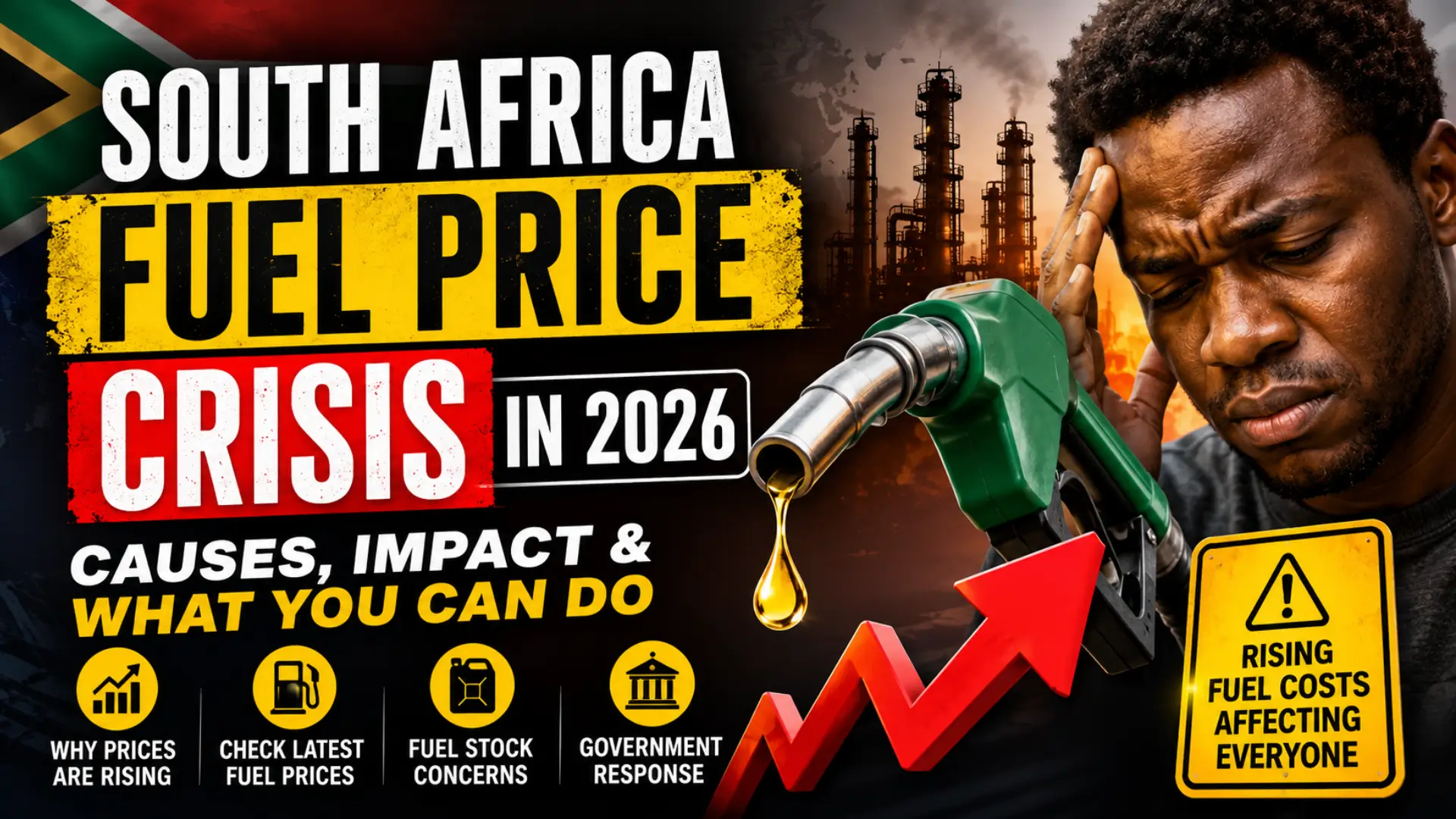
South Africa is facing one of its biggest fuel price crises in recent years after global crude oil supply disruptions pushed international oil prices sharply higher in 2026. The closure of the Strait of Hormuz following tensions involving Iran, Israel, and the United States reduced global oil supply significantly, affecting fuel-importing countries around the world. South Africa, which relies heavily on imported crude oil and refined fuel products, has been hit especially hard by rising petrol and diesel costs.
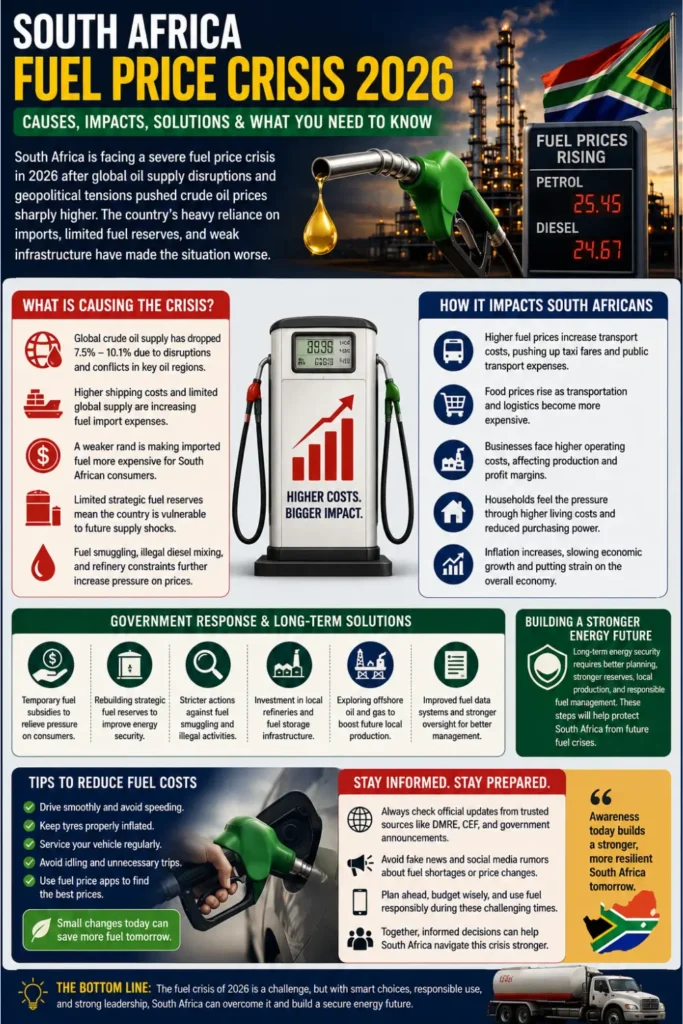
For ordinary South Africans, the crisis has already increased transport expenses, food prices, logistics costs, and business operating expenses. Many consumers are now searching for reliable ways to check official fuel price updates, understand the reasons behind the crisis, and prepare for future increases. This guide explains everything in simple terms, including how to check fuel price details, government responses, fuel stock concerns, and what the crisis could mean for households and businesses in 2026.
What Is Causing the South Africa Fuel Price Crisis in 2026?
The 2026 fuel crisis started after major disruptions in global oil supply caused international crude oil prices to surge. According to international energy reports, global crude supply fell by approximately 7.5% to 10.1%, creating severe pressure on oil-importing countries. Since South Africa imports most of its fuel requirements, local fuel prices quickly increased.
You can also read: SASSA Confirms May 2026 SRD Grant Payment
Another major issue is South Africa’s limited strategic fuel reserves. Reports suggest the country may only have enough emergency crude oil reserves for a few weeks under severe supply disruptions. Combined with weak fuel data systems, fuel smuggling, and refinery limitations, the crisis exposed long-standing weaknesses in South Africa’s energy security planning.
Why Fuel Prices Are Rising So Fast in South Africa
Several local and international factors are contributing to rising fuel prices across South Africa in 2026. Even when global oil prices stabilize temporarily, domestic challenges continue affecting fuel costs.
- Global crude oil supply shortages
- Increased shipping and transport costs
- Weak South African rand exchange rate
- Heavy dependence on imported fuel
- Limited local refining capacity
- Strategic fuel stock shortages
- Fuel smuggling and illegal diesel mixing
- Rising taxes and levies on fuel products
These combined pressures have increased both petrol and diesel prices, affecting transport operators, farmers, businesses, and ordinary consumers nationwide.
How to Check South Africa Fuel Price Updates in 2026
South Africans can monitor official fuel price changes through several trusted government and industry platforms. Fuel prices are usually adjusted monthly, but emergency changes may happen during periods of severe global instability.
| Platform | What You Can Check | Update Frequency |
|---|---|---|
| Department of Mineral Resources and Energy (DMRE) | Official fuel price announcements | Monthly |
| Central Energy Fund (CEF) | Fuel market reports and energy data | Regular |
| Automobile Association (AA) | Petrol and diesel price predictions | Weekly |
| News websites | Breaking fuel crisis updates | Daily |
| Fuel station apps | Current pump prices nearby | Real-time |
Always verify information using official government sources or trusted financial news platforms to avoid fake fuel price rumors spreading on social media.
How Monthly Fuel Prices Are Calculated in South Africa
Many people assume fuel stations set their own prices, but South Africa uses a regulated fuel pricing system controlled by the government. Fuel prices depend on several important components that change monthly.
- International crude oil prices
- Rand to US dollar exchange rate
- Shipping and insurance costs
- Fuel levies and taxes
- Wholesale and retail margins
- Storage and transport costs
- Refinery and distribution expenses
If global oil prices rise while the rand weakens, South Africans usually experience higher petrol and diesel prices the following month.
Impact of the Fuel Crisis on South African Households
The fuel crisis affects much more than just petrol station prices. Rising fuel costs increase the price of transporting goods across the country, which eventually affects food prices, public transport fares, electricity generation costs, and general inflation.
Families with fixed incomes are feeling the greatest pressure. Taxi fare increases, rising grocery costs, and higher school transport expenses are already affecting many households. Small businesses that depend on delivery vehicles, generators, or diesel-powered equipment are also struggling with operating costs.
Government Response to the 2026 Fuel Crisis
The South African government has introduced temporary support measures to reduce pressure on consumers. Fuel subsidies and discussions around strengthening strategic reserves have become central topics in energy policy discussions during 2026.
- Temporary fuel price subsidies
- Strategic crude oil stock rebuilding
- Improved fuel reserve monitoring
- Stricter action against fuel smuggling
- Investment in local refinery infrastructure
- Support for offshore oil and gas exploration
- Stronger oversight of fuel storage systems
Experts believe long-term solutions will require major reforms in energy planning, storage management, and domestic fuel production capacity.
Concerns About South Africa’s Strategic Fuel Reserves
One of the biggest concerns exposed during the crisis is the country’s limited emergency fuel stock. South Africa reportedly has large storage capacity, but the actual amount of fuel currently stored may be far below safe levels.
Energy experts warn that relying heavily on imports without sufficient emergency reserves creates major risks during international conflicts or supply disruptions. Some reports suggest current strategic reserves may only cover around two weeks of national fuel demand under extreme conditions
You can also read: SASSA Grant Administrator Vacancies
Fuel Smuggling and Illegal Diesel Mixing Problems
The fuel crisis also highlighted growing problems involving fuel smuggling and illegal fuel adulteration. Some operators reportedly mix diesel with paraffin or other substances to reduce tax costs and increase illegal profits.
- Engine damage to vehicles
- Reduced fuel efficiency
- Increased pollution
- Financial losses for consumers
- Reduced government tax revenue
- Safety hazards during storage and transport
Authorities are increasing inspections and investigations into illegal fuel trading networks, especially at storage depots and distribution centers.
Can South Africa Produce More Local Oil and Gas?
The 2026 oil crisis renewed interest in offshore oil and gas exploration, particularly in the Orange Basin off South Africa’s west coast. Neighboring Namibia recently made major oil discoveries, increasing hopes for similar findings in South African waters.
However, large-scale domestic production will not happen quickly. Oil and gas exploration projects require massive investment, technical expertise, environmental approvals, and years of development before commercial production begins. Experts estimate successful projects could still take around 10 years before contributing meaningfully to local fuel supply.
How the Fuel Crisis Affects Businesses and Transport
Transport companies, farmers, mining operations, delivery services, and manufacturers are among the industries most affected by rising diesel prices. Since many supply chains rely heavily on road transport, higher fuel costs eventually increase prices across the economy.
- Public transport operators
- Trucking and logistics companies
- Agriculture and farming
- Retail supply chains
- Construction businesses
- Mining operations
- Delivery and courier services
Businesses are now focusing more on fuel-saving strategies, route optimization, and operational efficiency to manage rising costs.
Tips to Reduce Fuel Costs During the Crisis
Although consumers cannot control global oil prices, there are practical ways to reduce fuel expenses during periods of high petrol and diesel prices.
- Avoid aggressive driving and speeding
- Keep tyres properly inflated
- Reduce unnecessary vehicle weight
- Combine multiple errands into one trip
- Service vehicles regularly
- Compare fuel prices using mobile apps
- Use public transport when possible
- Reduce idling time in traffic
Small driving habit changes can make a noticeable difference in monthly fuel expenses over time.
Common Mistakes People Make During Fuel Shortages
During fuel crises, panic buying and misinformation often create additional problems. Many consumers unknowingly follow fake social media reports or make unsafe fuel storage decisions.
- Panic-buying excessive fuel
- Storing petrol in unsafe containers
- Trusting unverified social media rumors
- Ignoring official government announcements
- Using low-quality illegal fuel products
- Delaying vehicle maintenance
Following verified updates and using fuel responsibly helps reduce unnecessary pressure on supply systems.
Will Fuel Prices Continue Rising in 2026?
Fuel prices in South Africa will likely remain volatile throughout 2026 due to ongoing geopolitical tensions and global supply uncertainty. Much depends on international oil markets, shipping routes, exchange rates, and future political developments in the Middle East.
Energy analysts expect continued price fluctuations rather than stable long-term relief in the short term. Consumers and businesses should prepare for possible monthly price increases while monitoring official updates closely.
Best Sources for Accurate Fuel Crisis Information
To avoid fake news and misinformation, always use reliable sources when checking fuel price crisis updates.
- Department of Mineral Resources and Energy
- Central Energy Fund
- South African Revenue Service
- Automobile Association of South Africa
- Reputable financial news websites
- Official government press releases
Checking multiple trusted sources helps confirm whether breaking fuel-related news is accurate and current.
You can also read: Western Cape School Closures Details 2026
Final Thoughts
The South Africa fuel price crisis of 2026 exposed serious weaknesses in the country’s fuel security system, including dependence on imports, limited emergency reserves, weak storage planning, and poor fuel data management. Rising petrol and diesel prices are already affecting households, transport systems, and businesses across the country.
While temporary subsidies and government interventions may provide short-term relief, long-term energy security will require stronger strategic reserves, better governance, stricter fuel regulation, and increased investment in domestic oil and gas development. For consumers, staying informed through official fuel price updates and following practical fuel-saving strategies will remain essential throughout 2026.