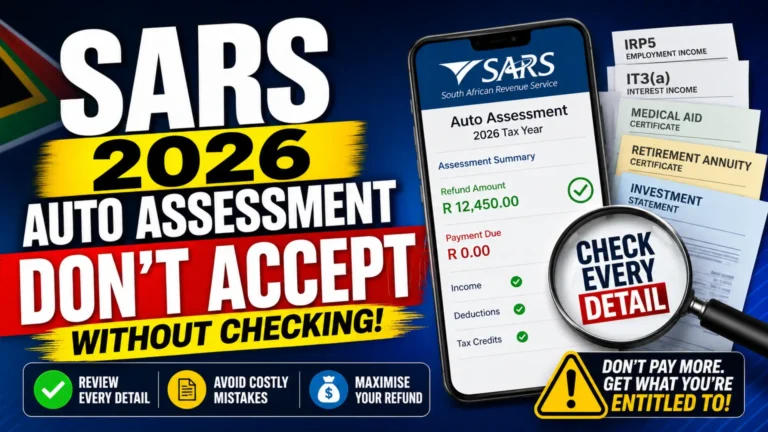
Sars Announced 2026 Tax Season Dates and Exemption Criteria

The South African Revenue Service (SARS) has officially released the first important details for the 2026 tax season. This announcement includes filing deadlines, exemption criteria, and updated guidance for taxpayers who may qualify for auto-assessments. Every year, millions of South Africans must submit tax returns, but many individuals are still uncertain about whether they are required to file or if they qualify for automatic processing.
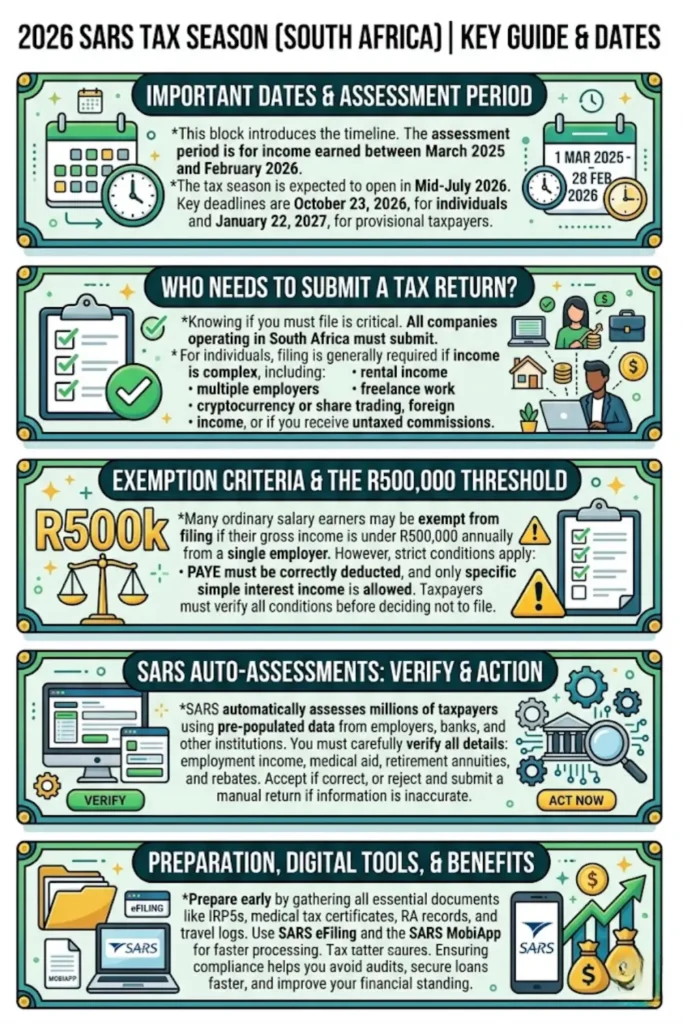
The 2026 tax season relates to the assessment period covering income earned between 1 March 2025 and 28 February 2026. SARS uses this period to evaluate taxable income, deductions, rebates, and overall compliance. Understanding the rules early can help taxpayers avoid penalties, missed deadlines, and unnecessary stress.
This year, SARS continues its focus on digital tax administration through eFiling, the SARS MobiApp, and expanded auto-assessment systems. Taxpayers who understand these systems and prepare in advance can complete the process faster and more accurately.
Official SARS 2026 Tax Season Filing Dates
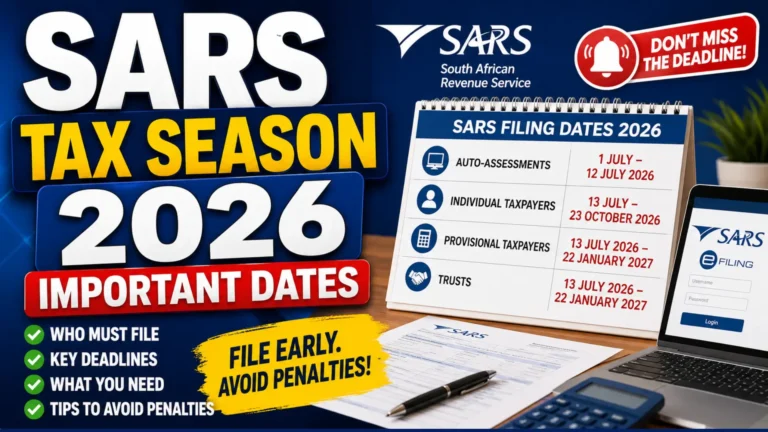
SARS has confirmed the key filing deadlines for the 2026 tax season. Individual taxpayers and provisional taxpayers will have different submission dates, making it important to know which category applies to you.
2026 SARS Tax Filing Deadlines
| Taxpayer Type | Filing Deadline |
|---|---|
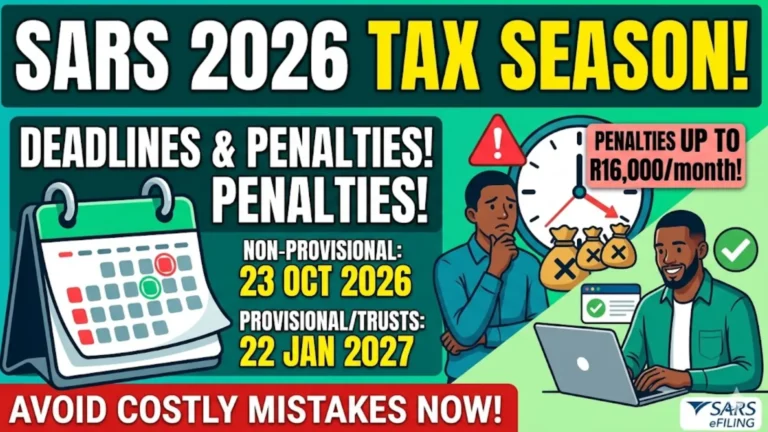
| Individual taxpayers | Friday, 23 October 2026 |
| Provisional taxpayers | Friday, 22 January 2027 |
| Tax season expected opening | Mid-July 2026 |
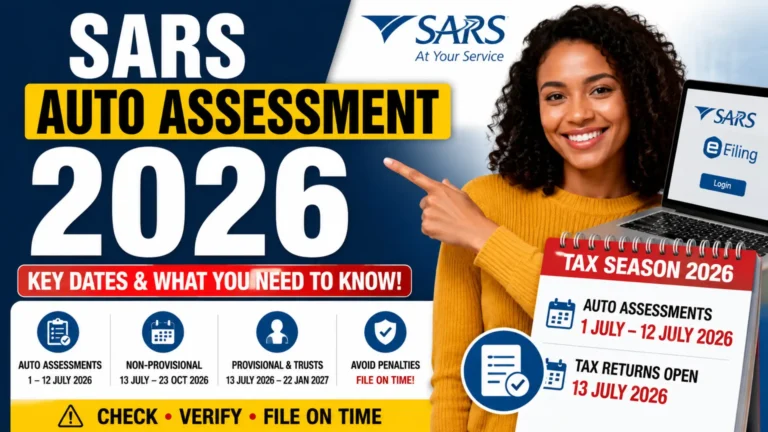
| Auto-assessment period | Approximately two weeks before tax season opens |
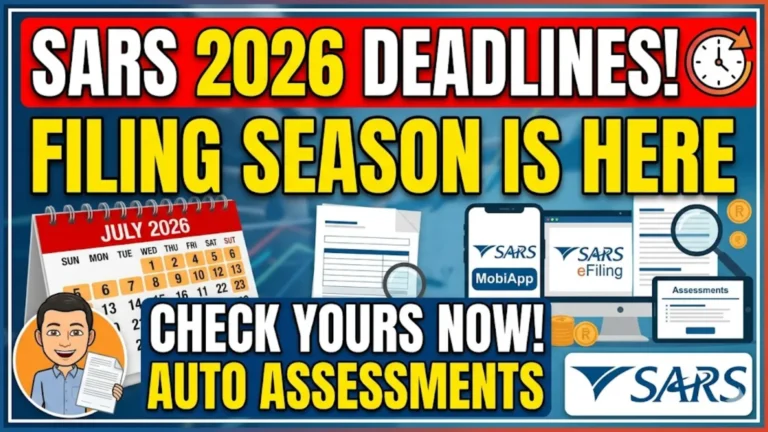
The filing season generally begins in mid-July, when SARS opens submissions through eFiling and the SARS MobiApp. Before the official opening, SARS usually runs an auto-assessment period where selected taxpayers receive pre-populated tax calculations based on available financial information.
You can also read: Nsfas Under Administration Buti Manamela
Who Needs to Submit a Tax Return in 2026?
Many South Africans assume that everyone must file a tax return, but this is not always the case. However, certain taxpayers are legally required to submit returns regardless of income level.
Companies, businesses, and juristic persons operating in South Africa generally need to file tax returns if they:
- Earn income
- Conduct business activities
- Own taxable assets
- Generate capital gains or losses
- Receive investment or foreign income
For individuals, filing is usually required when income sources become more complex. This includes taxpayers who:
- Have multiple employers
- Earn freelance or side income
- Receive rental income
- Trade cryptocurrency or shares
- Earn foreign income
- Receive untaxed commissions
- Claim significant deductions or allowances
Taxpayers who are uncertain about their filing obligations should verify their status directly through SARS eFiling. Filing unnecessarily is better than failing to file when legally required.
Who Is Exempt From Filing a Tax Return?
SARS has clarified that certain natural persons and deceased estates do not need to submit tax returns for the 2026 tax season if their income falls within specific limits and conditions.
A taxpayer may be exempt if their gross income consists only of the following:
- Employment income from a single employer not exceeding R500,000 annually
- PAYE (employees’ tax) already deducted correctly
- Interest income from South African sources within allowed thresholds
- A single retirement lump sum where tax has already been deducted
Interest Income Exemption Thresholds
| Taxpayer Category | Interest Threshold |
|---|---|
| Under 65 years old | R23,800 |
| Age 65 and older | R34,500 |
| Deceased estates | R23,800 |
These exemptions are intended to simplify compliance for ordinary salary earners with straightforward tax affairs. However, taxpayers must ensure they truly meet all exemption conditions before deciding not to file.
For example, a person earning below R500,000 may still need to file if they:
- Had more than one employer
- Earned freelance income
- Received travel allowances
- Claimed medical deductions
- Earned foreign interest or dividends
Incorrectly assuming exemption status can create problems later if SARS identifies undeclared income.
You can also read: How to Check SASSA Scams 2026
SARS Auto-Assessment Explained for 2026
SARS introduced auto-assessments in 2021 as part of its digital transformation strategy. Since then, the system has expanded rapidly and now processes millions of taxpayers automatically every year. Under the auto-assessment process, SARS gathers information from employers, banks, medical schemes, retirement funds, and other institutions. It then generates a pre-completed tax assessment for selected taxpayers.
If a taxpayer agrees with the information provided, no additional return submission is required. This makes the process significantly faster and easier for many individuals. However, taxpayers still carry the responsibility of verifying accuracy. Before accepting an auto-assessment, it is important to check:
- Employment income figures
- Medical aid contributions
- Retirement annuity deductions
- Travel allowances
- Interest income
- Tax rebates and credits
If any information is incorrect or incomplete, the taxpayer must reject the auto-assessment and submit a corrected return manually through SARS eFiling or the SARS MobiApp. SARS has also indicated that it plans to expand auto-assessments to provisional taxpayers through pilot programs, which could change how self-employed individuals manage taxes in future years.
Important Income Thresholds and Tax Rules
One of the biggest focus points for the 2026 tax season is the R500,000 annual income threshold. This figure plays a major role in determining whether many salary earners must file returns. However, taxpayers should understand that the threshold alone does not automatically guarantee exemption. SARS considers the full structure of a taxpayer’s income and financial activity.
Important tax considerations include:
- Whether income comes from one or multiple sources
- Whether PAYE deductions were accurate
- Whether additional allowances were received
- Whether foreign assets or investments exist
- Whether tax deductions are being claimed
Another critical area is interest income. Many taxpayers mistakenly assume all investment income qualifies under the exemption rules. In reality, certain investment types, especially foreign or tax-free investment products, may be treated differently for tax purposes.
Taxpayers approaching retirement should also pay attention to retirement lump sum taxation rules. While a single lump sum with correct tax deductions may qualify for exemption from filing, additional withdrawals or multiple retirement products can change filing requirements.
Common Mistakes Taxpayers Should Avoid
Every tax season, SARS identifies common errors that delay refunds, trigger audits, or result in penalties. Avoiding these mistakes can save taxpayers significant time and money.
Common Filing Errors
- Accepting auto-assessments without checking details
- Forgetting secondary income sources
- Failing to declare investment income
- Missing filing deadlines
- Incorrect banking details
- Claiming unsupported deductions
- Ignoring SARS notifications
- Not updating personal information
One major mistake involves assuming employers always submit accurate tax data. Although employers generally provide IRP5 information directly to SARS, errors can still happen. Taxpayers should always compare their records against the auto-assessment.
You can also read: South African Police Service 5,500 Police Trainees
Another frequent issue is poor record keeping. Even taxpayers using auto-assessments should keep supporting documents such as medical certificates, retirement annuity confirmations, and travel logs for several years in case SARS requests verification.
How to Prepare for the 2026 Tax Season
Preparing early can make the tax filing process much smoother. Taxpayers should start organizing documents before the filing season officially opens in July 2026.
Important documents may include:
- IRP5 or IT3(a) certificates
- Medical aid tax certificates
- Retirement annuity contribution records
- Interest income statements
- Travel logs and expense records
- Rental income statements
- Cryptocurrency transaction reports
Taxpayers should also ensure their SARS eFiling profiles are updated with correct:
- Banking information
- Contact details
- Tax reference numbers
- Employer details
Using digital platforms like SARS eFiling and the SARS MobiApp can reduce filing delays and improve communication with SARS. Taxpayers unfamiliar with these systems should learn how they work before peak filing season begins.
Benefits of Filing Correctly and On Time
Submitting accurate tax information within the deadlines offers several important benefits. Apart from avoiding penalties, compliant taxpayers often receive refunds faster and experience fewer disputes with SARS.
Key advantages include:
- Faster tax refunds
- Reduced risk of audits
- Better financial records
- Easier loan and visa applications
- Improved compliance history
- Lower stress during tax season
Timely filing also helps businesses and self-employed individuals maintain good standing with financial institutions and government agencies. Many lenders and investors now request tax compliance status before approving applications.
For provisional taxpayers, early preparation is especially important because calculations are often more complex and may involve multiple income streams.
Final Thoughts
The announcement of the 2026 SARS tax season dates gives South African taxpayers enough time to prepare properly before filing begins. With deadlines set for 23 October 2026 for individual taxpayers and 22 January 2027 for provisional taxpayers, early preparation will be critical.
The updated exemption criteria and expanded auto-assessment system aim to simplify tax compliance for ordinary salary earners. However, taxpayers should still carefully review their income sources, deductions, and SARS records before assuming they are exempt or accepting auto-assessments.
You can also read: South Africa Adulterated Diesel Warning
Understanding the rules now can help taxpayers avoid penalties, reduce errors, and make the entire filing process smoother. Whether filing manually or through auto-assessment, staying informed and organized remains the best approach for a successful 2026 tax season.