How to Check SASSA Scams 2026 Details Who is Affected
SASSA scams in 2026 have become more advanced and harder to detect. Many messages, calls, and offers now look real, making it easy for beneficiaries to trust them without checking. Unfortunately, this has led to many people losing money, personal information, or even access to their grants.
If you depend on a social grant, knowing how to identify and check scams is no longer optional it is essential. This guide explains everything clearly, from how scams work to how you can verify information safely and protect yourself.
What Are SASSA Scams in 2026
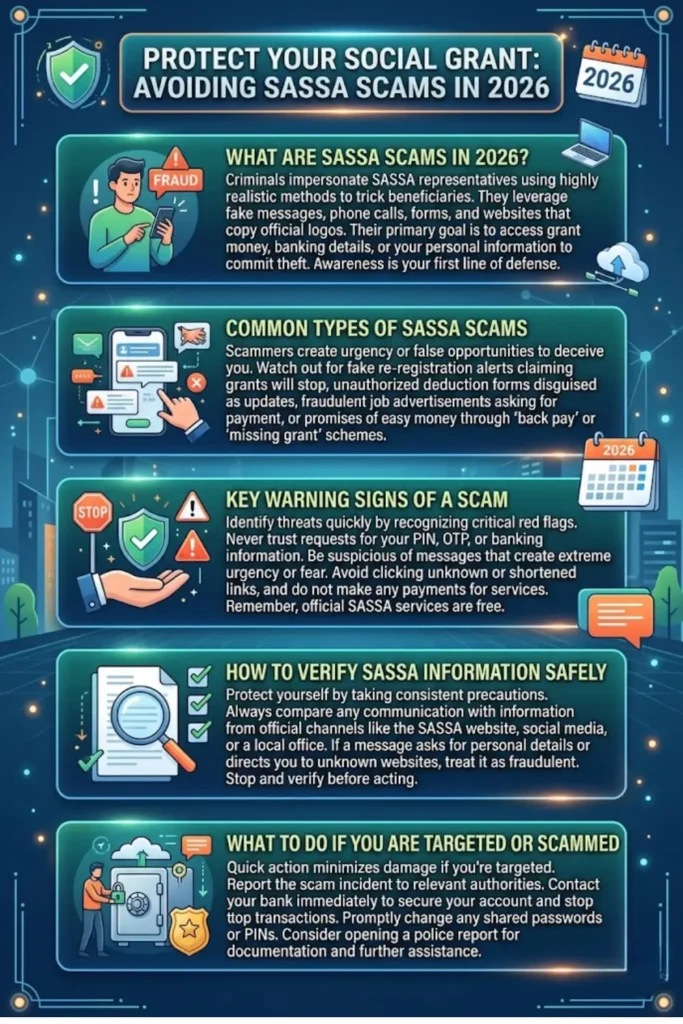
SASSA scams are fraudulent activities where criminals pretend to be official representatives to steal money or personal details. These scams often involve fake messages, phone calls, forms, or websites designed to trick beneficiaries.
In 2026, scammers are using more convincing tactics. They copy official logos, create realistic websites, and even speak professionally to gain trust. Their goal is simple: access your grant money, banking details, or identity information.
Why Scams Are Increasing in 2026
The rise in scams is linked to increased digital usage and financial pressure. Many people now rely on mobile phones and social media for updates, making it easier for scammers to reach them quickly.
You can also read: Nsfas Under Administration Buti Manamela
At the same time, economic challenges make people more vulnerable. When someone is worried about losing their grant or missing payments, they are more likely to react quickly without verifying information. Scammers use this urgency to their advantage.
Who Is Affected by SASSA Scams
SASSA scams target a wide range of beneficiaries. Criminals do not focus on one group they target anyone who receives or applies for grants.
Those most affected include:
- Older persons receiving pension grants
- Caregivers collecting child support grants
- People receiving disability grants
- SRD (Social Relief of Distress) beneficiaries
- Unemployed youth looking for job opportunities
Many victims already face financial pressure, making them more likely to trust urgent or promising messages.
Common Types of SASSA Scams in 2026
Scammers are using different methods, but most fall into a few common categories. Understanding these helps you recognize threats quickly.
- Fake re-registration messages claiming your grant will stop
- Unauthorized deduction forms disguised as updates
- Fake job advertisements asking for payment
- Insurance or funeral cover scams using false partnerships
- Fake back pay or “missing grant” claims
Each of these scams is designed to create urgency or offer benefits that seem too good to ignore.
How to Check If a SASSA Message or Offer Is Real
The safest way to check any message is to verify it through official channels. Never rely on the message itself, even if it looks professional.
Start by comparing the information with official announcements. If the message asks for personal details or directs you to an unknown link, treat it as suspicious until proven otherwise.
Always remember that official services are free and do not require payments or sensitive information through informal platforms.
Key Warning Signs of a Scam
Recognizing warning signs early can save you from serious loss. Most scams share similar patterns.
Here are the most important red flags:
- Requests for PIN, OTP, or banking details
- Messages creating urgency or fear
- Unknown or shortened links
- Requests for payment to receive services
- Offers that promise easy money or jobs
If even one of these signs appears, it is best to stop and verify before taking any action.
Step-by-Step Guide to Verify SASSA Information Safely
| Step | What to Do | Why It Matters |
|---|---|---|
| 1 | Check official website or office | Confirms real updates |
| 2 | Avoid clicking unknown links | Prevents data theft |
| 3 | Compare message details | Identifies fake content |
| 4 | Ask at a local office | Provides trusted clarification |
| 5 | Do not share personal info | Protects your identity |
Following these steps ensures that you do not fall for fake messages or misleading offers.
What to Do If You Are Targeted or Scammed
If you suspect a scam, act immediately. Quick action can reduce damage and protect your account. First, report the incident to the relevant authorities. Then contact your bank to secure your account and prevent further transactions.
You can also read: Bigger Fuel Price Crisis Looms in June and July
If personal information was shared, change your passwords and PINs without delay. In serious cases, opening a police report helps document the incident and may assist in recovery efforts.
Practical Tips to Stay Safe
Staying safe requires consistent habits. Small precautions can make a big difference over time.
- Always verify before responding
- Keep personal details private
- Use only official platforms for updates
- Ignore messages that create panic
- Speak to trusted officials when unsure
Building these habits helps you avoid scams even as they evolve.
Common Mistakes to Avoid
Many victims fall into scams simple mistakes. Avoiding these can protect you.
- Trusting messages without checking
- Sharing details on WhatsApp or social media
- Paying fees for grants or jobs
- Clicking links without verifying sources
- Acting quickly fear or pressure
Taking a moment to think before acting is one of the strongest protections.
Latest Updates and Trends in 2026
Scammers are becoming more organized and using technology to improve their tactics. In 2026, many scams involve fake websites that closely resemble official ones.
There is also an increase in targeted scams, where fraudsters use personal data to make messages more convincing. This makes awareness and verification more important than ever.
Frequently Asked Questions (FAQ)
Are WhatsApp SASSA messages real?
Most are fake unless confirmed through official channels.
Does SASSA charge fees?
No, all services are free.
Can someone from SASSA ask for my PIN?
No, your PIN should never be shared.
Are online job offers from SASSA trustworthy?
Only trust jobs posted on official platforms.
You can also read: Sars 2026 Tax Fling Deadlines
Conclusion
SASSA scams in 2026 are more convincing, but they still rely on one thing—people reacting without checking. By slowing down and verifying information, you can protect your money, identity, and peace of mind.
Always remember: if a message is not confirmed through official channels, it should not be trusted. Staying informed and cautious is your best defense.