Special Investigating Unit Details Check Complete Fraud Details
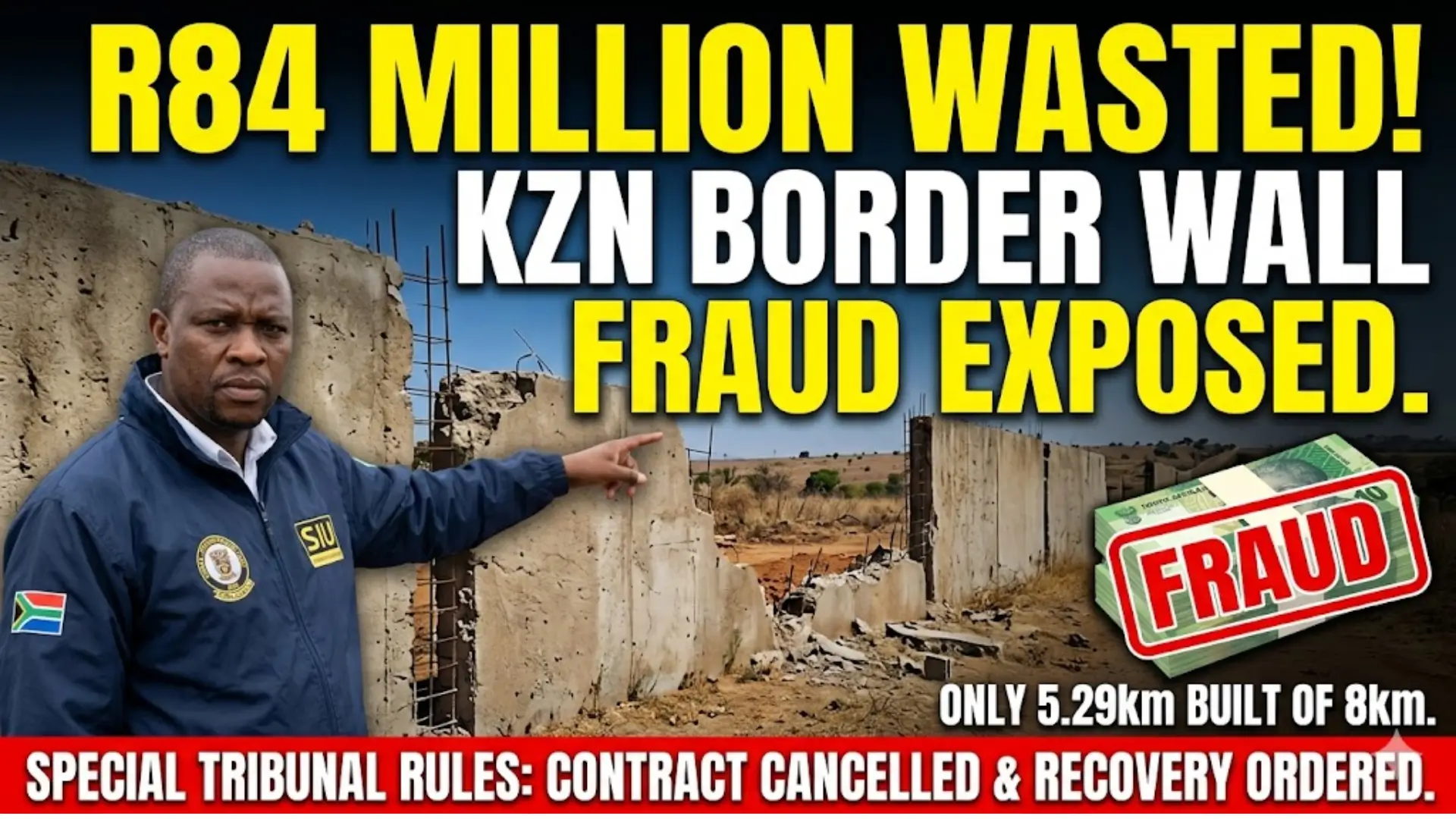
The Special Investigating Unit (SIU) has recently taken a strong stand against corruption by exposing serious fraud in a public infrastructure project. The case involves a failed construction project of a concrete barrier wall along the KwaZulu-Natal–Mozambique border. This wall was meant to improve safety and reduce cross-border crime, but instead became a clear example of procurement irregularities and misuse of public funds.
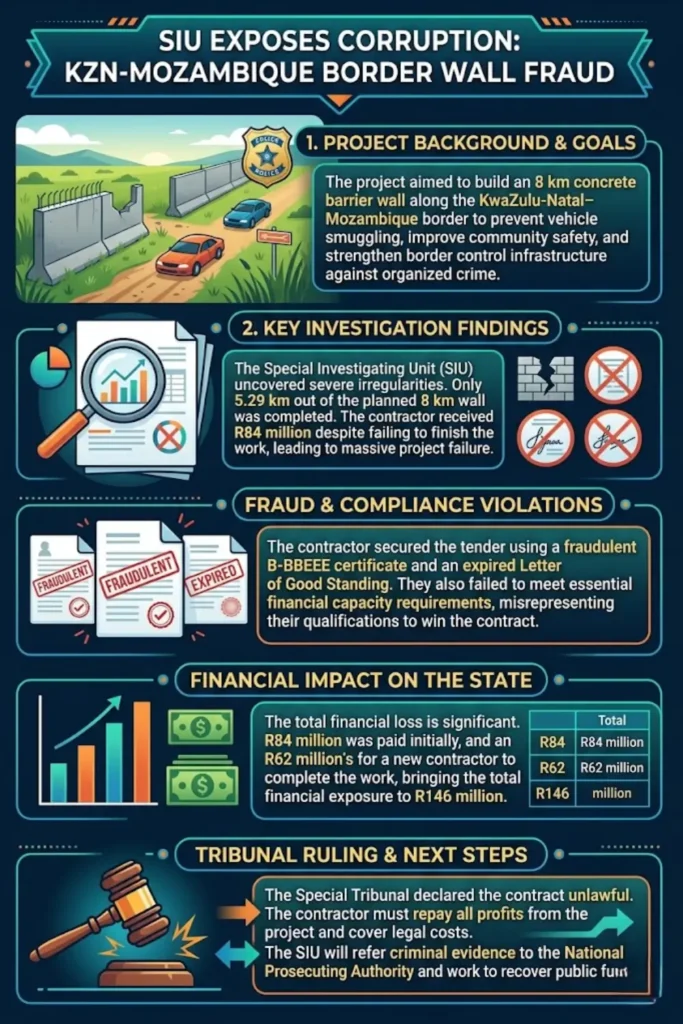
The ruling by the Special Tribunal has confirmed that the tender process was flawed and involved fraudulent activities. This article breaks down the full situation in simple terms, helping readers understand what went wrong, who is responsible, and what actions are being taken to fix the damage.
Background of the Border Wall Project
The border wall project was initiated by the KwaZulu-Natal Department of Transport to address growing concerns about illegal activities. Communities in the area were facing increased incidents of stolen vehicles being trafficked across the border into Mozambique.
To tackle this issue, the government planned to construct an 8 km concrete barrier wall. However, the responsibility was given to the ISF Shula Joint Venture, which failed to deliver the project as expected.
Key objectives of the project included:
- Prevent cross-border vehicle smuggling
- Improve community safety
- Strengthen border control infrastructure
- Provide a long-term solution to organized crime
Despite these goals, the project quickly turned into a case of incomplete work and financial mismanagement.
You can also read: SASSA Gold Cards are being Phased Out
Major Findings of the SIU Investigation
The SIU conducted a detailed investigation that revealed multiple serious violations in the tender process and project execution. These findings were later confirmed by the Special Tribunal.
One of the most alarming issues was that the contractor received a large portion of the funds but failed to complete the work. Only a part of the wall was built, leaving the project unfinished and ineffective.
Key Investigation Findings
- Only 5.29 km out of 8 km of the wall was completed
- Around R84 million was already paid to the contractor
- A new contractor had to be hired at an extra cost of R62 million
- Fraudulent documents were used during the bidding process
These findings clearly show that the project suffered from both poor execution and intentional misrepresentation.
Fraud and Compliance Violations
The SIU uncovered several compliance failures and fraudulent actions that allowed the contractor to secure the tender unfairly. These violations highlight weaknesses in the procurement system and the importance of strict oversight.
The contractor did not meet essential requirements but still managed to win the contract. This raised serious concerns about transparency and fairness in public procurement.
Main Violations Identified
- Use of a fraudulent B-BBEE certificate
- Submission of an expired Letter of Good Standing
- Failure to meet financial capacity requirements
- Misrepresentation of qualifications and eligibility
These actions directly violated procurement rules and undermined trust in public systems.
Financial Impact on the State
The incomplete project resulted in significant financial losses for the government. Public funds were used inefficiently, and additional money had to be spent to complete the work.
Below is a summary of the financial impact:
| Category | Amount (Rands) |
|---|---|
| Initial payment to contractor | R84 million |
| Additional completion cost | R62 million |
| Total financial exposure | R146 million |
This table highlights how costly the failure of one contractor can be, especially when fraud is involved.
Tribunal Ruling and Legal Actions
The Special Tribunal ruled in favor of the SIU, setting aside the original tender awarded to the ISF Shula Joint Venture. This decision confirms that the contract was незаконный and should never have been granted.
The ruling also includes several corrective actions aimed at recovering lost funds and ensuring accountability.
Tribunal Orders
- The contractor must repay all profits earned from the project
- An independent expert will calculate the total profit amount
- The contractor is responsible for legal costs
- Disputes will be handled again by the Tribunal if necessary
This ruling sends a strong message that fraud and incomplete work will not be tolerated.
You can also read: Check the Reasons for Sassa Portal
SIU’s Next Steps and Authority
The SIU is not only responsible for investigating corruption but also for taking action to recover losses. In this case, it will continue efforts to ensure that public money is returned to the state.
The SIU operates under legal authority granted by a presidential proclamation and relevant legislation. It has the power to take both civil and criminal actions where necessary.
Actions Moving Forward
- Recover funds paid for incomplete work
- Refer criminal evidence to the National Prosecuting Authority
- Initiate civil proceedings to correct wrongdoing
- Strengthen oversight on public procurement
These steps are crucial for restoring public confidence in government processes.
Importance of Transparent Procurement
This case highlights the importance of fairness, transparency, and accountability in public procurement. When these principles are ignored, the consequences affect not just finances but also public safety and trust.
The Constitution requires that all government procurement processes must be:
- Fair
- Transparent
- Competitive
- Cost-effective
Ensuring these principles are followed can prevent similar cases in the future and protect public resources.
Conclusion
The SIU investigation and Tribunal ruling have exposed a clear case of fraud, mismanagement, and failure in delivering a critical infrastructure project. While corrective actions are now underway, the case serves as an important lesson for all stakeholders involved in public projects.
You can also read: Dis-Chem Section 189 Process
Strong oversight, strict compliance checks, and accountability measures are essential to prevent such incidents. Moving forward, the focus must remain on protecting public funds and ensuring that projects deliver real value to communities.