Dis-Chem Section 189 Process Good News For South Africa People
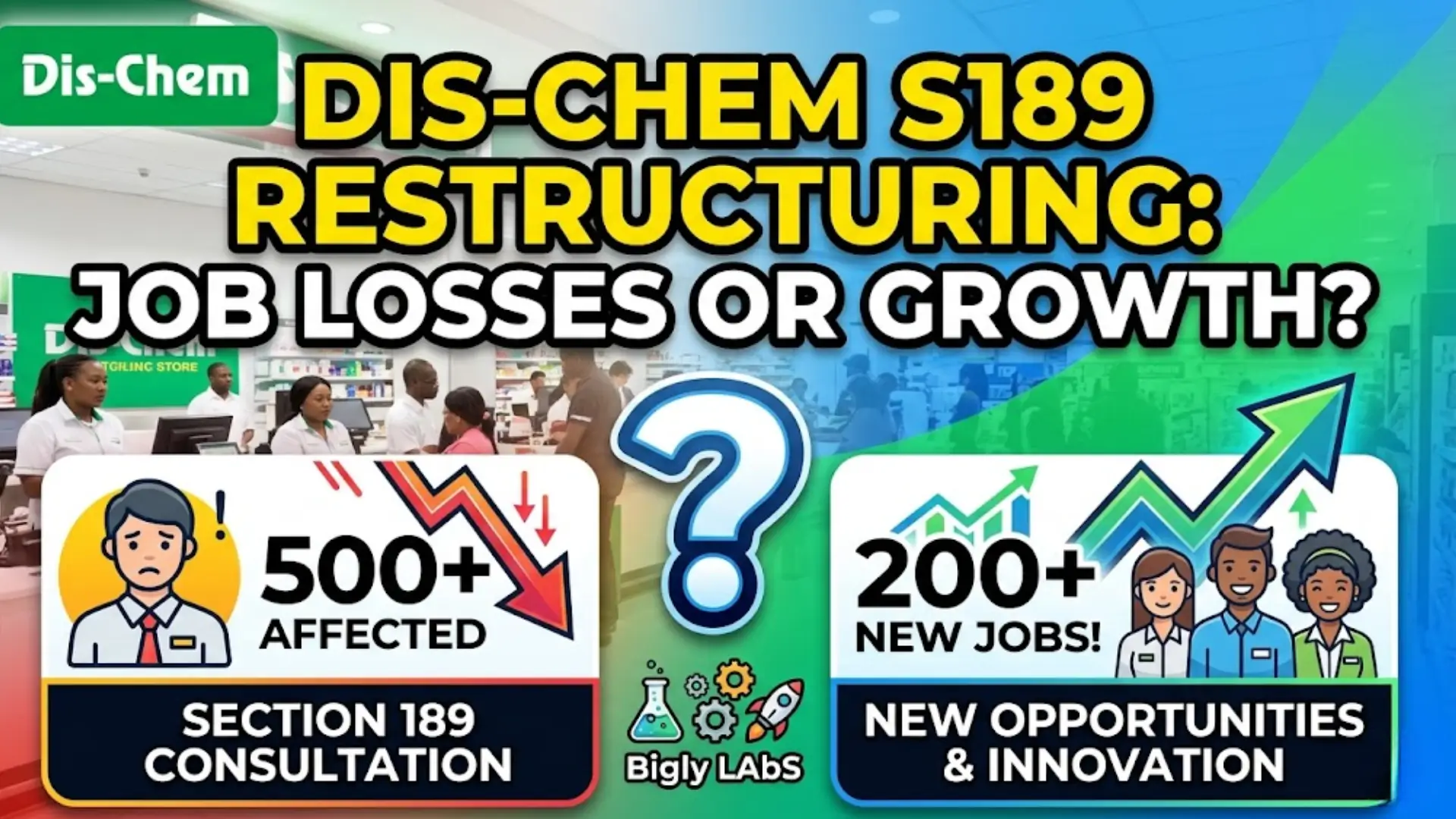
Dis-Chem’s recent announcement about initiating a Section 189 process has drawn significant attention across South Africa. At first glance, the mention of potential retrenchments may sound concerning, especially with over 500 employees invited to participate in consultations. However, the company has positioned this move as part of a broader transformation strategy aimed at long-term growth and sustainability.
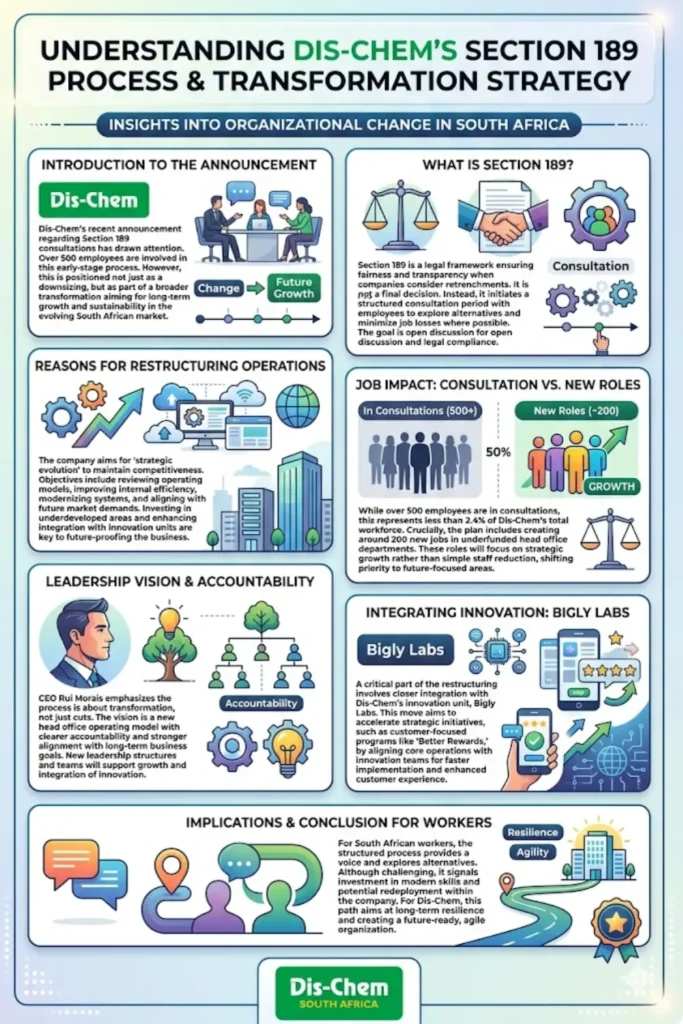
Rather than being purely about job losses, this process is tied to restructuring efforts that aim to improve efficiency, modernize operations, and align the business with future market demands. The company emphasizes that this is an early-stage consultation process, meaning outcomes are not yet finalized. Understanding the full context is essential before forming conclusions.
What Is a Section 189 Process?
A Section 189 process is a legal framework in South Africa that companies must follow when considering retrenchments. It ensures fairness, transparency, and consultation with employees before any final decisions are made.
This process is not an immediate dismissal notice but rather a structured discussion phase between employers and employees. It allows all parties to explore alternatives and minimize job losses where possible.
Key points about Section 189:
- It is a consultation process, not a final decision
- Employees are invited to provide input and alternatives
- The goal is to avoid or reduce retrenchments
- It ensures legal compliance and fairness
- The process can take several months
This means that while the news may sound alarming, it actually reflects a regulated and cautious approach to organizational change.
You can also read: Sasol Natref Sustainability Certification
Why Dis-Chem Is Restructuring Its Operations
Dis-Chem has stated that the restructuring is part of its “strategic evolution.” As markets change and competition increases, companies must adapt their structures to remain relevant and competitive.
The company is reviewing its operating model, organizational structure, and working methods to better align with its long-term ambitions. This includes improving efficiency and ensuring that resources are directed toward high-impact areas.
Reasons behind the restructuring include:
- Aligning operations with future business goals
- Improving internal efficiency and accountability
- Strengthening competitiveness in a dynamic market
- Investing in underdeveloped departments
- Enhancing integration with innovation units
These changes are designed to create a more agile and future-ready organization.
Job Impact: Losses and New Opportunities
One of the most important aspects of this announcement is the balance between potential job losses and new job creation. While over 500 employees are part of the consultation process, the company has also announced plans to create around 200 new positions.
These new roles will focus on key head office departments that have historically been underfunded. This indicates a shift in priorities rather than a simple reduction in workforce.
Job impact overview:
- Over 500 employees involved in consultation
- Represents less than 2.4% of total workforce
- Around 200 new jobs to be created
- Focus on strategic and growth-oriented roles
- Retail stores and distribution centres remain unaffected
This shift suggests that Dis-Chem is reallocating resources rather than downsizing entirely.
Workforce Changes at a Glance
| Category | Details |
|---|---|
| Employees in consultation | 500+ |
| Percentage of workforce | أقل than 2.4% |
| New jobs to be created | حوالي 200 |
| Affected areas | Head office departments |
| Unaffected areas | Retail stores & distribution centres |
| Process duration | Several months (ongoing consultation) |
Leadership Perspective: CEO Rui Morais’ Vision
Dis-Chem’s CEO, Rui Morais, has clarified that the Section 189 process should not be viewed purely as large-scale retrenchment. Instead, he describes it as a necessary step to enable transformation and create new opportunities within the company.
He emphasizes that the goal is to build a new head office operating model with clearer accountability and stronger alignment with business goals. This includes integrating innovation-driven initiatives into the company’s core structure.
Key messages from leadership:
- The process is about transformation, not just job cuts
- New roles will support long-term growth
- Clear accountability structures will be introduced
- Employee consultation remains a priority
- Alternatives to retrenchment will be explored
This perspective highlights a forward-looking strategy rather than a reactive measure.
You can also read: SASSA Gold Cards are being Phased Out
Role of Innovation: Integration with Bigly Labs
A significant part of the restructuring involves better integration with Dis-Chem’s innovation unit, Bigly Labs. This division focuses on strategic initiatives, including customer-focused programs like Better Rewards.
By aligning its core operations with innovation-driven teams, the company aims to accelerate growth and improve customer experience. This integration is expected to strengthen the company’s competitive position in the retail pharmacy sector.
Benefits of innovation integration:
- Improved customer engagement programs
- Faster implementation of new ideas
- Stronger alignment between strategy and execution
- Increased focus on digital and modern solutions
- Enhanced long-term business sustainability
This move shows that Dis-Chem is investing in future-focused capabilities rather than maintaining outdated systems.
What This Means for South African Workers
For many South Africans, news of a Section 189 process can be worrying. However, the structured nature of the process ensures that employees have a voice and that decisions are not made hastily.
At the same time, the creation of new jobs and investment in key departments signals potential opportunities for skilled workers. The focus on innovation and growth could also contribute to broader economic benefits.
Implications for workers:
- Opportunity to participate in consultation discussions
- Potential redeployment within the company
- New job openings in strategic areas
- Increased demand for modern skills
- Greater focus on long-term career growth
This balanced approach offers both challenges and opportunities.
Conclusion
Dis-Chem’s Section 189 process represents a significant moment for the company and its employees. While it involves difficult decisions, it is also part of a broader strategy to ensure sustainability, competitiveness, and growth.
You can also read: Sassa Portal Facial Recognition Failure
The combination of restructuring, job creation, and innovation investment suggests that the company is preparing for the future rather than reacting to short-term pressures. For South Africa, this could mean a stronger, more resilient retail sector in the years ahead.
Understanding the full context reveals that this development, while complex, carries elements of positive transformation alongside its challenges.