South Africa Fuel Prices Hike to rise in May 2026 Due to Ongoing US-Israeli War Against Iran
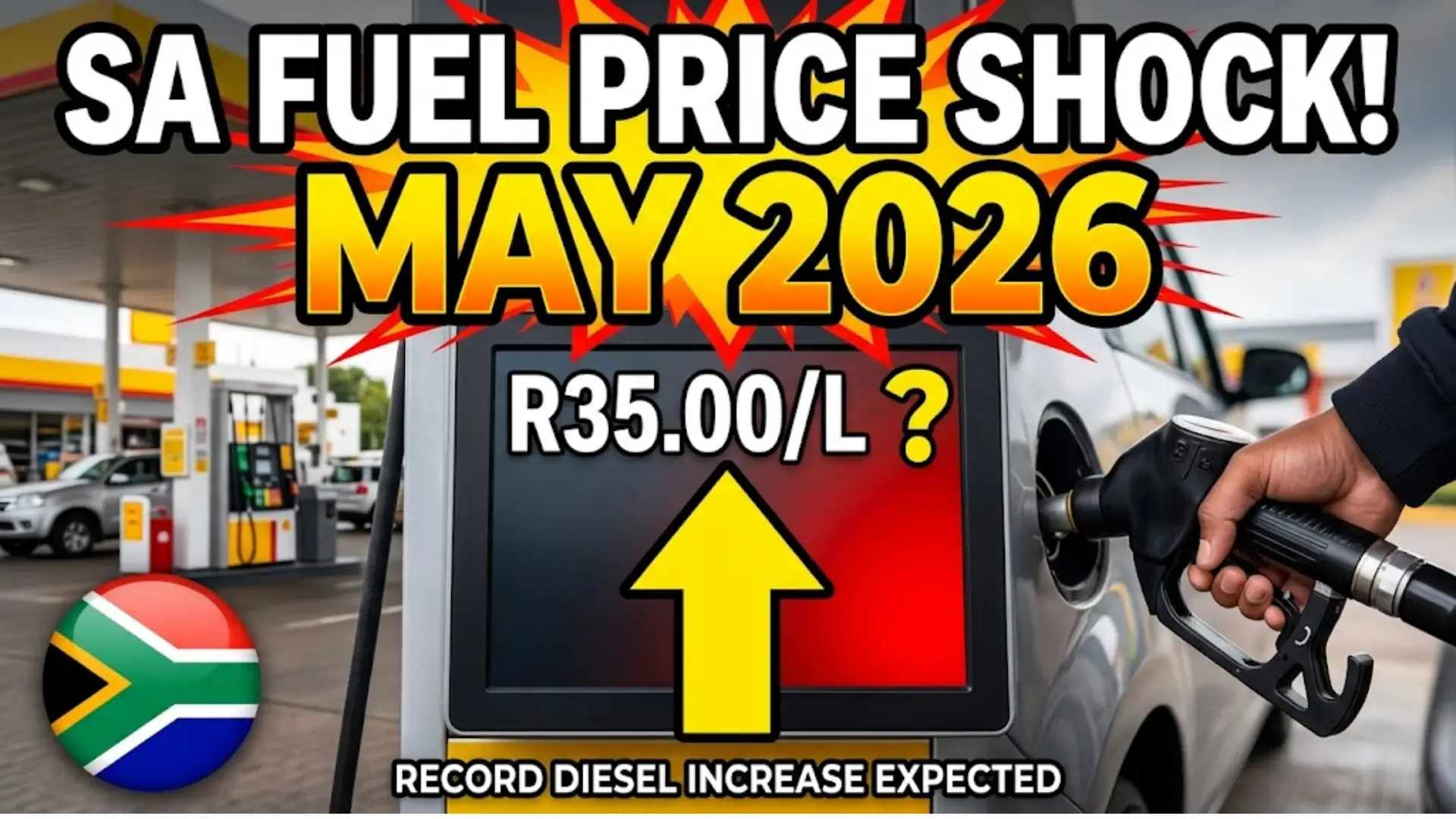
Fuel prices in South Africa are once again under pressure, and May 2026 is expected to bring another sharp increase. After already rising at the start of April, diesel prices could surge even further, putting strain on households, transport sectors, and businesses.
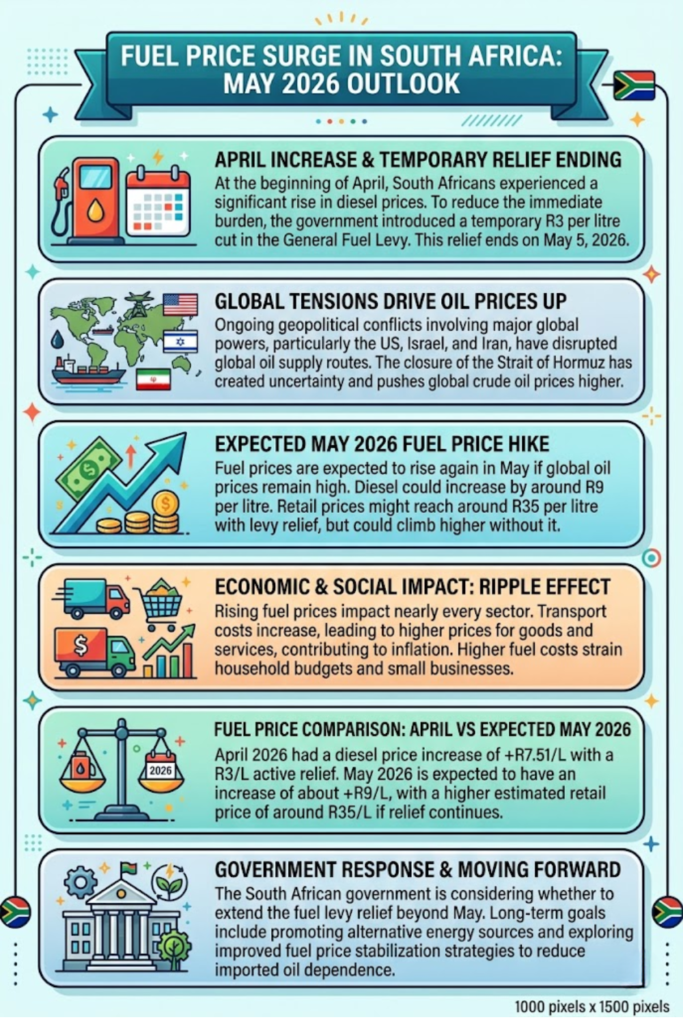
The situation is not just about local economics. It is strongly linked to global geopolitical tensions, particularly the ongoing conflict involving the United States, Israel, and Iran. This conflict has disrupted oil supply routes, pushing global crude oil prices higher and directly affecting South Africa’s fuel costs.
Recent Fuel Price Increase in April 2026
At the beginning of April, South Africans experienced a significant rise in diesel prices. In Gauteng, diesel increased by R7.51 per litre, pushing the wholesale price to R26.11 per litre.
To reduce the immediate burden on consumers, the government introduced a temporary relief measure by cutting the General Fuel Levy by R3 per litre. This relief was designed to provide short-term support during a period of rising global oil prices.
However, this relief is only temporary and is scheduled to end on May 5, 2026. This means consumers could soon face the full impact of rising fuel costs.
Key highlights from April increase:
- Diesel price rose by R7.51 per litre
- Wholesale price reached R26.11 per litre
- Government reduced fuel levy by R3 per litre temporarily
- Relief period runs from April 1 to May 5, 2026
You can also read: SRD SASSA Gov Za SC19 Application Mobile
Expected Fuel Price Hike in May 2026
According to estimates from the Central Energy Fund, fuel prices are expected to rise again in May if global oil prices remain at current levels. Diesel could increase by around R9 per litre, which would significantly impact transportation and daily expenses.
If the temporary fuel levy relief is extended, retail diesel prices may reach around R35 per litre. However, if the government does not extend the relief, prices could climb even higher, placing additional pressure on consumers.
This expected increase highlights how vulnerable South Africa is to global oil price movements and external political events.
Possible May 2026 scenarios:
- Diesel increase of approximately R9 per litre
- Prices may reach around R35 per litre with levy relief
- Higher prices likely if relief is not extended
- Increased cost burden on logistics and consumers
Global Factors Driving Fuel Price Surge
The primary driver behind rising fuel prices is the ongoing geopolitical conflict involving the United States, Israel, and Iran. In late February, military strikes triggered a chain reaction that disrupted global oil supply.
Iran responded by closing the Strait of Hormuz, one of the world’s most important oil shipping routes. This created uncertainty in global markets and reduced oil supply, pushing prices upward.
Brent crude oil prices surged to around $110 per barrel in early April before slightly easing to about $97. Despite this drop, prices remain high enough to impact fuel costs globally.
Major global factors include:
- Military conflict involving major global powers
- Closure of the Strait of Hormuz
- Disruption in global oil supply chains
- Increased uncertainty in energy markets
Impact on South African Economy and Consumers
Rising fuel prices affect nearly every sector of the economy. Transport costs increase, which leads to higher prices for goods and services. This creates a ripple effect that contributes to inflation.
For everyday consumers, higher fuel prices mean increased expenses for commuting, food, and basic services. Businesses, especially those in logistics and agriculture, also face rising operational costs.
This situation is particularly challenging for lower-income households, who are already dealing with economic pressures.
Economic and social impacts:
- Increased transportation and delivery costs
- Rising food and commodity prices
- Higher inflation rates
- Financial strain on households and small businesses
You can also read: Eskilz College AI Training for Business
Fuel Price Comparison: April vs Expected May 2026
| Category | April 2026 Value | Expected May 2026 Value |
|---|---|---|
| Diesel Price Increase | +R7.51 per litre | +R9 per litre (estimate) |
| Wholesale Price (Diesel) | R26.11 per litre | Likely above R30 per litre |
| Retail Price (Estimated) | Around R30 per litre | Around R35 per litre |
| Fuel Levy Relief | R3 per litre (active) | May expire after May 5 |
Government Response and Possible Actions
The South African government has already taken steps to soften the impact by reducing the fuel levy temporarily. However, the key question remains whether this relief will be extended beyond May 2026.
Extending the levy relief could help stabilize prices in the short term, but it may also affect government revenue. Policymakers must balance consumer relief with fiscal sustainability.
In the long term, South Africa may need to explore alternative energy sources and reduce its dependence on imported oil.
Possible government actions:
- Extend the fuel levy reduction
- Introduce additional subsidies or support measures
- Promote renewable energy solutions
- Improve fuel price stabilization strategies
Conclusion
Fuel prices in South Africa are set to rise again in May 2026, driven largely by global geopolitical tensions and disrupted oil supply. While temporary government relief has helped ease the burden, its expiration could lead to even higher prices.
You can also read: Sassa Elife Certification Glitches Guide
The situation highlights the strong connection between global events and local fuel costs. As uncertainty continues, both consumers and businesses must prepare for ongoing price volatility while the government considers further intervention strategies.