How to check Sars Illicit Trade Enforcement
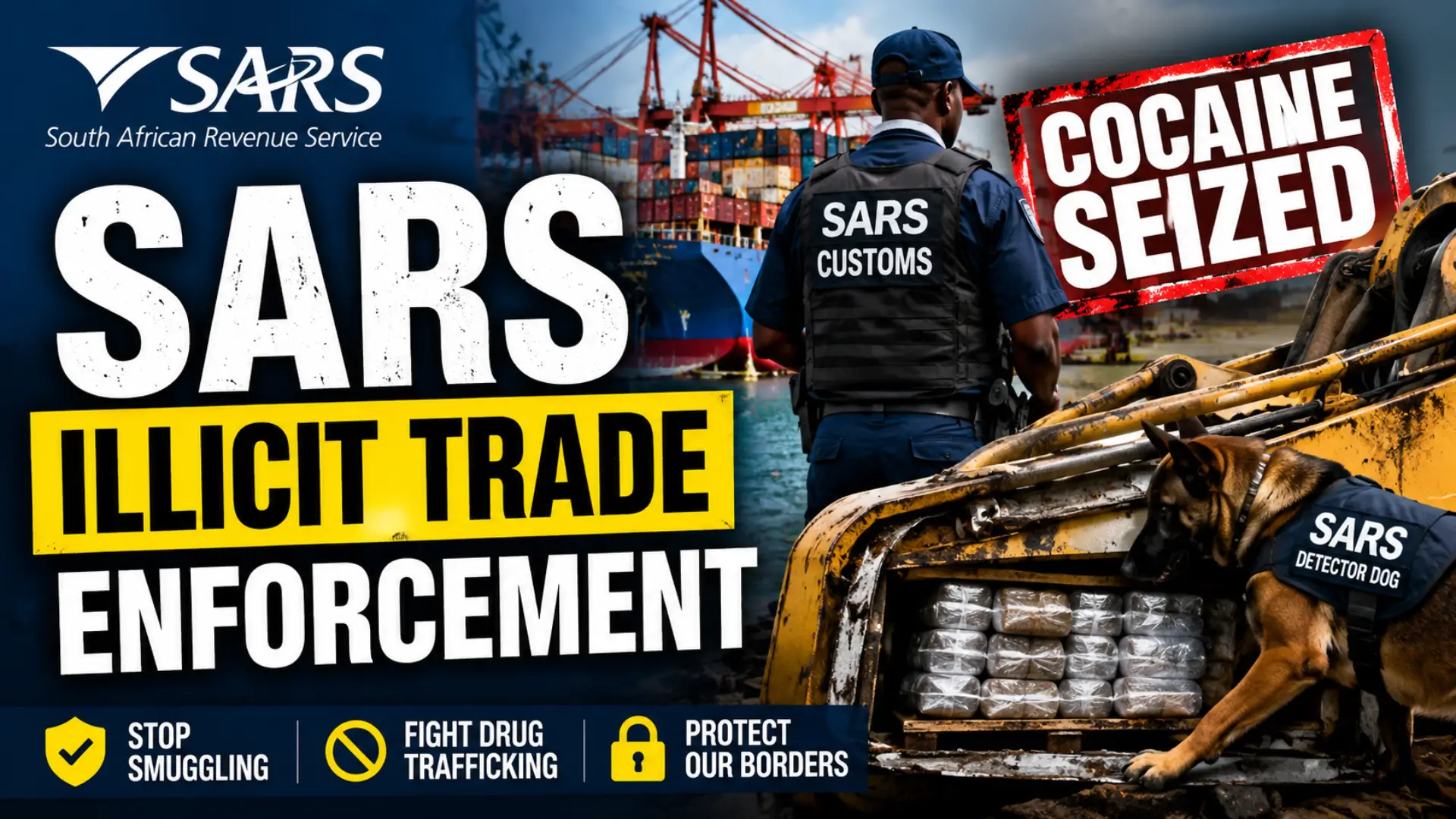
The South African Revenue Service (SARS) plays a critical role in protecting South Africa’s borders from illicit trade, drug trafficking, smuggling, and customs-related crimes. Through its Customs and Excise division, SARS conducts intelligence-led operations to identify high-risk shipments and prevent illegal goods from entering or leaving the country.
Recent interceptions at the Port of Durban, including the seizure of suspected cocaine hidden inside excavation machinery, have highlighted the effectiveness of SARS’ modernized customs enforcement system. Understanding how SARS illicit trade enforcement works can help businesses, importers, exporters, and the public stay informed about customs compliance and border security efforts.
What Is SARS Illicit Trade Enforcement?
SARS Illicit Trade Enforcement refers to the agency’s efforts to detect, investigate, and stop illegal trade activities that threaten South Africa’s economy and public safety. These operations target smuggling networks, counterfeit goods, tax evasion schemes, illegal imports, and drug trafficking operations.
You can also read: SASSA SRD Grant 2026 Check Eligibility
The enforcement program combines customs inspections, intelligence gathering, risk profiling, advanced technology, and cooperation with law enforcement agencies to identify suspicious shipments before they reach the market.
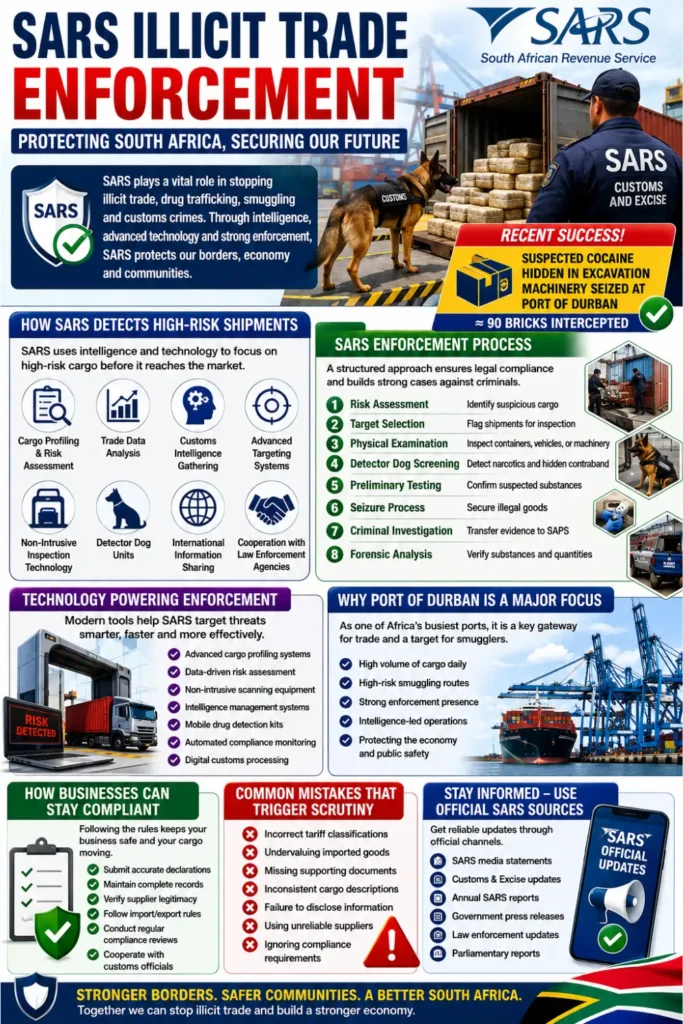
How SARS Detects High-Risk Shipments
SARS uses a risk-based approach to identify cargo that may require additional inspection. Rather than physically examining every shipment, the agency relies on intelligence and technology to focus resources on high-risk consignments.
Key detection methods include:
- Cargo profiling and risk assessment
- Trade data analysis
- Customs intelligence gathering
- Automated targeting systems
- Non-intrusive inspection technology
- Detector dog units
- International information sharing
- Cooperation with law enforcement agencies
These tools allow SARS to identify suspicious patterns and intervene before illegal goods enter South Africa.
Steps SARS Takes During Customs Enforcement Operations
When customs officials identify a potentially suspicious shipment, a structured inspection process begins. Each stage is designed to preserve evidence and ensure legal compliance during the investigation.
| Enforcement Stage | Purpose |
|---|---|
| Risk Assessment | Identify potentially suspicious cargo |
| Target Selection | Flag shipments for inspection |
| Physical Examination | Inspect containers, vehicles, or machinery |
| Detector Dog Screening | Detect narcotics and hidden contraband |
| Preliminary Testing | Confirm suspected substances |
| Seizure Process | Secure illegal goods |
| Criminal Investigation | Transfer evidence to SAPS |
| Forensic Analysis | Verify substances and quantities |
This systematic approach helps authorities build strong cases against organized criminal networks.
How to Check SARS Illicit Trade Enforcement Activities
Members of the public can follow SARS enforcement activities through official announcements, customs updates, and enforcement reports published by the agency. These updates provide information about major seizures, compliance operations, and border security initiatives.
The most reliable ways to monitor SARS enforcement activities include:
- Official SARS media statements
- SARS Customs and Excise announcements
- Annual SARS reports
- Government press releases
- Law enforcement updates
- Parliamentary reports on customs enforcement
Official sources provide verified information and help avoid misinformation circulating on social media.
The Role of Customs and Excise in Combating Illicit Trade
The Customs and Excise division serves as the frontline defense against illegal imports and exports. Officers inspect cargo, verify documentation, assess duties and taxes, and identify shipments that may be linked to criminal activity.
Their work protects legitimate businesses from unfair competition while helping the government collect revenue that might otherwise be lost through smuggling and tax evasion.
Technology Used by SARS to Fight Smuggling
Modern customs enforcement relies heavily on advanced technology. SARS has invested in digital systems that improve the speed and accuracy of inspections while reducing disruption for compliant traders.
Some of the technologies currently supporting enforcement efforts include:
- Advanced cargo profiling systems
- Data-driven risk assessment tools
- Digital customs processing
- Non-intrusive scanning equipment
- Intelligence management systems
- Mobile drug detection kits
- Automated compliance monitoring
These technologies enable SARS to target suspicious cargo more effectively while facilitating legitimate trade.
You can also read: R5000 SASSA Pension Proposal Brings
Why the Port of Durban Is a Major Enforcement Focus
The Port of Durban is one of Africa’s busiest shipping hubs and serves as a key gateway for international trade. Because of its high cargo volumes, it is also a target for organized criminal groups attempting to smuggle illegal goods into South Africa.
SARS maintains extensive enforcement operations at the port to monitor imports and exports, identify high-risk consignments, and intercept contraband before it reaches local markets.
Recent Drug Seizures and Enforcement Successes
Recent customs operations have demonstrated SARS’ growing capability to combat international drug trafficking. In one major operation, customs officials intercepted a shipment of suspected cocaine concealed inside heavy-duty excavation equipment imported through the Port of Durban.
Detector dogs alerted officials to hidden parcels within the machinery, leading to the discovery of approximately 90 bricks of a substance believed to be cocaine. The seizure highlighted the effectiveness of intelligence-led targeting and inter-agency cooperation.
How Businesses Can Avoid Customs Compliance Problems
Importers and exporters should take proactive steps to ensure compliance with customs regulations. Proper documentation and transparent business practices reduce the likelihood of delays, penalties, or inspections.
Best practices include:
- Submit accurate customs declarations
- Maintain complete shipping records
- Verify supplier legitimacy
- Conduct regular compliance reviews
- Follow import and export regulations
- Cooperate with customs officials
- Monitor regulatory changes
Strong compliance programs help businesses move goods efficiently while reducing enforcement risks.
Common Mistakes That Trigger Customs Scrutiny
Certain compliance errors can increase the likelihood of customs inspections or investigations. Many of these issues arise from incomplete documentation or inaccurate declarations.
Common mistakes include:
- Incorrect tariff classifications
- Undervaluing imported goods
- Missing supporting documents
- Inconsistent cargo descriptions
- Failure to disclose required information
- Using unreliable suppliers
- Ignoring customs compliance requirements
Avoiding these mistakes can help businesses maintain smoother customs clearance processes.
The Importance of Intelligence-Led Enforcement
Traditional customs inspections alone are no longer sufficient to combat modern smuggling networks. Criminal organizations often use sophisticated concealment methods and complex international supply chains.
Intelligence-led enforcement enables SARS to identify threats before goods reach the border. By analyzing trade data, shipping patterns, and risk indicators, officials can focus resources where they are most needed and improve enforcement outcomes.
Future of SARS Illicit Trade Enforcement
SARS continues to strengthen its customs enforcement capabilities through modernization, technology investments, and enhanced cooperation with domestic and international partners. These improvements are expected to increase the agency’s ability to identify high-risk cargo and disrupt organized criminal operations.
As global trade continues to expand, intelligence-driven customs enforcement will remain essential for protecting South Africa’s economy, securing borders, and supporting legitimate international trade.
You can also read: Unlawful Procurement Nsfas Tender
Conclusion
SARS Illicit Trade Enforcement is a vital component of South Africa’s border security and economic protection strategy. Through advanced technology, intelligence-led operations, cargo profiling, detector dog units, and collaboration with law enforcement agencies, SARS continues to combat smuggling, drug trafficking, and illegal trade activities.
By understanding how these enforcement mechanisms work and following official SARS updates, businesses and individuals can stay informed about customs operations while supporting lawful and compliant trade practices across South Africa.