NSFAS 2027 Funding Apply Date Release Check Fully Details Step by Step
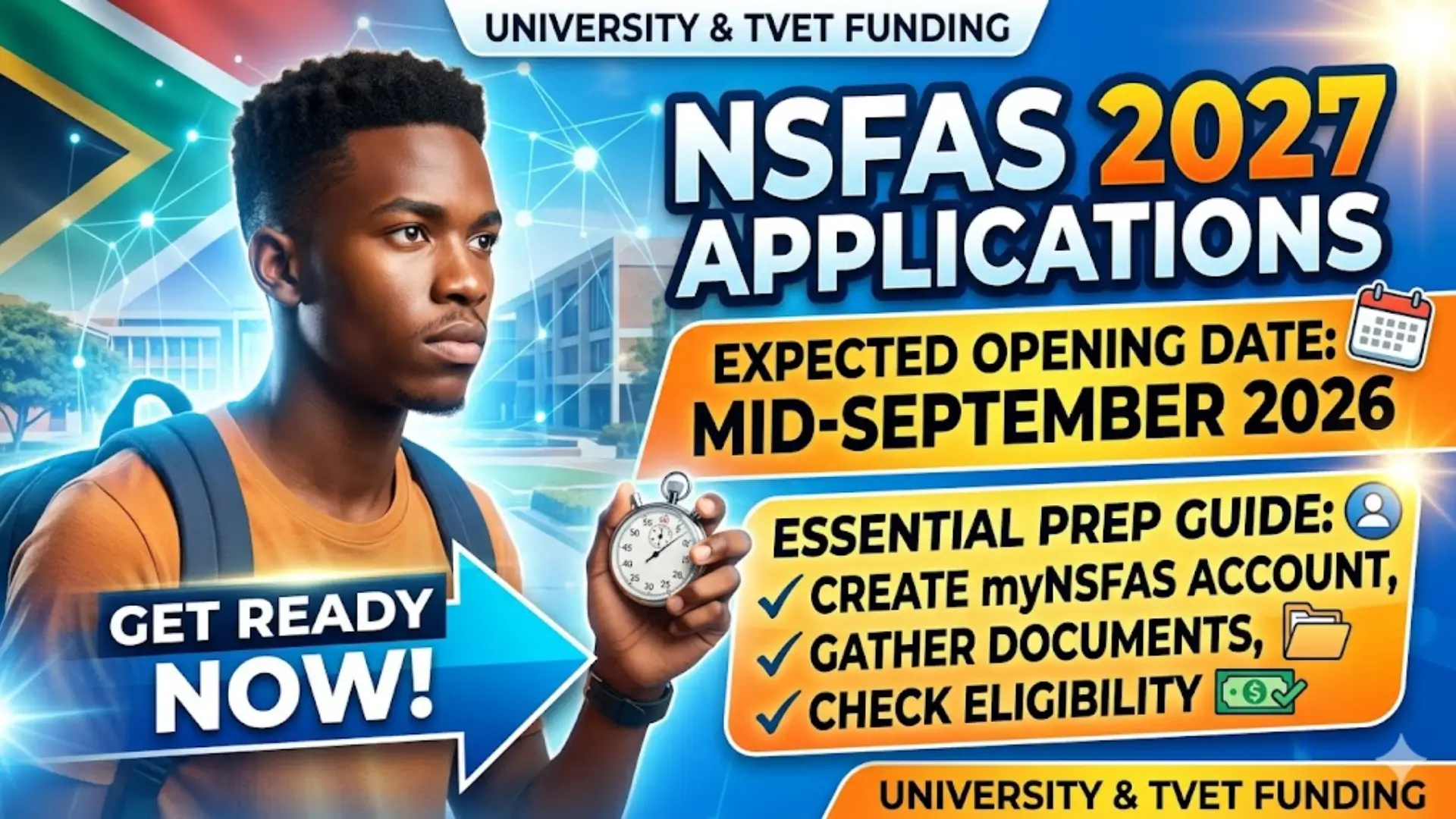
The National Student Financial Aid Scheme NSFAS is one of the most important funding programs for South African students, and the same expectations apply for the 2027 academic cycle. Although the official opening date has not yet been announced, past trends clearly show how the application system usually works.
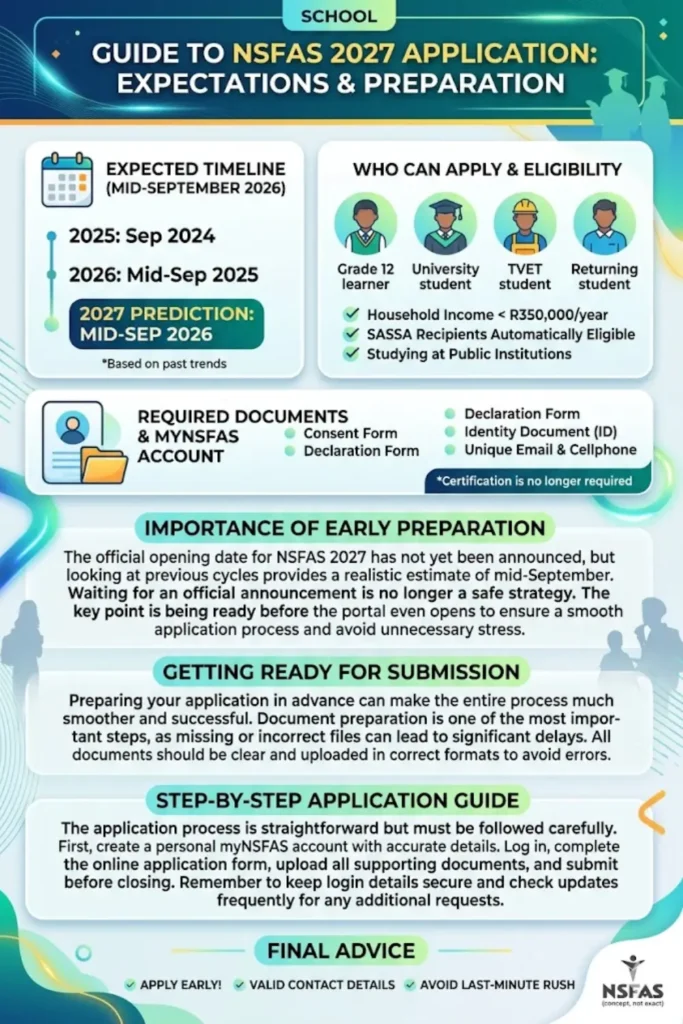
Every year, many students wait until the last moment to prepare their applications. This leads to unnecessary stress, system errors, and missed opportunities. Understanding the expected timeline and preparation steps early can make the entire process much smoother and more successful. The key point is simple: NSFAS 2027 is not only about applying on time, but about being ready before the portal even opens.
Expected NSFAS 2027 Application Opening Date
NSFAS has not officially confirmed the 2027 application opening date yet. However, looking at previous cycles provides a strong and realistic estimate of what students should expect.
In recent years, application windows have followed a clear mid-September pattern. This helps students prepare mentally and practically for the upcoming cycle.
- 2025 applications opened around 20 September 2024
- 2026 applications opened between 15–16 September 2025
- 2027 is therefore expected around mid-September 2026
Even though this is not officially confirmed, it remains the strongest prediction based on past behavior. The important thing is not the exact date, but understanding that applications usually open in September and require immediate action once live.
You can also read: Status Check SRD R350 Grant Check
Why the September Pattern Matters
The shift toward September openings has created a shorter and more structured application cycle. In some cases, closing dates have also become earlier than expected, which increases pressure on students. This pattern is important because it changes how students should prepare. Waiting for official announcements is no longer a safe strategy.
- Application windows may close earlier than expected
- High traffic leads to portal delays and errors
- Late preparation increases rejection risk
Students who understand this pattern are usually more successful because they prepare in advance rather than reacting at the last minute. The safest mindset is to be ready before the announcement, not after it.
Who Should Apply for NSFAS 2027
The funding program is mainly designed for students who need financial assistance for public education. This includes both new and continuing students under specific conditions.
The most relevant groups include:
- Grade 12 learners completing school in 2026
- First-time university students entering in 2027
- TVET college applicants starting new qualifications
- Returning students who still require funding support
Continuing students are often automatically considered for funding if they meet academic requirements. However, new applicants must complete the full process. Understanding your category early helps avoid confusion during application time.
Eligibility Overview
Eligibility rules remain an important part of the funding decision process. The scheme primarily supports low- and middle-income households.
Key eligibility points include:
- Household income should generally not exceed R350,000 per year
- Students with disabilities may qualify up to R600,000
- SASSA grant recipients are automatically eligible
- Applicants must study at public universities or TVET colleges
These rules are designed to ensure that financial support reaches students who need it most. Meeting eligibility requirements is the first step before even starting the application process.
myNSFAS Account Setup Requirements
Before applying, every student must create a personal account on the myNSFAS system. This is where all applications, updates, and communication take place. Proper setup is critical because many delays come from incorrect account details.
Important setup requirements:
- A valid personal email address
- A working cellphone number (unique to each applicant)
- Accurate ID information matching Home Affairs records
- Secure login details stored safely
Students should avoid sharing accounts or using someone else’s contact information, as this often leads to application failure. A correctly set up account ensures smooth communication throughout the process.
You can also read: South Africa SASSA SRD Top Searches
Required Documents for NSFAS 2027
Document preparation is one of the most important steps in the application process. Missing or incorrect documents can delay approval or lead to rejection.
Applicants are usually required to submit:
- Consent Form
- Declaration Form
- Disability Annexure Form (if applicable)
- Proof of guardianship or vulnerability documents (if needed)
A major improvement is that documents no longer need to be certified, making the process easier. However, accuracy and clarity are still essential.
Key Document Preparation Tips
- Ensure documents are clear and readable
- Upload correct file formats
- Double-check names and ID numbers
- Avoid blurry or incomplete uploads
Proper preparation reduces delays and increases approval chances.
Common Mistakes Students Make
Many applications are delayed not because of eligibility issues, but because of avoidable errors. These mistakes are repeated every year.
Common issues include:
- Using incorrect phone numbers or emails
- Submitting incomplete applications
- Uploading wrong or outdated documents
- ID mismatches with official records
- Forgetting login details after registration
These mistakes can easily be avoided with early preparation and careful checking. Students who take time to verify their details usually experience smoother approval outcomes.
Step-by-Step NSFAS 2027 Application Process
The application process is straightforward but must be followed carefully to avoid errors.
Step-by-step guide:
- Create a myNSFAS account using your personal details
- Log in and complete the online application form
- Upload all required supporting documents
- Submit the application before the closing date
- Track your application status regularly
After submission, students must continue checking updates on their account. NSFAS often requests additional information or corrections.
Important reminders:
- Do not wait until the last day to apply
- Ensure all documents are uploaded correctly
- Keep login details secure
- Check updates frequently
Expected Timeline Overview Table
| Stage | Expected Period | Key Activity |
|---|---|---|
| Preparation Phase | Before September 2026 | Document gathering and account setup |
| Application Opening | Mid-September 2026 (Expected) | Online submissions begin |
| Application Window | Sep–Nov 2026 (Estimated) | Applications processed |
| Closing Period | Nov–Dec 2026 (Possible) | Final submissions accepted |
| Review Phase | After submission | Status updates and approvals |
This timeline helps students understand when to prepare and when to act. Being aware of each stage reduces confusion and missed deadlines.
You can also read: SASSA Old-Age Grants May 2026
Conclusion
Success in the NSFAS application process depends more on preparation than timing. Students who prepare early usually avoid stress, errors, and last-minute issues. The most important lesson is to stay ready before the portal opens. Waiting for official announcements often results in unnecessary pressure and rushed applications.
Key final tips:
- Prepare documents early
- Keep contact details active and correct
- Follow official updates only
- Apply as soon as the portal opens
- Avoid last-minute submissions
By following these steps, students can significantly improve their chances of a smooth and successful application process for NSFAS 2027.