South Africa SASSA SRD Top Searches and Check Your SRD Status Effortlessly
The Social Relief of Distress (SRD) grant has become a critical support system for millions of South Africans facing unemployment and financial hardship. With the R370 monthly payment extended until March 2027, interest in updates, eligibility, and payment tracking continues to grow rapidly.
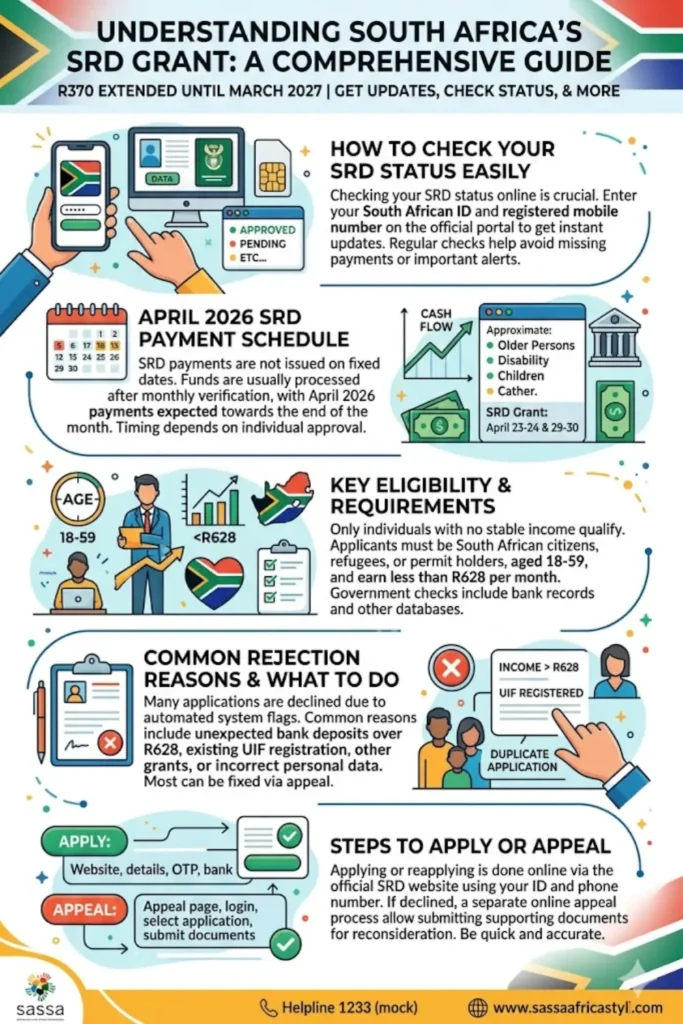
This article explains everything in a simple and clear way, helping you stay informed and take the right steps without confusion. People frequently search for reliable and easy ways to check their status, understand approval decisions, and avoid unnecessary delays.
Why the SRD Grant Is Constantly Trending in South Africa
The SRD grant is not just financial aid it is a lifeline for many households. This is why it consistently ranks among the most searched topics online.
Many applicants actively look for updates due to delays, verification issues, and uncertainty around approvals. The process involves multiple checks, which often leads to confusion, especially for first-time applicants. Younger applicants, particularly those under 35, make up a large portion of users, increasing digital search activity.
Key reasons behind high search volume include:
- Delays after “application complete” status
- Confusion about payment dates and cycles
- Fear of rejection or sudden decline
- Need for confirmation about grant extension
- Difficulty understanding eligibility rules
These concerns reflect real-life financial struggles, making accurate and timely information essential.
You can also read: Status Check SRD Sassa & Check New SCAMS
How to Check Your SRD Status Easily
Checking your SRD status is one of the most important steps to ensure you receive your payment without issues. The process is simple if you follow the correct steps.
You need your South African ID number and the phone number you used during registration. Once entered on the official SRD portal, your application status will appear instantly.
Here’s how you can check your status:
- Visit the official SRD status check website
- Enter your 13-digit ID number
- Provide your registered mobile number
- Click submit to view your status
Understanding your status is equally important:
- Approved – Your application is successful
- Pending – Verification is still in progress
- Declined – Your application did not meet criteria
- Payment Approved – Funds are being processed
Alternative methods for checking status:
- WhatsApp service for quick updates
- SMS-based inquiry system
- Notifications via registered mobile number
Regular checking helps you avoid missing important updates or payment alerts.
April 2026 SRD Payment Schedule Explained
Payment dates are one of the most searched topics because beneficiaries rely heavily on timely disbursements. Unlike other social grants, SRD payments are not issued on fixed dates for everyone.
Payments are released in phases after verification is completed. For April 2026, SRD payments are expected toward the end of the month.
Payment Timeline Overview
| Grant Type | Payment Date Range |
|---|---|
| Older Persons Grant | April 2, 2026 |
| Disability Grant | April 7, 2026 |
| Children’s Grants | April 8, 2026 |
| SRD Grant | April 23–24 & 29–30 |
Important payment notes:
- SRD payments are processed after monthly verification
- Funds are usually deposited after the 20th of each month
- Payment timing depends on individual approval status
- Bank account details must match applicant information
Delays often happen due to incorrect banking details or failed verification checks.
Who Qualifies for the SRD Grant?
Eligibility is a major concern for applicants, as many are unsure whether they meet the criteria. The SRD grant targets individuals with no stable income.
To qualify, applicants must meet strict conditions set by authorities. These rules ensure the grant reaches only those who genuinely need support.
Basic eligibility requirements:
- Age between 18 and 59 years
- Must be unemployed
- Monthly income must be below R628
- Must be a South African citizen, refugee, or permit holder
Disqualifying factors include:
- Receiving UIF benefits
- Already getting another government grant
- Receiving NSFAS funding
- Having regular income above the threshold
Additional verification measures:
- Bank account checks for income patterns
- Cross-checking with government databases
- Biometric verification in certain cases
Meeting all criteria increases your chances of approval significantly.
Common Reasons for SRD Application Declines
Application rejections are common and often misunderstood. Many applicants assume a decline means permanent disqualification, but this is not always true.
Most declines happen due to automated system checks that flag financial activity or duplicate records. Understanding the reason helps you fix the issue quickly.
Top reasons for rejection:
- Bank deposits exceeding R628
- UIF registration or contributions
- Duplicate applications
- Existing government grant records
- Incorrect personal information
- Important facts:
- Once-off payments can sometimes trigger false income flags
- Many declined applications are eligible for appeal
- A large percentage of rejections are successfully reversed
Knowing the exact reason is the first step toward correcting your application.
You can also read: Status Check SRD Sassa & Check New SCAMS
How to Appeal a Declined SRD Application
If your application is declined, you still have a chance to correct it through the appeal process. This step is crucial and should be done carefully.
Appeals are submitted online through the SRD system. You may need to provide additional proof to support your case.
Steps to appeal:
- Visit the official SRD appeals page
- Log in using your ID and phone number
- Select the declined application
- Submit supporting documents
Documents that may help:
- Bank statements
- Proof of unemployment
- Identity verification records
Important tips:
- Submit your appeal as soon as possible
- Ensure all information is accurate
- Double-check uploaded documents
A well-prepared appeal can significantly improve your chances of approval.
How to Apply or Reapply for the SRD Grant
Applying for the SRD grant is a straightforward process, but accuracy is essential to avoid delays. Whether you are applying for the first time or reapplying, the steps remain simple.
The application is mainly completed online, making it accessible for most users.
Application steps:
- Visit the official SRD website
- Click on “Apply Online”
- Enter your ID number and mobile number
- Verify with OTP (one-time password)
- Provide banking details
Additional options:
- Cash Send method for those without bank accounts
- Retail collection points for payments
- Online chat support for assistance
Processing usually takes a few days, after which you can track your application status.
Solving Common SRD Problems and Avoiding Delays
Many applicants face recurring issues such as fraud concerns, system errors, or blocked payments. Understanding these problems can help you avoid them.
SASSA continuously improves its system to reduce fraud and ensure fair distribution. However, users must also take responsibility for keeping their information updated.
Common challenges:
- Incorrect banking details
- Outdated personal information
- System verification delays
- Fraudulent websites and scams
How to avoid problems:
- Always use official platforms
- Update your details regularly
- Never share personal information with unknown sources
- Contact the official helpline for assistance
Quick support options:
- Helpline for urgent queries
- Online support portal
- SMS and WhatsApp services
Staying proactive ensures smooth processing and timely payments.
You can also read: SRD Sassa Status Check Appeal
Final Thoughts
The SRD grant continues to play a vital role in supporting millions of South Africans. With its extension until 2027, staying informed about status checks, payments, and eligibility is more important than ever.
By following the correct steps, checking your status regularly, and keeping your information updated, you can avoid most common issues. Clear understanding and timely action are the keys to ensuring uninterrupted support.