May 2026 Fuel Price Forecast South Africa Full Details

South Africa is preparing for another increase in fuel prices in May 2026. Although earlier predictions suggested even sharper hikes, the latest data shows that prices are still set to rise noticeably. The changes are mainly driven by global oil market conditions and ongoing geopolitical tensions.
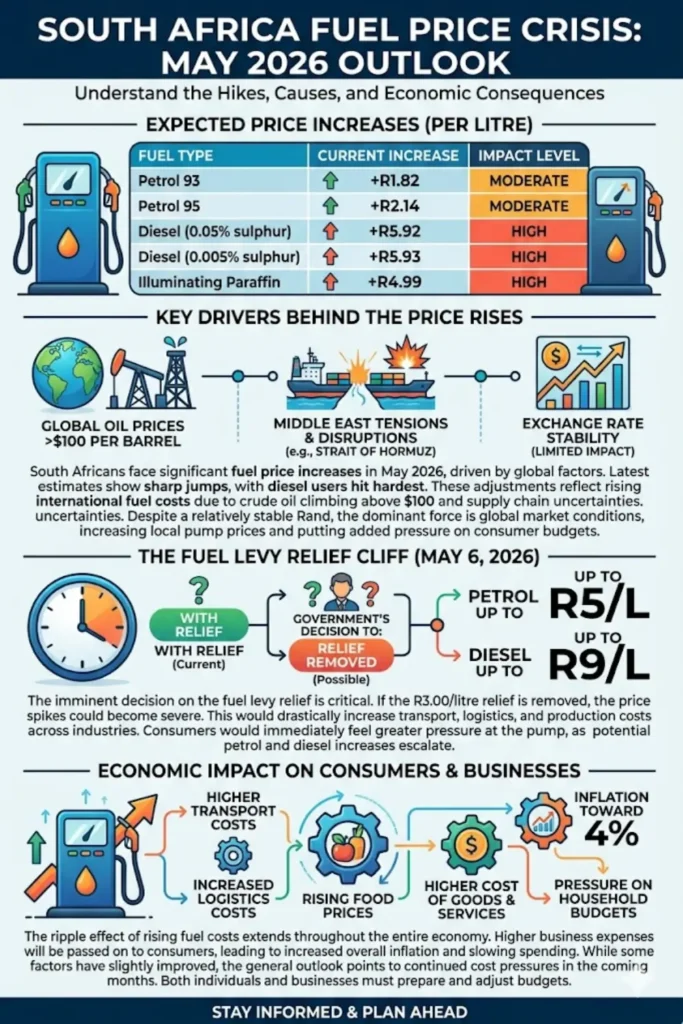
For consumers, this means higher transport costs, increased prices for goods, and added pressure on household budgets. While some factors have improved slightly, the overall outlook still points toward rising fuel expenses in the coming months.
Latest Fuel Price Projections for May 2026
The most recent estimates based on late-April data indicate moderate to significant increases across all fuel types. These adjustments reflect the difference between local pump prices and international fuel costs.
Expected Increases
- Petrol 93: Increase of around R1.82 per litre
- Petrol 95: Increase of about R2.14 per litre
- Diesel (0.05% sulphur): Increase of roughly R5.92 per litre
- Diesel (0.005% sulphur): Increase of about R5.93 per litre
- Illuminating paraffin: Increase near R4.99 per litre
These figures show that diesel users will face the largest cost increases, which could have wider economic consequences due to its role in transportation and logistics.
You can also read: Eff Malema Defamation Claim Mchunu
Fuel Price Summary Table
| Fuel Type | Current Increase (R/litre) | Impact Level |
|---|---|---|
| Petrol 93 | +1.82 | Moderate |
| Petrol 95 | +2.14 | Moderate |
| Diesel (0.05% sulphur) | +5.92 | High |
| Diesel (0.005% sulphur) | +5.93 | High |
| Illuminating Paraffin | +4.99 | High |
Key Drivers Behind the Fuel Price Increase
The rise in fuel prices is not random. It is influenced by several global and local factors working together.
Main Causes
- Global oil prices climbing above $100 per barrel
- Supply disruptions in key oil routes
- Increased shipping and insurance costs
- Strong demand in international energy markets
The largest contributor is the surge in international petroleum prices, which accounts for nearly all of the under-recovery in South Africa’s fuel pricing system.
Role of Middle East Tensions
Geopolitical instability in the Middle East continues to play a major role. The Strait of Hormuz, a critical oil transit route, has experienced disruptions. This has created uncertainty in global supply chains, pushing oil prices higher.
Even small disruptions in this region can affect global markets because a significant portion of the world’s oil supply passes through this route.
Exchange Rate Impact: Limited but Notable
The South African rand has shown some stability despite global uncertainty. It has been trading within a relatively steady range against the US dollar.
Currency Influence
- Exchange rate contributes about R1 per litre to fuel price
- Stability has helped prevent even larger increases
- Oil prices remain the dominant factor
While currency performance does affect fuel costs, its impact is much smaller compared to global oil price movements.
Fuel Levy Relief: A Crucial Decision Point
One of the most important factors influencing May’s final fuel prices is the government’s decision on the fuel levy relief.
Current Situation
- R3.00 per litre relief introduced earlier
- Scheduled to end on 6 May 2026
- Government still reviewing whether to extend it
If this relief is removed, the price increases could become much more severe.
Possible Outcomes
- Petrol prices could rise up to R5 per litre
- Diesel prices could increase up to R9 per litre
- Government may introduce alternative measures to balance the budget
The decision will significantly affect how much consumers ultimately pay at the pump.
Economic Impact on Consumers and Businesses
Rising fuel prices affect more than just drivers. They have a ripple effect across the entire economy.
Direct Effects
- Higher transport and commuting costs
- Increased logistics expenses for businesses
- Rising agricultural and production costs
Indirect Effects
- Increase in food prices
- Higher cost of goods and services
- Pressure on household budgets
Economists expect inflation to rise toward 4% as fuel costs feed into the broader economy. This could slow down spending and impact economic growth.
Outlook: What to Expect in the Coming Months
The outlook for fuel prices remains uncertain but leans toward continued pressure. Much will depend on global events and government decisions.
Key Factors to Watch
- Movement in global oil prices
- Stability in the Middle East
- Government policy on fuel levies
- Exchange rate fluctuations
Even though under-recoveries have improved compared to earlier in April, they are still significant enough to justify price increases.
You can also read: SASSA Number is Ninked to Another Applicant
Conclusion
South Africans should be prepared for higher fuel prices in May 2026. While the increases may not be as extreme as initially feared, they are still substantial enough to impact daily life and the broader economy.
The final outcome will depend largely on global oil trends and the government’s stance on fuel levy relief. Until then, both consumers and businesses may need to adjust their budgets and plan for continued cost pressures.