June 30th Shutdown Immigration Protest Details Step by Step
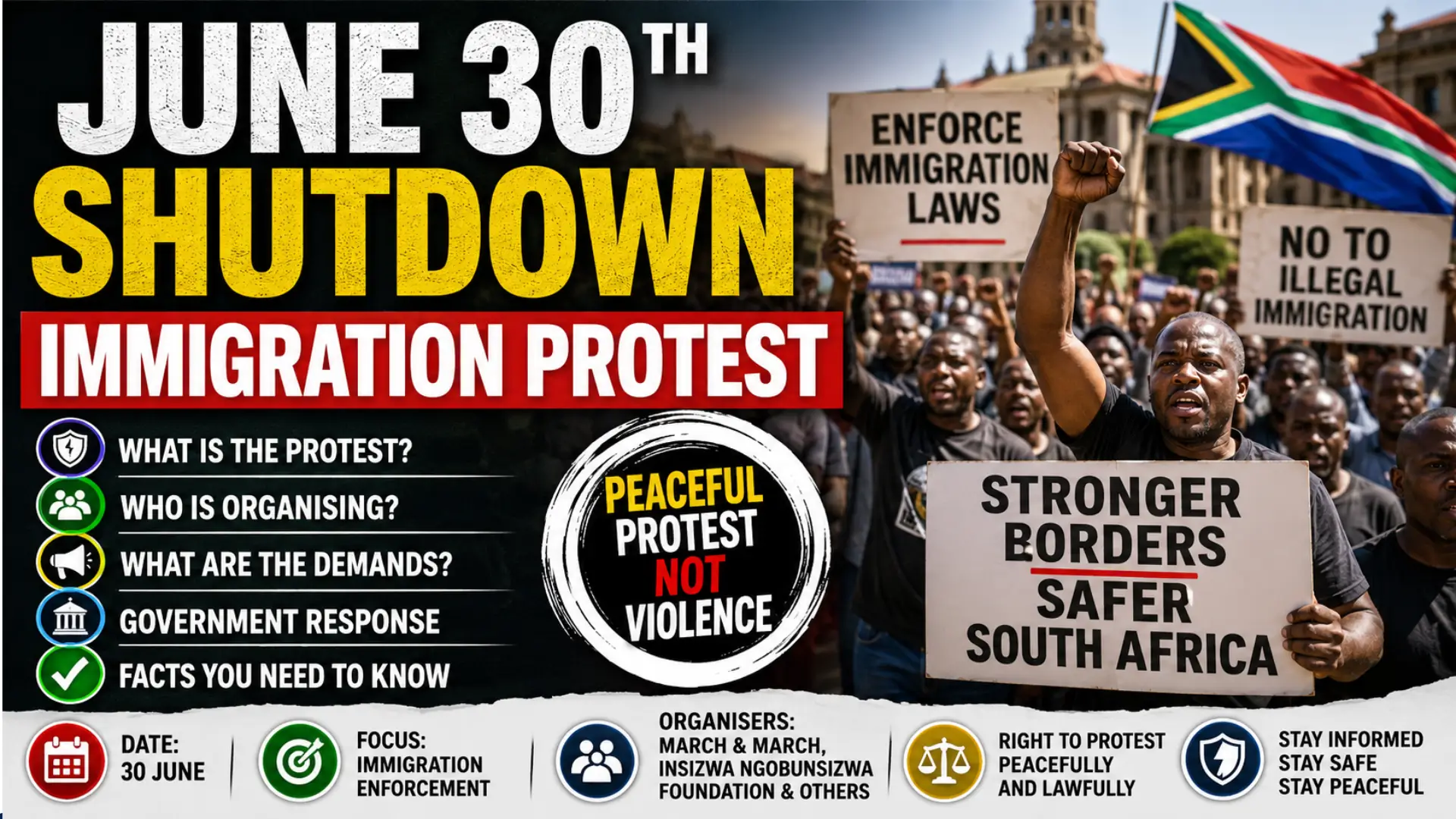
The planned June 30th Shutdown Immigration Protest has become one of the most discussed public demonstrations in South Africa. Organised by civic groups and community activists, the protest aims to draw attention to concerns surrounding undocumented immigration, border control, and the enforcement of existing immigration laws.
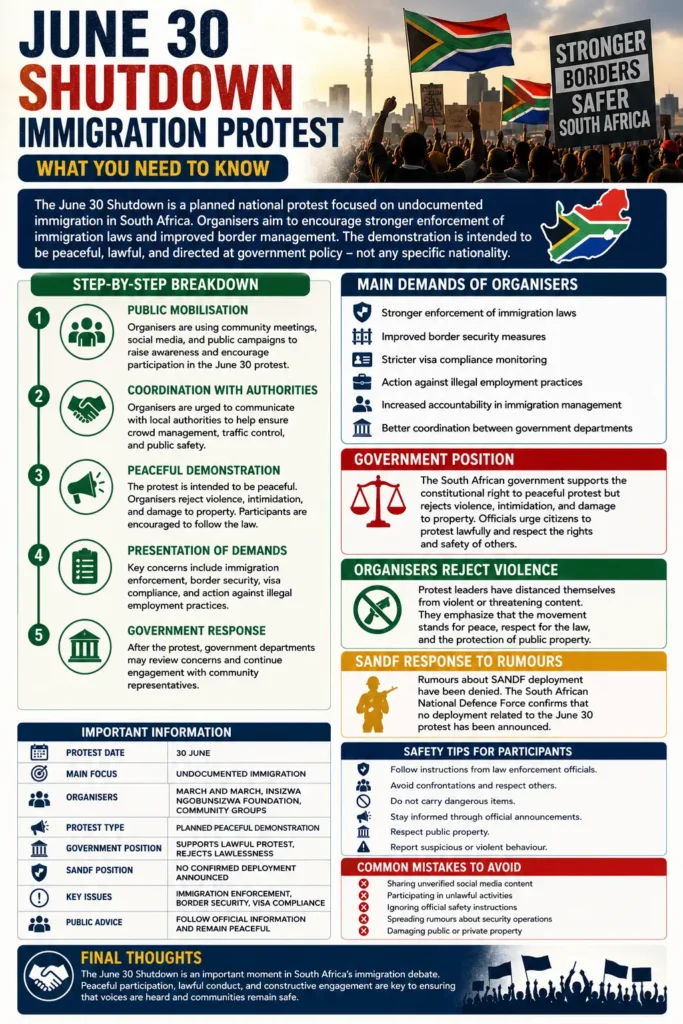
As public interest grows, many South Africans are seeking accurate information about what the protest involves, who is organizing it, what the demands are, and how authorities are responding. This guide explains the June 30 shutdown step by step, providing clear and reliable information while highlighting important legal and safety considerations.
What Is the June 30th Shutdown Protest?
The June 30 shutdown is a planned national protest focused on undocumented immigration in South Africa. Organisers say the demonstration is intended to encourage stronger enforcement of immigration laws and improved border management.
You can also read: South Africa Diesel Price Drop in June
Several civic groups, including March and March and the Insizwa Ngobunsizwa Foundation, have publicly supported the protest. According to organisers, the demonstration is aimed at government policy and immigration enforcement rather than targeting any specific nationality or community.
Why Is the Protest Being Organised?
Supporters of the shutdown believe undocumented immigration has become a major public concern. They argue that stronger enforcement measures are needed to address issues related to employment, public services, and border security.
Government officials, however, maintain that immigration enforcement operations are already taking place and have urged citizens to exercise their constitutional rights peacefully while respecting the law and the rights of others.
Step-by-Step Breakdown of the June 30 Shutdown
Understanding the process helps explain how the planned demonstration is expected to unfold.
Step 1: Public Mobilisation
Organisers have been using community meetings, social media platforms, and public campaigns to encourage participation in the protest.
The goal of this phase is to raise awareness about immigration-related concerns and inform supporters about planned activities on June 30.
Step 2: Coordination With Authorities
Government officials have encouraged organisers to communicate with local authorities and law enforcement agencies before the protest.
This coordination helps authorities prepare for crowd management, traffic control, public safety measures, and the protection of infrastructure.
Step 3: Peaceful Demonstration Activities
Organisers have repeatedly stated that the shutdown is intended to be peaceful. They have publicly rejected online content that promotes violence, intimidation, or unlawful actions.
Participants are expected to engage in lawful demonstrations, public gatherings, and marches while complying with South African laws governing protests.
Step 4: Presentation of Demands
During the protest, organisers are expected to highlight several concerns relating to immigration policy and law enforcement.
Key issues include border control, undocumented migration, visa enforcement, and action against employers who hire undocumented workers.
Step 5: Government Response
Following the demonstration, government departments may review concerns raised by protest groups and continue discussions with community representatives.
Officials have indicated that immigration enforcement remains an ongoing priority while emphasizing that public order and constitutional rights must be protected.
Main Demands of Protest Organisers
Organisers have outlined several concerns they believe require greater government attention.
- Stronger enforcement of immigration laws
- Improved border security measures
- Stricter visa compliance monitoring
- Action against illegal employment practices
- Increased accountability in immigration management
- Better coordination between government departments
These demands form the central message of the planned June 30 shutdown.
Government Position on the Protest
The South African government has stated that peaceful protest is a constitutional right. However, officials have stressed that demonstrations must remain lawful and should not involve violence, intimidation, or damage to property.
Ministers from security and justice departments have held discussions regarding the planned protest and have called for calm, responsible participation from all parties involved.
Organisers Reject Violence and Incitement
Recent social media posts linked to the shutdown generated concern after featuring threatening messages and references to weapons. Protest leaders have publicly distanced themselves from such content, stating that violence, destruction of infrastructure, and intimidation do not represent the objectives of the movement.
Organisers have emphasized that:
- The protest should remain peaceful
- Public infrastructure must not be damaged
- Participants should follow the law
- False information should not be shared
- Violence is not part of the campaign
These statements were made to reassure the public and reduce tensions ahead of the planned demonstration.
You can also read: SRD SASSA Payment Dates June 2026
SANDF Response to Deployment Rumours
Social media rumours recently claimed that the South African National Defence Force (SANDF) would be deployed before the June 30 protest.
Military officials have denied these claims and described the reports as false and misleading. According to the SANDF, no official deployment related to the demonstration has been announced.
Important Information for South Africans
Citizens who plan to participate in or observe the protest should stay informed through credible sources and avoid relying on unverified social media claims. Authorities have encouraged the public to respect the law, remain calm, and report any attempts to incite violence or spread misinformation.
| Topic | Details |
|---|---|
| Protest Date | 30 June |
| Main Focus | Undocumented immigration concerns |
| Organisers | March and March, Insizwa Ngobunsizwa Foundation, community groups |
| Protest Type | Planned peaceful demonstration |
| Government Position | Supports lawful protest, rejects lawlessness |
| SANDF Position | No confirmed deployment announced |
| Key Issues | Immigration enforcement, border security, visa compliance |
| Public Advice | Follow official information and remain peaceful |
Safety Tips for Participants
Anyone attending public demonstrations should prioritize safety and legal compliance.
- Follow instructions from law enforcement officials
- Avoid confrontations with others
- Do not carry dangerous items
- Stay informed through official announcements
- Respect public property
- Report suspicious or violent behaviour
Responsible participation helps ensure that demonstrations remain safe and lawful.
Common Mistakes to Avoid
Many problems during public protests arise from misinformation or poor preparation.
- Sharing unverified social media content
- Participating in unlawful activities
- Ignoring official safety instructions
- Spreading rumours about security operations
- Damaging public or private property
Avoiding these mistakes helps reduce tensions and protects both participants and the wider community.
Latest Update on the June 30 Shutdown
As the protest date approaches, organisers continue to state that the demonstration will proceed as planned. Government officials remain engaged with protest representatives and have reiterated the importance of lawful conduct.
Authorities, security agencies, and community leaders are monitoring developments closely to ensure that constitutional rights are respected while maintaining public safety.
Final Thoughts
The June 30th Shutdown Immigration Protest represents a significant moment in South Africa’s ongoing debate about undocumented immigration and border management. While organisers are calling for stronger immigration enforcement, government officials continue to emphasize lawful protest, public safety, and respect for constitutional rights.
You can also read: SASSA June 2026 Payment Calendar
For anyone following the event, the most important approach is to rely on verified information, avoid misinformation, and understand both the rights and responsibilities that accompany public demonstrations. The success of any protest ultimately depends on peaceful participation, lawful conduct, and constructive engagement between citizens and government.