2026 Tax Filing Season In South Africa

The South African Revenue Service (SARS) has officially announced its approach for the 2026 tax filing season, introducing improved digital systems, stronger compliance checks, and expanded taxpayer support channels. The goal is to make tax filing simpler while improving accuracy and reducing administrative burdens for millions of taxpayers.
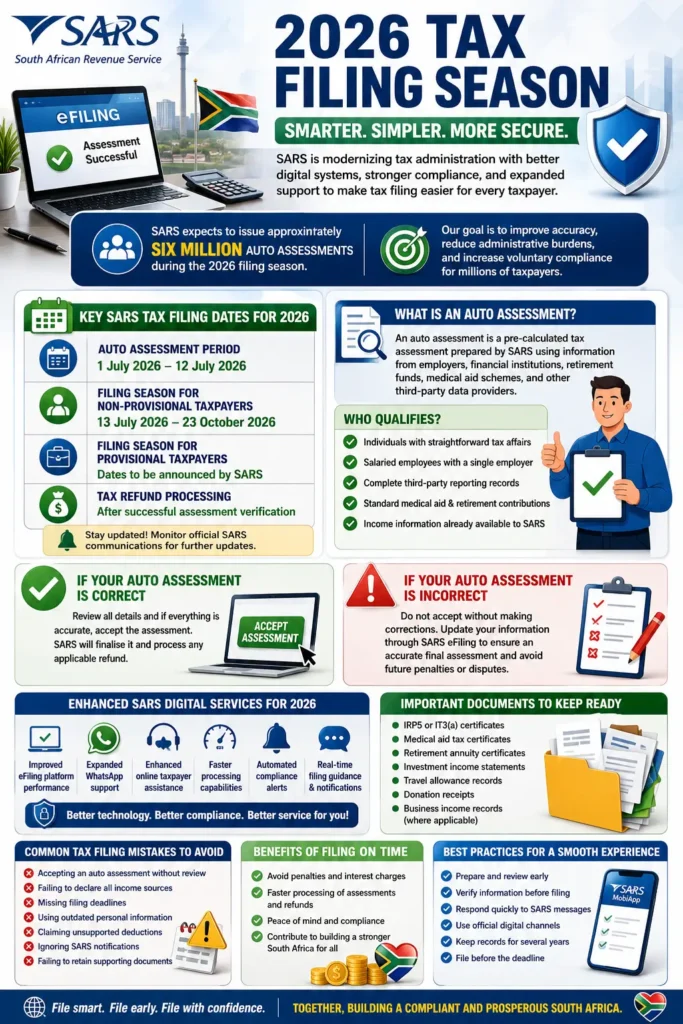
SARS expects to issue approximately six million auto assessments during the 2026 filing season. This initiative forms part of its ongoing strategy to modernize tax administration, improve taxpayer convenience, and increase voluntary compliance across South Africa.
Key SARS Tax Filing Dates for 2026
Understanding important deadlines is essential to avoid penalties, interest charges, or unnecessary delays.
| Filing Period | Dates |
|---|---|
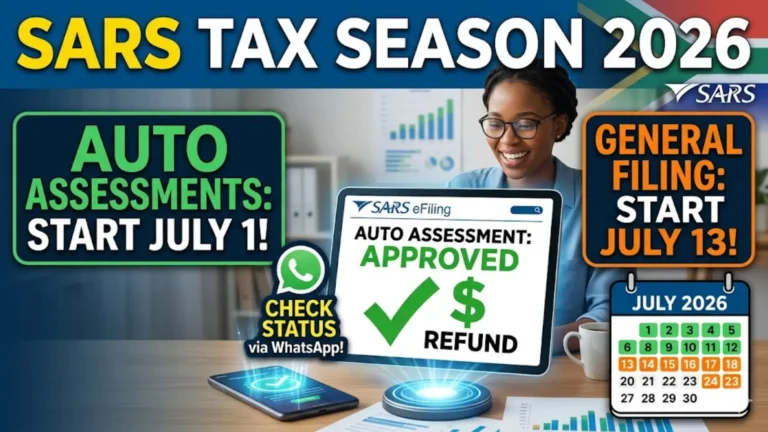
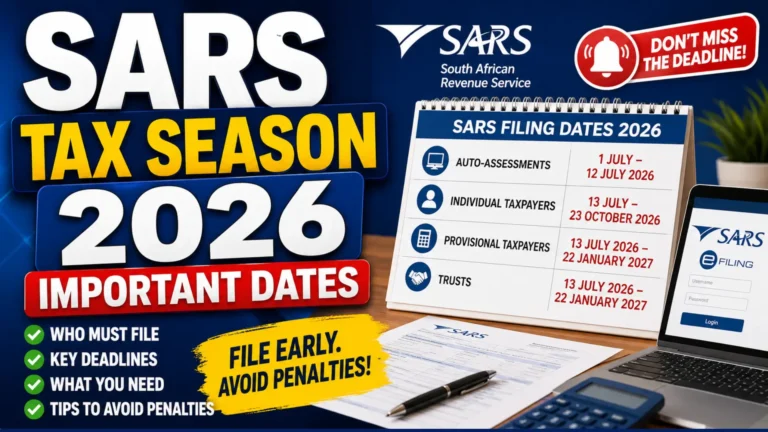
| Auto Assessment Period | 1 July 2026 – 12 July 2026 |
| Filing Season for Non-Provisional Taxpayers | 13 July 2026 – 23 October 2026 |
| Filing Season for Provisional Taxpayers | Dates to be announced by SARS |
| Tax Refund Processing | After successful assessment verification |
Taxpayers should monitor official SARS communications regularly because additional updates may be announced during the filing season.
What Is an Auto Assessment?
An auto assessment is a pre-calculated tax assessment prepared by SARS using information received from employers, financial institutions, retirement funds, medical aid schemes, and other third-party data providers.
You can also read: South Africa Immigration Crackdown
Instead of manually completing a tax return, eligible taxpayers receive an assessment that already includes their available financial information. This significantly reduces the time and effort required to meet tax obligations.
Who Qualifies for SARS Auto Assessment?
Not every taxpayer receives an auto assessment. SARS uses available third-party information to determine eligibility and generate assessments automatically.
Taxpayers commonly considered for auto assessment include:
- Individuals with straightforward tax affairs
- Salaried employees with a single employer
- Taxpayers with complete third-party reporting records
- Individuals with standard medical aid and retirement contributions
- Taxpayers whose income information is already available to SARS
Eligibility depends on the quality and completeness of the data SARS receives.
Filing Season Timeline Explained
The filing season follows a phased approach designed to manage large volumes efficiently while giving taxpayers sufficient time to review their tax positions.
The first phase focuses on auto assessments from 1 July to 12 July 2026. Taxpayers receiving these assessments must carefully review the information before accepting the outcome. The second phase begins on 13 July 2026 when non-provisional taxpayers can submit their returns through SARS digital platforms.
How to Check Your Auto Assessment
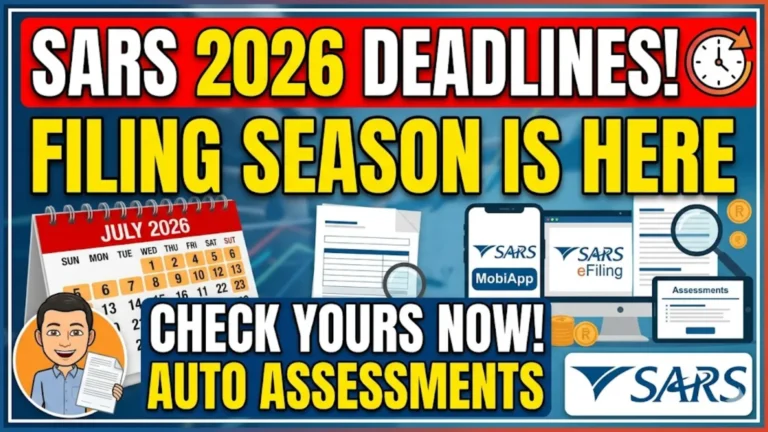
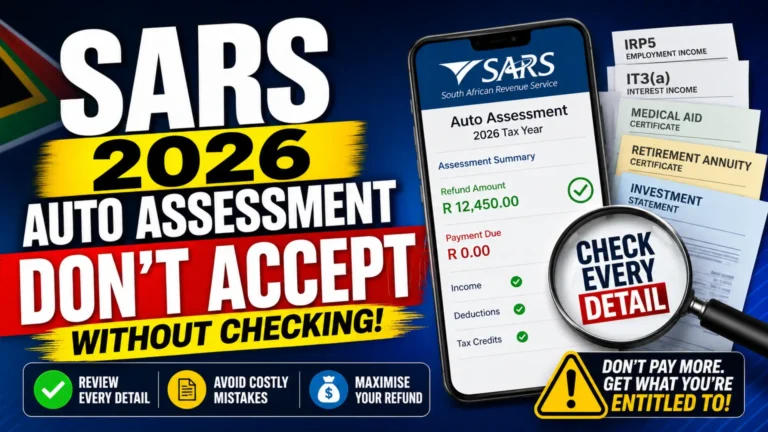
SARS encourages taxpayers to review every detail of their auto assessment before accepting it. Even though the system uses verified information, errors can still occur if data submitted by third parties is incomplete or inaccurate.
You can review your assessment through:
- SARS eFiling
- SARS MobiApp
- Official SARS communication channels
- SMS and email notifications from SARS
- SARS service centres when assistance is required
A careful review can prevent future disputes and corrections.
What to Do If Your Auto Assessment Is Correct
If all income, deductions, retirement contributions, and medical aid information appear accurate, you may simply accept the assessment.
Once accepted, SARS will finalize the assessment and process any applicable refund. Taxpayers should keep copies of supporting documents for future reference in case verification is required later.
What to Do If Your Auto Assessment Is Incorrect
If information is missing or inaccurate, taxpayers should not accept the assessment without making corrections. An incorrect assessment can lead to underpayment, overpayment, penalties, or future compliance issues.
Common reasons for corrections include:
- Missing income information
- Incorrect employment records
- Unreported investment earnings
- Missing retirement fund contributions
- Incorrect medical expense information
- Additional deductions not reflected
Updating information promptly helps ensure an accurate final assessment.
Enhanced SARS Digital Services for 2026
SARS has invested heavily in technology improvements for the 2026 filing season. These upgrades are intended to improve user experience, strengthen compliance monitoring, and reduce filing errors.
Key digital enhancements include:
- Improved eFiling platform performance
- Expanded WhatsApp support channels
- Enhanced online taxpayer assistance
- Faster processing capabilities
- Automated compliance alerts
- Real-time filing guidance through pop-up notifications
These digital services are expected to reduce the need for physical visits to SARS branches.
Important Documents Needed for Tax Filing
Although many taxpayers receive auto assessments, supporting documentation remains important. Keeping records organized can simplify verification requests and future audits.
Documents commonly required include:
- IRP5 or IT3(a) certificates
- Medical aid tax certificates
- Retirement annuity certificates
- Investment income statements
- Travel allowance records
- Donation receipts
- Business income records where applicable
Maintaining complete records remains a critical part of tax compliance.
You can also read: Sassa SRD SC19 Status Check
Common Tax Filing Mistakes to Avoid
Many filing delays and disputes occur because taxpayers overlook simple but important details.
Avoid these common mistakes:
- Accepting an auto assessment without review
- Failing to declare all income sources
- Missing filing deadlines
- Using outdated personal information
- Claiming unsupported deductions
- Ignoring SARS notifications
- Failing to retain supporting documents
Even small errors can result in additional reviews or compliance actions.
Benefits of Filing Taxes Correctly and On Time
Timely and accurate filing offers several advantages beyond simply complying with legal requirements. It helps taxpayers avoid penalties while ensuring faster processing of assessments and refunds.
Proper tax compliance also supports public services, infrastructure development, healthcare, education, and other government programs funded through tax revenue. SARS continues to emphasize that tax compliance is both a legal responsibility and a contribution to national development.
SARS Compliance Improvements in 2026
SARS has strengthened its verification and compliance systems to improve data accuracy and reduce errors. Enhanced matching systems now compare taxpayer information against data received from employers, medical aid providers, and other institutions.
The revenue authority has also introduced proactive compliance measures. Taxpayers may receive automated warnings or guidance messages during the filing process, helping identify potential issues before submission.
Best Practices for a Smooth Filing Experience
A little preparation can save significant time during tax season.
Follow these best practices:
- Review all tax-related documents early
- Verify personal information before filing
- Check every auto assessment carefully
- Respond quickly to SARS notifications
- Use official digital channels whenever possible
- Keep supporting records for several years
- File before deadlines to avoid last-minute issues
Being proactive reduces stress and improves filing accuracy.
Frequently Asked Questions
Do I still need to check an auto assessment?
Yes. Every taxpayer should review the assessment carefully to ensure all information is accurate before accepting it.
What happens if I ignore my auto assessment?
Ignoring an assessment may lead to missed corrections, inaccurate tax outcomes, or compliance complications later.
Can I edit information after receiving an auto assessment?
Yes. If information is incorrect or incomplete, you can update your return through SARS before finalizing the assessment.
Is eFiling the preferred method for 2026?
Yes. SARS strongly encourages taxpayers to use digital platforms such as eFiling and the MobiApp before visiting a service centre.
You can also read: SRD Decline Reasons Common
Conclusion
The 2026 Tax Filing Season in South Africa introduces a more streamlined, technology-driven approach designed to simplify compliance for taxpayers. With approximately six million expected auto assessments, enhanced digital tools, proactive compliance alerts, and improved verification systems, SARS aims to make tax filing faster, easier, and more accurate.
Taxpayers should pay close attention to key filing dates, review auto assessments carefully, maintain accurate records, and use SARS digital platforms whenever possible. Taking these steps can help avoid costly mistakes, ensure compliance, and make the filing process smooth and stress-free.