Unlawful Procurement Nsfas Tender Details 2026
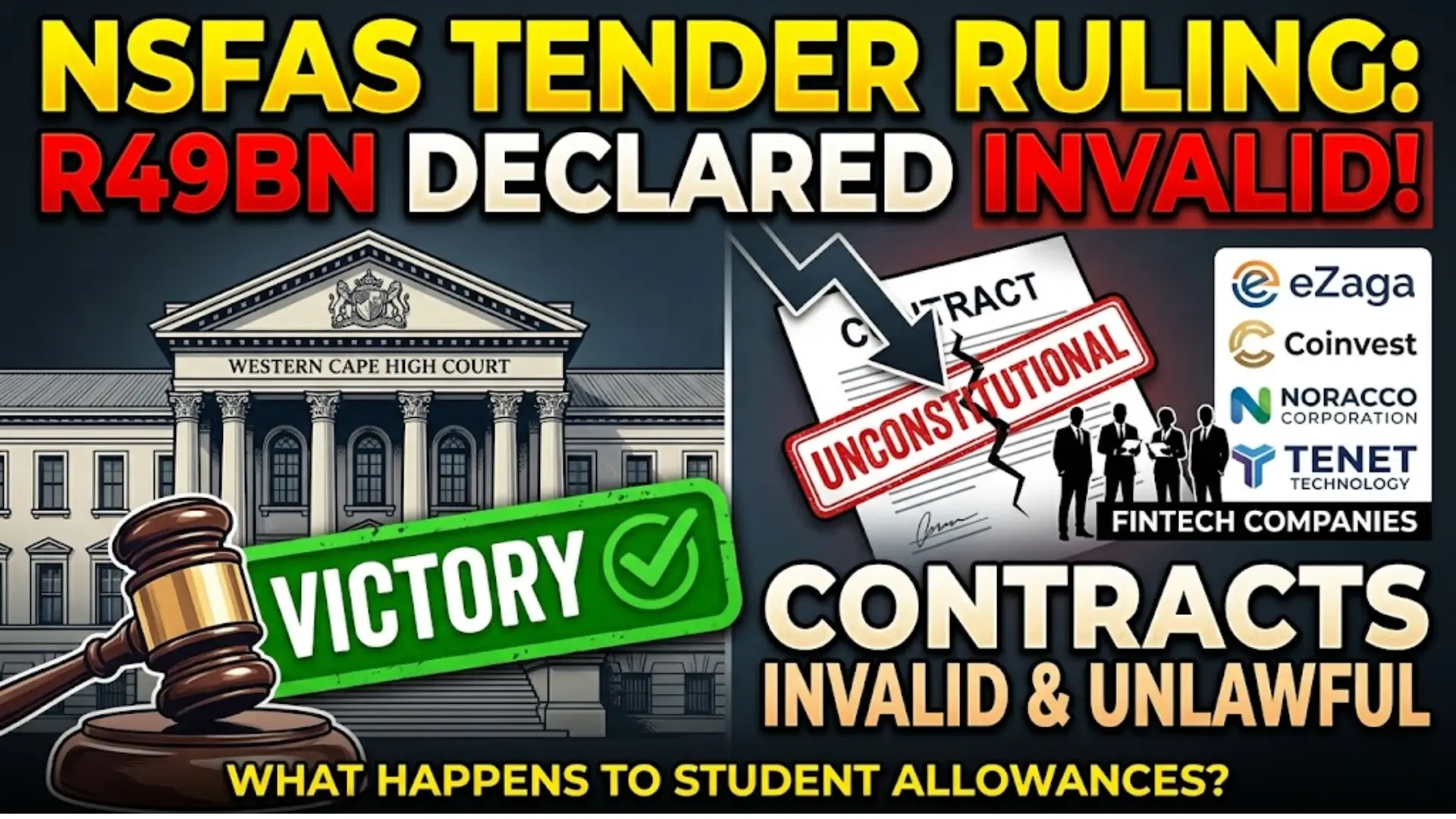
The National Student Financial Aid Scheme (NSFAS) has secured a major legal victory after the Western Cape High Court ruled that the controversial student allowance payment contracts awarded in 2022 were unconstitutional, unlawful, and invalid. The judgment brings an important chapter in the NSFAS payment saga to a close while raising new questions about accountability, public procurement, and financial consequences for the scheme.
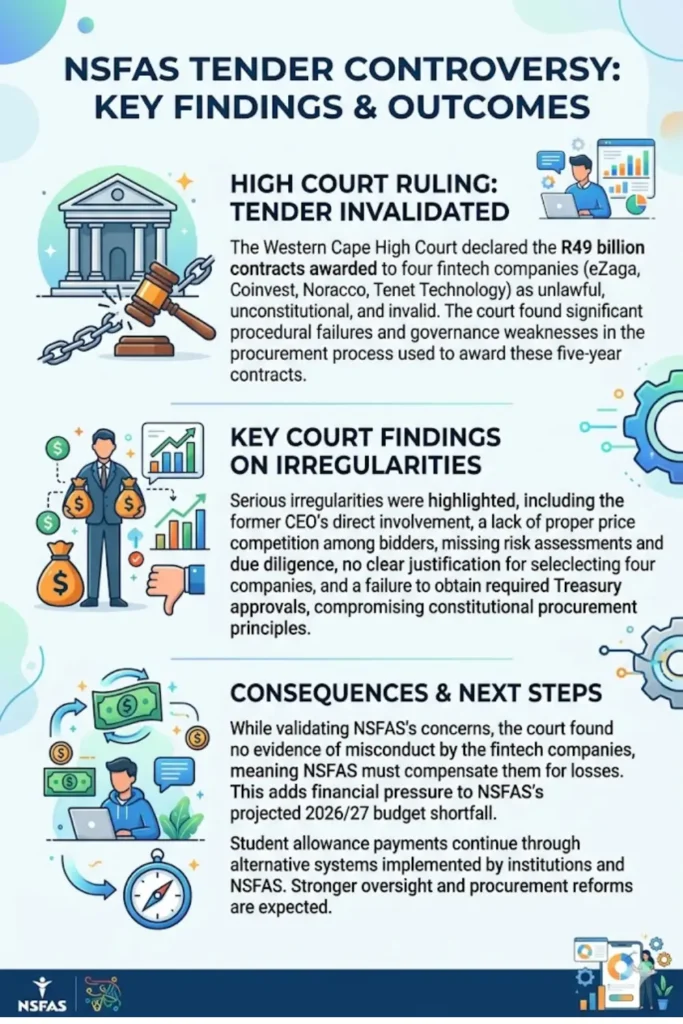
The court’s decision affects contracts worth approximately R49 billion that were awarded to four fintech companies responsible for distributing student allowances. While the ruling supports NSFAS’s claims of procurement irregularities, it also requires the organization to compensate the affected companies for losses suffered after their contracts were terminated.
What Is the NSFAS Tender Controversy?
The dispute centers on a five-year contract awarded in 2022 to four fintech companies to manage direct allowance payments for NSFAS-funded students.
The companies involved were:
- eZaga
- Coinvest
- Noracco Corporation
- Tenet Technology
These service providers were selected to distribute student allowances to university and TVET college students across South Africa. The tender process immediately attracted criticism from students, institutions, and oversight bodies due to concerns about fees, transparency, and procurement procedures.
You can also read: Sars Announces 2026 Tax Filing Dates
Western Cape High Court Ruling Explained
The Western Cape High Court ruled that the procurement process used to award the contracts was unlawful and failed to meet constitutional requirements for fair and transparent public procurement.
The court found significant procedural failures within NSFAS during the tender process. According to the judgment, the procurement system did not promote genuine competition and contained several governance weaknesses that undermined its legitimacy.
Key Findings of the Court
The judgment highlighted several serious irregularities:
- Direct involvement of former NSFAS CEO Andile Nongogo in the tender process
- Lack of proper price competition among bidders
- Failure to conduct a risk assessment before appointing fintech companies
- No comprehensive due diligence on service providers
- No clear justification for selecting four separate companies
- Failure to obtain required Treasury approvals during parts of the process
- Procurement decisions that did not comply with constitutional procurement principles
The court concluded that these failures rendered the contracts invalid.
Why the Tender Was Declared Unconstitutional
South Africa’s Constitution requires public procurement processes to be fair, transparent, competitive, equitable, and cost-effective.
The court found that these principles were compromised when the successful bidders allegedly coordinated pricing after the tender award. Instead of competing independently, the companies reportedly agreed on a uniform fee structure.
This arrangement reduced genuine market competition and undermined the integrity of the procurement process. As a result, the court determined that the tender process failed to satisfy constitutional procurement standards.
The Role of Former NSFAS CEO Andile Nongogo
A major issue identified in the case was the involvement of former NSFAS CEO Andile Nongogo in procurement-related activities.
The court found that his participation in aspects of the tender process was irregular. Public procurement rules generally require strict separation between executive management and evaluation processes to avoid conflicts of interest and ensure impartial decision-making.
Although the judgment identified governance concerns, it focused primarily on procurement failures rather than allegations of personal misconduct.
Impact on Students Receiving NSFAS Allowances
Despite the legal dispute, student funding continues to be paid through alternative systems implemented by NSFAS.
Currently:
| Student Category | Payment Method |
|---|---|
| University Students | Payments managed through institutions |
| TVET College Students | Direct payments from NSFAS-approved channels |
Students are not expected to lose their funding because of the ruling. The judgment primarily affects procurement contracts rather than student eligibility or allowance amounts.
Compensation Ordered for Fintech Companies
One of the most significant aspects of the ruling is the court’s decision regarding compensation.
While the contracts were declared invalid, the court found no evidence that the fintech companies were responsible for the procurement irregularities. As a result, NSFAS may be required to compensate the companies for losses incurred after their services were discontinued.
This creates a complex financial challenge because NSFAS is already facing significant budget pressures.
You can also read: SASSA SRD Grant 2026 Check Eligibility
Why Compensation Was Awarded
The court considered several factors:
- Companies entered contracts through an official tender process
- No evidence showed they manipulated procurement procedures
- Businesses invested resources based on awarded contracts
- Contract termination caused measurable financial losses
The exact compensation amounts have not yet been disclosed.
Financial Implications for NSFAS in 2026
The ruling comes at a difficult time for NSFAS finances.
NSFAS has already warned Parliament about a potential funding shortfall of approximately R10.46 billion for the 2026/27 financial year. With a budget allocation of R54.8 billion, any additional compensation payments could increase financial pressure on the student funding system.
Potential impacts include:
- Increased budget management challenges
- Greater scrutiny of procurement decisions
- Stronger oversight from government bodies
- More emphasis on financial accountability
Future financial planning will likely need to account for the legal consequences arising from the tender dispute.
Student Complaints About Fintech Service Fees
One of the most controversial aspects of the payment system involved transaction charges imposed on students.
Initially, students reported monthly fees of approximately R89 being deducted from their allowances. Although these fees were later reduced, many students argued that charges consumed funds intended for educational expenses.
Common concerns included:
- Monthly account maintenance fees
- Transaction charges
- Reduced access to full allowance amounts
- Limited transparency regarding deductions
These complaints contributed to public criticism of the payment system and increased pressure for reform.
Lessons for Public Procurement in South Africa
The NSFAS tender case highlights the importance of robust procurement controls within government institutions.
Public entities can draw several lessons from this judgment:
- Conduct thorough risk assessments before awarding major contracts
- Ensure genuine competition among bidders
- Maintain strict governance oversight
- Obtain all required approvals before procurement decisions
- Perform detailed due diligence on service providers
- Document decision-making processes clearly
Strong procurement systems help protect public funds and reduce the risk of costly legal disputes.
Common Procurement Mistakes Government Agencies Should Avoid
Government institutions frequently face procurement challenges when controls are weak.
Some of the most common mistakes include:
- Insufficient market analysis
- Weak evaluation procedures
- Poor documentation
- Inadequate oversight mechanisms
- Lack of transparency
- Failure to follow Treasury regulations
Avoiding these mistakes can significantly reduce legal and financial risks.
What Happens Next?
The High Court judgment represents a major victory for NSFAS’s efforts to challenge the tender process, but the matter may still have financial consequences.
Key developments to watch include:
- Potential compensation claims from the fintech companies
- NSFAS budget planning for 2026/27
- Procurement reforms within NSFAS
- Further oversight by Parliament and regulatory bodies
- Future student allowance payment models
These developments will shape how NSFAS manages student funding and procurement processes in the years ahead.
You can also read: R5000 SASSA Pension Proposal Brings
Conclusion
The unlawful NSFAS tender ruling marks one of the most significant public procurement judgments involving South Africa’s student funding system. The Western Cape High Court found serious irregularities in the R49 billion procurement process, including governance failures, inadequate competition, and procedural shortcomings.
While the ruling validates NSFAS’s concerns about the tender process, it also creates new financial challenges because compensation may be payable to the affected fintech companies. For students, however, allowance payments are expected to continue through existing payment arrangements. The case serves as a powerful reminder that transparency, accountability, and competitive procurement remain essential for protecting public funds and maintaining trust in government institutions.