How the SASSA Means Test Works in South Africa

Millions of South Africans depend on grants from the South African Social Security Agency to survive during difficult financial periods. However, one of the most misunderstood parts of the application process is the SASSA means test.
Many applicants only discover the importance of the means test after receiving a declined status. In most cases, the rejection happens because SASSA detected income, banking activity, UIF records, or other financial support that exceeded the qualifying limits.
What Is the SASSA Means Test?
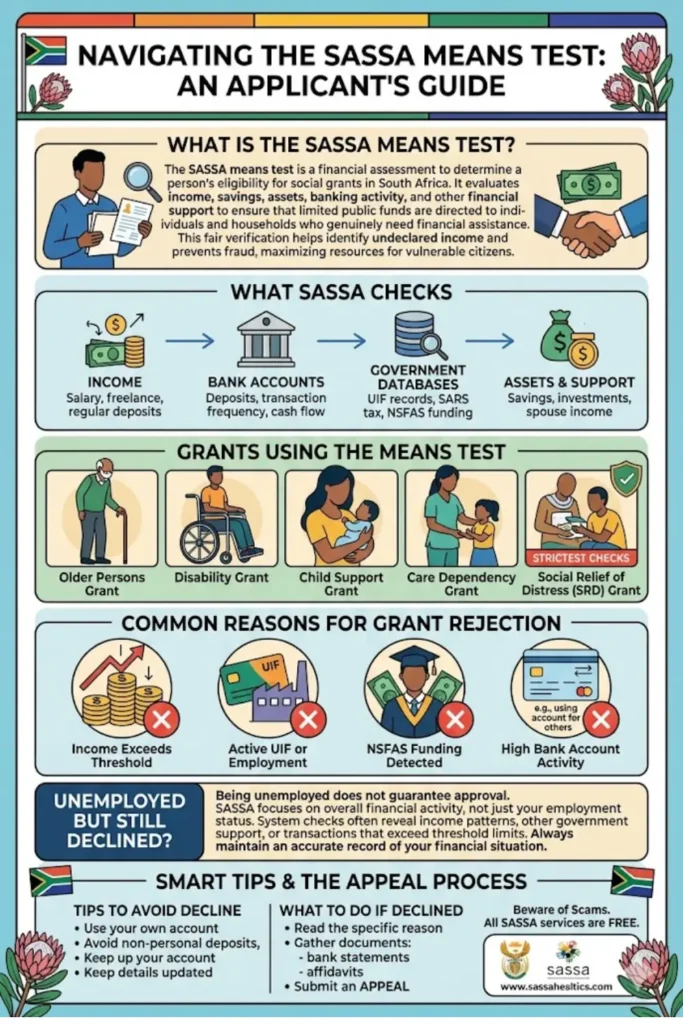
The SASSA means test is a financial assessment used to determine whether a person qualifies for a social grant. It helps the government identify applicants who genuinely need financial assistance.
You can also read: SASSA e-KYC Status Pending Details
During the process, SASSA checks your income, savings, assets, banking activity, and other financial support. If your financial position is above the required threshold, your application may be rejected even if you are unemployed or facing hardship.
Why SASSA Uses a Means Test
The South African government uses the means test to ensure that limited public funds go to vulnerable individuals and households that need support the most.
The system also helps to:
- Prevent fraud and duplicate claims
- Identify undeclared income
- Reduce incorrect grant payments
- Verify financial eligibility fairly
- Protect government resources
Without financial screening, it would be difficult to determine who truly qualifies for assistance.
Which Grants Use the Means Test?
Several SASSA grants require applicants to pass a financial assessment before approval.
These include:
- Older Persons Grant
- Disability Grant
- Child Support Grant
- Care Dependency Grant
- War Veterans Grant
- Social Relief of Distress (SRD) Grant
- Some Foster Child Grant assessments under special conditions
The SRD grant is one of the strictest because applications are verified through automated systems and multiple government databases.
Quick Overview of the SASSA Means Test
| Topic | Details |
|---|---|
| Purpose of Means Test | To assess financial need |
| What SASSA Checks | Income, bank activity, UIF, assets, government support |
| Main Reason for Declines | Income above allowed threshold |
| Grants Affected | SRD, Disability, Older Persons, Child Support and others |
| Can You Appeal? | Yes |
| Does SASSA Check Bank Accounts? | Yes |
| Official Website | SASSA Official Website |
How the SASSA Means Test Works
The means test works by comparing your financial situation against SASSA’s approved income and asset limits. The agency then decides whether your level of income is low enough to qualify for assistance.
SASSA may evaluate:
- Monthly income
- Salary payments
- Bank account deposits
- Savings and investments
- Pension income
- UIF payments
- Government bursaries
- Spousal income
- Other financial support
Even small amounts of regular money entering your account may affect your application outcome.
Does SASSA Check Bank Accounts?
Yes, SASSA can verify banking information during the application and verification process. Many applicants are surprised when their grants are declined because of transactions reflected in their accounts.
Automated systems may assess:
- Monthly deposits
- Frequency of transactions
- Cash flow patterns
- Income indicators
- Financial support from relatives
- Temporary large deposits
This does not necessarily mean officials manually inspect every transaction, but digital verification systems can flag suspicious or inconsistent activity.
How SASSA Verifies Financial Information
Many people believe SASSA only checks the information written on the application form. In reality, verification happens through several official databases and government systems.
SASSA may check information through:
- Bank verification systems
- UIF databases
- South African Revenue Service records
- Government payroll systems
- Home Affairs records
- Pension databases
- Employment records
- National Student Financial Aid Scheme funding records
Because systems are linked, applicants may still fail verification even after declaring themselves unemployed.
You can also read: Nsfas Application 2027 Opening Date PDF
Common Reasons Why SASSA Grants Get Declined
This is the most common reason applications fail. If SASSA detects income higher than the allowed limit, the system may classify the applicant as financially ineligible.
Income may include:
- Salary payments
- Freelance income
- Side business earnings
- Family support
- Regular cash deposits
- UIF payments
Even temporary income can sometimes trigger a rejection.
Active UIF or Employment Records
Many applicants are declined because their employment records still appear active on government systems.
This can happen when:
- Employers fail to update payroll records
- UIF still reflects active employment
- Temporary contracts remain registered
- Old work records were never closed
This issue is especially common among SRD applicants.
NSFAS Funding Detected
Students receiving support from the National Student Financial Aid Scheme may not qualify for certain SASSA grants because they already receive government financial assistance. This mainly affects SRD grant applications.
High Bank Account Activity
Applicants sometimes fail the means test because their bank accounts show financial activity that appears inconsistent with unemployment.
Common examples include:
- Someone using your account
- Frequent family deposits
- Temporary transfers
- Savings exceeding limits
- Large once-off payments
Even if the money was not permanently yours, the system may still flag the activity.
Can You Fail the Means Test Even If You Are Unemployed?
Yes. Being unemployed does not automatically guarantee approval for a SASSA grant.
You may still fail the means test if:
- Your bank account receives regular deposits
- UIF records still appear active
- You receive financial support from others
- Government systems detect undeclared income
- Your account activity exceeds the threshold
SASSA focuses on overall financial activity, not only employment status.
SASSA Means Test Limits in South Africa
SASSA income thresholds can change over time depending on government policy updates and inflation adjustments. The limits differ depending on the type of grant and whether the applicant is single or married.
The assessment may consider:
- Individual income
- Household income
- Total assets
- Savings and investments
- Spouse earnings
- Existing government support
Applicants should always check the latest updates through the official SASSA website before applying.
How the Means Test Affects Different Grants
Older Persons Grant
For this grant, SASSA checks pension income, savings, investments, assets, and spousal income. Applicants whose income exceeds the approved threshold may not qualify.
Financial assessments are stricter for married applicants because combined household income is considered.
Disability Grant
Applicants must meet both medical and financial requirements. Passing the medical assessment alone does not guarantee approval if income exceeds the means test limits.
SASSA may also review disability-related support payments and banking activity during verification.
Child Support Grant
The caregiver’s financial position is assessed to determine whether the household qualifies for support.
If the caregiver earns above the required threshold, the application may be rejected even if the child qualifies otherwise.
SRD Grant
The SRD grant uses one of the strictest automated verification systems in South Africa.
Applications are commonly declined because of:
- Small bank deposits
- UIF activity
- NSFAS funding
- Government payroll matches
- Alternative income source detection
What Happens After a SASSA Grant Is Declined?
When an application is declined, SASSA usually provides a reason for the rejection. Understanding the reason is important before submitting an appeal.
Common decline messages include:
- Alternative income source identified
- UIF registered
- Income exceeds threshold
- Government payroll registered
- NSFAS registered
- Existing grant detected
Applicants should carefully review the message before taking further steps.
How to Appeal a Declined SASSA Grant
If you believe your application was unfairly rejected, you can submit an appeal. Many successful appeals happen after applicants correct outdated records or provide additional proof.
Documents that may help during appeals include:
- Bank statements
- UIF termination letters
- Employment termination proof
- Affidavits
- Identity verification documents
SRD applicants can submit appeals through the official appeals platform linked by SASSA.
You can also read: Western Cape School Closures Check
Tips to Avoid Failing the SASSA Means Test
Small mistakes can sometimes trigger automatic rejections. Applicants should ensure all information submitted is accurate and consistent.
Helpful tips include:
- Use your own bank account only
- Avoid allowing others to use your account
- Keep banking details updated
- Verify UIF status before applying
- Ensure employment records are correct
- Submit accurate contact details
- Keep supporting documents available
These steps can reduce delays and improve verification accuracy.
Common Mistakes Applicants Make
Many South Africans misunderstand how the means test works, especially for the SRD grant. Some assume unemployment alone guarantees approval, while others believe temporary deposits do not matter.
Common mistakes include:
- Using personal accounts for family transactions
- Ignoring active UIF records
- Submitting incorrect banking details
- Failing to update employment status
- Applying while already receiving incompatible government support
Understanding these issues early can help applicants avoid unnecessary rejections.
Important Warning About Grant Scams
Applicants should never pay anyone who promises to “approve” or “fix” a SASSA application. All official SASSA services are free.
Be cautious of:
- Fake approval agents
- Social media scammers
- Unofficial websites
- Fraudulent WhatsApp groups
- Requests for payment or banking PINs
Always use official SASSA platforms when applying or appealing.
Final Thoughts
The SASSA means test plays a major role in determining who qualifies for social grants in South Africa. While the process can sometimes feel strict or confusing, understanding how financial verification works can help applicants avoid common problems.
Before applying, it is important to check your banking activity, UIF records, employment status, and financial information carefully. If your application gets declined, read the reason properly and submit an appeal if you believe the decision was incorrect.
With accurate information and proper preparation, many applicants can improve their chances of successful approval.
Frequently Asked Questions (FAQ)
What is the SASSA means test?
It is a financial assessment used to determine whether an applicant qualifies for a social grant based on income, assets, and financial support.
Does SASSA check bank accounts?
Yes. SASSA may verify bank account activity, deposits, and income patterns during the application process.
Can family deposits affect my grant application?
Yes. Regular deposits from relatives or friends may sometimes be treated as financial support or income.
Can unemployed people fail the means test?
Yes. Applicants can still fail if systems detect income, active UIF records, or unusual banking activity.
Does UIF affect SASSA applications?
Yes. Active UIF records can lead to grant declines, especially for SRD applications.
Can I appeal a declined SASSA grant?
Yes. Applicants can submit an appeal if they believe the rejection was incorrect or based on outdated information.