South Africa Electricity Price Hikes May 2026

South Africans are once again preparing for higher electricity costs as new tariff increases are expected to affect households and businesses from May and June 2026. Rising energy production costs, infrastructure maintenance, fuel expenses, and financial pressure on the power sector have pushed regulators and electricity providers toward another major price adjustment.
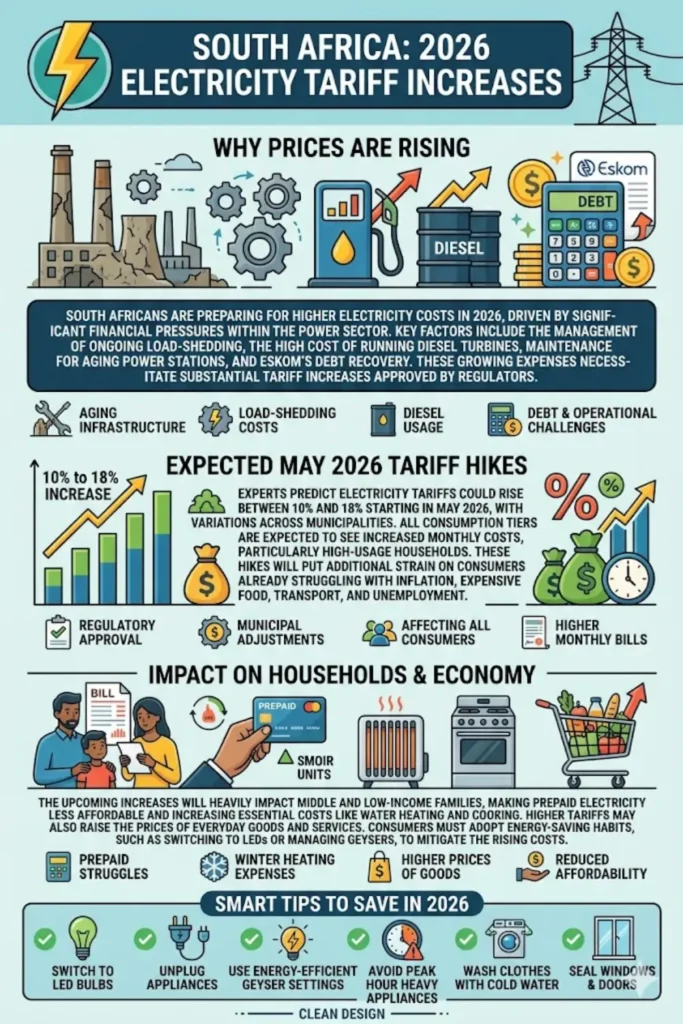
For millions of consumers already struggling with inflation, expensive food prices, transport costs, and unemployment, the latest electricity hike may place additional pressure on monthly budgets. Experts also warn that higher electricity tariffs could increase the prices of everyday goods and services across the country.
Why Electricity Prices Are Increasing in 2026
Electricity prices in South Africa continue to rise mainly because of the growing financial burden on the national power sector. Aging infrastructure, load-shedding management costs, diesel usage for emergency power generation, and maintenance expenses have significantly increased operating costs for energy providers.
You can also read: Nsfas Disbursement to Accommodation Providers
Another major reason is the debt and operational challenges faced by Eskom. The utility company has been under pressure for years due to power shortages, infrastructure breakdowns, and high borrowing costs. To recover some of these losses, tariff adjustments are regularly proposed to energy regulators.
Key Factors Behind the Increase
- Rising fuel and diesel prices
- Maintenance of aging power stations
- Increased operational and transmission costs
- Debt recovery for energy providers
- Expansion of renewable energy projects
- Inflation and currency pressure
- Higher municipal electricity distribution expenses
These combined factors make electricity tariff increases more likely each year.
Expected Electricity Tariff Increase in May 2026
Energy analysts believe electricity tariffs in South Africa could rise between 10% and 18% during 2026, depending on regulatory approval and municipal adjustments. Some municipalities may apply additional local surcharges, which could increase final consumer bills even further.
Although final rates vary by area and electricity provider, households using higher electricity consumption levels are expected to feel the biggest impact. Lower-income families may also struggle because even small tariff increases can significantly affect monthly expenses.
Estimated Electricity Cost Comparison for 2026
| Electricity Usage | Estimated 2025 Cost | Expected 2026 Cost | Possible Increase |
|---|---|---|---|
| 150 kWh | R450 | R520 | +15% |
| 300 kWh | R900 | R1,050 | +16% |
| 600 kWh | R1,850 | R2,180 | +18% |
| 900 kWh | R2,900 | R3,450 | +19% |
These estimates may differ depending on municipal tariffs, prepaid systems, and regional electricity charges.
How Higher Electricity Prices Will Affect Households
The upcoming electricity price hike is expected to hit middle-income and working-class families the hardest. Many households already spend a large portion of their income on electricity, especially during winter when heating usage increases.
Higher electricity costs may also indirectly increase living expenses because businesses often pass energy costs to consumers through higher prices on food, transport, services, and retail products. Families using prepaid electricity meters may notice faster depletion of electricity units after the new rates are implemented.
Common Household Challenges
- Reduced affordability for prepaid electricity users
- Higher winter heating expenses
- Increased pressure on low-income families
- Rising appliance usage costs
- More expensive cooking and water heating
Consumers may need to adjust daily electricity usage habits to manage monthly costs more effectively.
Impact on Businesses and the South African Economy
Businesses across South Africa are also expected to face increased operational costs due to higher electricity tariffs. Small businesses, factories, restaurants, and retail stores that rely heavily on electricity may experience reduced profit margins.
Economists warn that electricity price increases can contribute to inflation because companies usually transfer part of their increased operating costs to customers. This creates a wider economic effect that impacts almost every sector of the economy.
You can also read: SASSA Status Check for SRD R370
Government Response and Energy Sector Plans
The South African government continues working on long-term solutions to stabilize the electricity sector. Authorities are investing in renewable energy projects, independent power producers, and infrastructure improvements to reduce dependence on costly emergency generation.
Officials have also discussed support measures for vulnerable households, although many consumers believe current assistance programs are still insufficient. Energy experts argue that improving efficiency and reducing infrastructure losses could help limit future tariff increases.
Current Energy Improvement Efforts
- Expansion of solar and wind energy projects
- Private sector energy partnerships
- Power grid modernization plans
- Reduction of load-shedding dependence
- Infrastructure maintenance upgrades
These initiatives aim to improve electricity reliability while controlling long-term costs.
Tips to Reduce Your Electricity Bill in 2026
As electricity prices rise, consumers can lower monthly expenses by improving energy efficiency at home. Small changes in daily habits can make a noticeable difference over time.
Practical Electricity Saving Tips
- Switch to LED light bulbs
- Unplug appliances when not in use
- Use energy-efficient geyser settings
- Avoid running heavy appliances during peak hours
- Limit unnecessary heater and air-conditioner usage
- Wash clothes with cold water when possible
- Seal windows and doors to reduce heating loss
Consistent energy-saving habits can help families manage rising electricity costs more effectively.
Common Mistakes That Increase Electricity Usage
Many households unknowingly waste electricity through inefficient habits and outdated appliances. Identifying these problems can help reduce unnecessary energy consumption.
Mistakes to Avoid
- Leaving devices on standby mode
- Using old high-energy appliances
- Overheating geysers
- Running half-full washing machines
- Keeping lights on unnecessarily
- Ignoring appliance maintenance
Even small reductions in electricity waste can lower monthly bills significantly over time.
Future of South Africa’s Electricity Sector
South Africa’s electricity sector is expected to continue evolving over the next few years as renewable energy investments increase and infrastructure upgrades expand. Solar power adoption among households and businesses is also growing rapidly due to rising grid electricity prices.
You can also read: SRD Sassa Status Check 19
Experts believe that while short-term electricity costs may continue increasing, long-term improvements in energy generation and efficiency could eventually help stabilize prices. However, this process may take several years before consumers experience noticeable relief.
Conclusion
The South Africa electricity price hikes in May 2026 are likely to create additional financial pressure for households and businesses already dealing with rising living costs. Higher tariffs may affect everything from monthly utility bills to food prices and overall economic stability.
Consumers can still reduce the impact by adopting energy-saving habits, monitoring electricity usage carefully, and investing in efficient appliances where possible. As the country works toward improving its energy infrastructure and expanding renewable power sources, managing electricity consumption will remain increasingly important for South African families in 2026.