SASSA SRD Status Declined & Check NSFAS Funding Detected
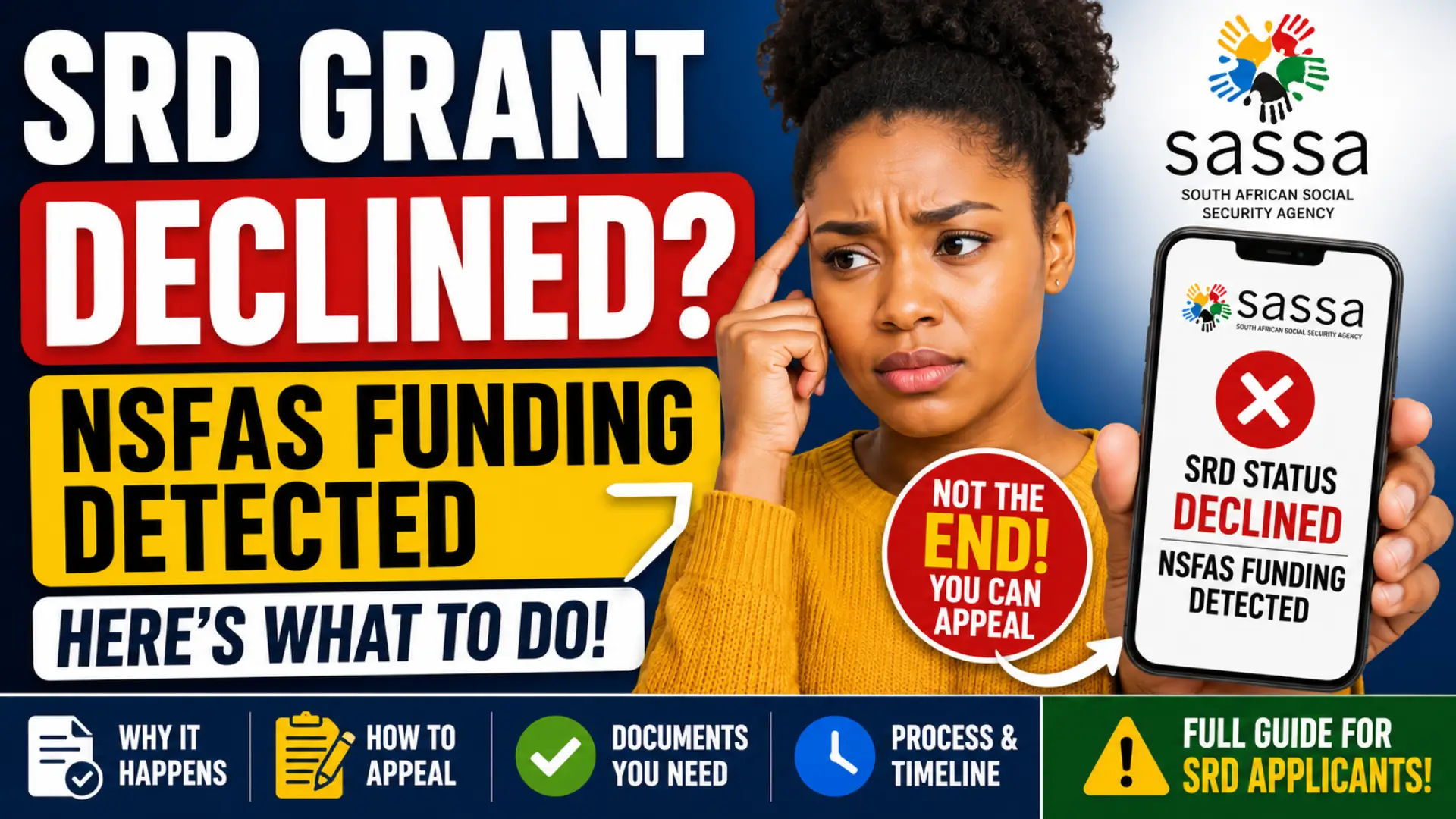
Many SRD grant applicants are surprised to see their application status marked as “Declined – NSFAS Funding Detected.” This status means SASSA’s verification system has identified you as a beneficiary of the National Student Financial Aid Scheme (NSFAS), which is considered a form of government financial support.
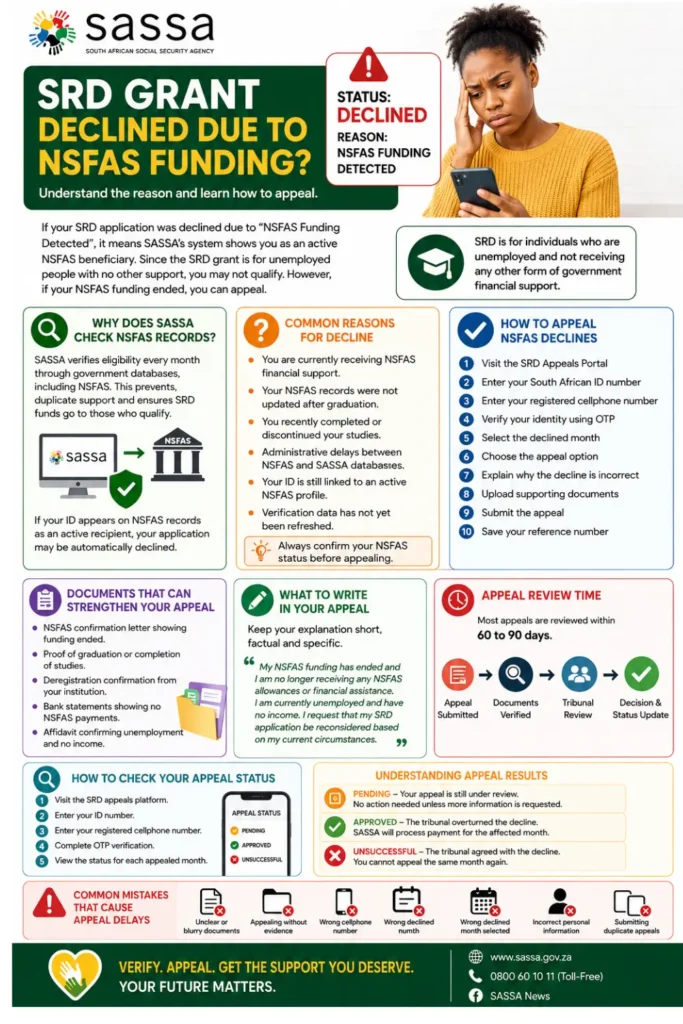
Because the SRD grant is intended for unemployed individuals who are not receiving other government assistance, active NSFAS beneficiaries do not qualify for the SRD R370 grant. However, this decline is not always accurate. Some applicants are flagged even after their NSFAS funding has ended, making it important to understand your options before taking further action.
Why Does SASSA Check NSFAS Records?
SASSA performs monthly verification checks with several government databases to confirm applicant eligibility. One of these databases belongs to NSFAS.
You can also read: July 2026 SASSA Grant Calendar
The verification process helps prevent duplicate government support and ensures SRD funds reach individuals who meet the grant requirements. If your ID number appears on NSFAS records as an active recipient, SASSA may automatically decline your application for that specific month.
Common Reasons for NSFAS Funding Detected Declines
Several situations can trigger this decline status, even when you believe you no longer receive student funding.
Common reasons include:
- You are currently receiving NSFAS financial support.
- Your NSFAS records have not been updated after graduation.
- You recently completed or discontinued your studies.
- Administrative delays exist between NSFAS and SASSA databases.
- Your ID number is still linked to an active NSFAS profile.
- Verification data has not yet been refreshed.
If any of these situations apply, it is important to verify your current NSFAS status before appealing.
Can You Receive SRD and NSFAS at the Same Time?
Under current SRD eligibility rules, active NSFAS beneficiaries generally do not qualify for the SRD grant because they are already receiving government-funded support for education and living expenses.
If you are still receiving NSFAS allowances or funding payments, an SRD decline based on NSFAS funding is usually considered correct. However, if your funding ended and you are unemployed with no income, you may have grounds to appeal the decision.
How to Confirm Whether Your NSFAS Funding Is Still Active
Before submitting an appeal, verify your NSFAS status. Many applicants assume their funding ended, only to discover their records still show active support.
You can confirm your status by:
- Logging into your NSFAS account.
- Reviewing your current funding information.
- Checking whether allowances are still being paid.
- Contacting NSFAS support for confirmation.
- Requesting written proof that funding has ended if applicable.
Having official confirmation greatly strengthens your appeal case.
How to Appeal a SASSA NSFAS Funding Detected Decline
If your NSFAS funding has ended and you believe the decline is incorrect, you can submit an appeal through the Independent Tribunal for Social Assistance Appeals (ITSAA).
Follow these steps:
| Step | Action |
|---|---|
| 1 | Visit the SRD Appeals Portal |
| 2 | Enter your South African ID number |
| 3 | Enter your registered cellphone number |
| 4 | Verify your identity using the OTP |
| 5 | Select the declined month |
| 6 | Choose the appeal option |
| 7 | Explain why the decline is incorrect |
| 8 | Upload supporting documents |
| 9 | Submit the appeal |
| 10 | Save your reference number |
Always appeal each declined month separately if multiple months were rejected.
Documents That Can Help Your Appeal
Supporting evidence increases the likelihood of a successful appeal review.
Useful documents may include:
- NSFAS confirmation letter showing funding ended.
- Proof of graduation or completion of studies.
- Deregistration confirmation from your institution.
- Bank statements showing no NSFAS payments.
- Affidavit confirming unemployment and lack of income.
- Official correspondence from NSFAS regarding funding status.
Ensure all documents are clear, accurate, and recently issued.
You can also read: July Petrol Price Forecast South Africa
What Should You Write in Your Appeal?
Your appeal explanation should be short, factual, and specific. Avoid emotional statements or unnecessary details.
A simple example is:
“My NSFAS funding has ended and I am no longer receiving any NSFAS allowances or financial assistance. I am currently unemployed and have no income. I request that my SRD application be reconsidered based on my current circumstances.”
Providing supporting evidence alongside your explanation can strengthen your submission.
How Long Does an NSFAS Appeal Review Take?
Most SRD appeals are reviewed within 60 to 90 days, although processing times can vary depending on application volumes and verification requirements.
The typical process involves:
- Initial appeal submission.
- Verification of supporting documents.
- Review by the Independent Tribunal.
- Final decision.
- Status update on the appeals portal.
Applicants should regularly monitor their appeal status during this period.
How to Check Your SRD Appeal Status
Once your appeal has been submitted, you can track its progress online.
To check your appeal status:
- Visit the SRD appeals platform.
- Enter your ID number.
- Enter your registered cellphone number.
- Complete OTP verification.
- View the status for each appealed month.
Checking periodically helps you stay informed about any updates or decisions.
Understanding Appeal Status Results
After review, your appeal may display one of several outcomes.
Pending
A pending status means the appeal is still under review. No action is usually required unless additional information is requested.
Approved
An approved appeal means the tribunal overturned the decline. SASSA will process payment for the affected month once the approval is finalized.
Unsuccessful
This status means the tribunal agreed with the original decline decision. In most cases, the same month cannot be appealed again through ITSAA.
Common Mistakes That Cause Appeal Delays
Many applicants unintentionally slow down the appeal process by submitting incomplete information.
Avoid these common mistakes:
- Uploading unclear or unreadable documents.
- Appealing without evidence.
- Using a cellphone number different from the registered SRD number.
- Selecting the wrong declined month.
- Providing inaccurate personal information.
- Submitting duplicate appeals.
Carefully reviewing your submission before sending it can prevent unnecessary delays.
When Should You Appeal and When Should You Not?
Not every NSFAS-related decline should be appealed.
| Situation | Recommended Action |
| Active NSFAS funding | Do not appeal |
| Funding ended recently | Appeal with proof |
| Graduated and no longer funded | Appeal |
| Incorrect NSFAS record | Appeal |
| Currently receiving NSFAS allowances | Not eligible for SRD |
| Database error suspected | Appeal with supporting documents |
Understanding the reason behind the decline helps you choose the correct next step.
Latest Advice for Applicants Declined Due to NSFAS
Government database matching continues to improve, but delays and outdated records still occur. Applicants whose NSFAS support has ended should gather official evidence as soon as possible rather than waiting for records to update automatically.
You can also read: SRD Identity Verification 2026 Common Problems
Keeping your personal information accurate across SASSA, NSFAS, and Home Affairs records can also reduce verification problems and improve the chances of a successful application or appeal.
Frequently Asked Questions
Why was my SRD application declined because of NSFAS?
SASSA identified your ID number as belonging to a current or recent NSFAS beneficiary. Active NSFAS recipients generally do not qualify for the SRD grant.
Can I appeal a NSFAS funding detected decline?
Yes. If your NSFAS funding has ended and you are no longer receiving support, you can submit an appeal and provide proof of your updated status.
What documents should I upload for a NSFAS appeal?
The best documents include an NSFAS confirmation letter, proof of completed studies, deregistration records, and bank statements showing no NSFAS payments.
How long does the appeal process take?
Most appeals are reviewed within 60 to 90 days, although processing times may vary.
Will I receive back pay if my appeal is approved?
Yes. If your appeal succeeds, SASSA generally processes payment for the affected approved month or months.
Final Thoughts
Receiving a “SASSA SRD Status Declined – NSFAS Funding Detected” message does not automatically mean you have reached the end of the process. While active NSFAS beneficiaries are not eligible for SRD assistance, many applicants are incorrectly flagged because of outdated records or administrative delays.
You can also read: SRD Sassa Gov Za SC19 Application
The most important step is to verify your NSFAS status, collect supporting evidence, and submit a well-documented appeal within the required timeframe. A properly prepared appeal gives eligible applicants the best chance of having an incorrect decline overturned and receiving the SRD grant they qualify for.