SARs Announced Filing Dates and Automated System Updates for 2026
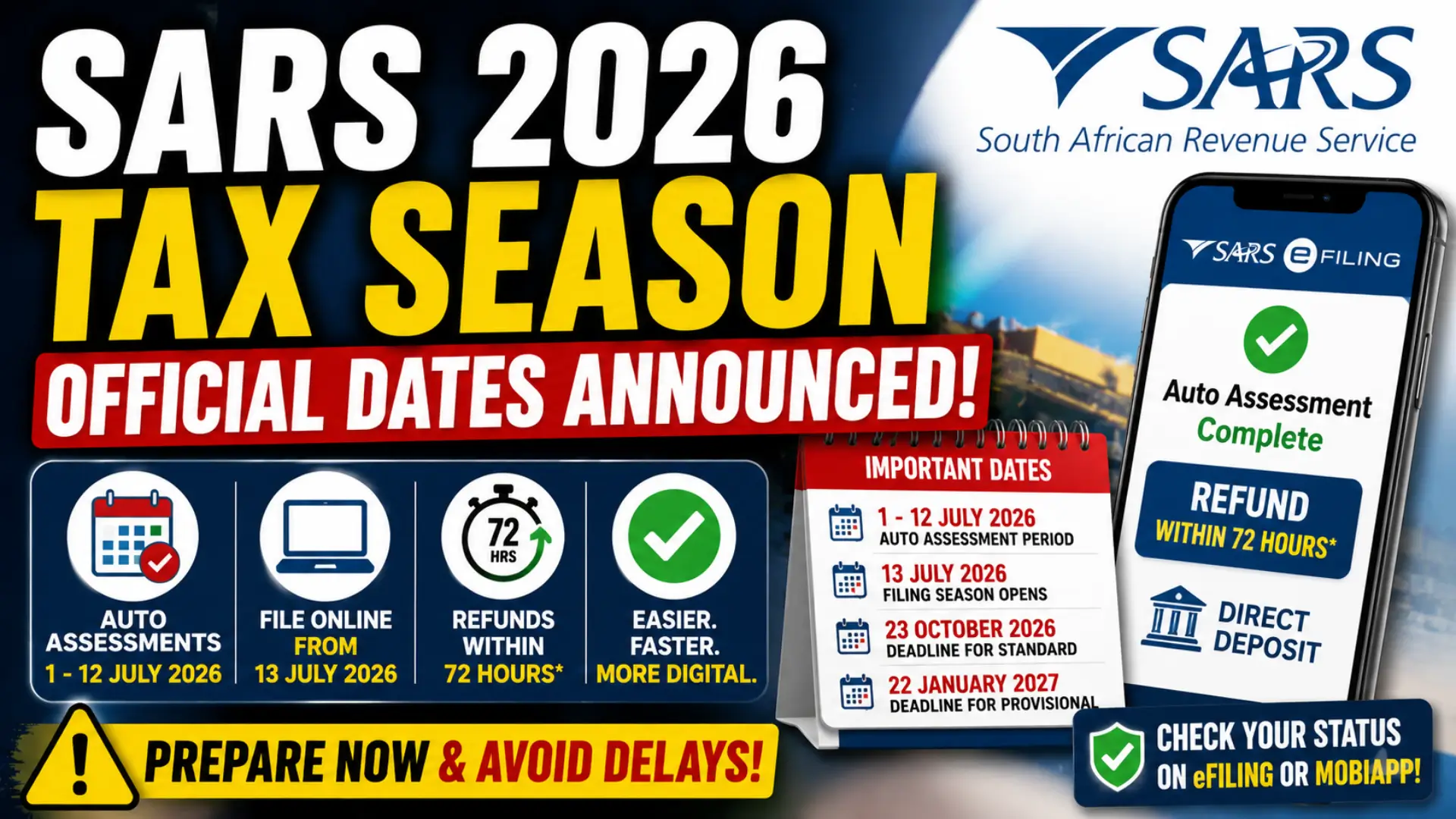
The South African Revenue Service (SARS) has announced the official dates for the 2026 Tax Filing Season, together with important updates to its automated assessment and digital tax systems. The phased filing process will begin on 1 July 2026, with millions of taxpayers expected to receive Auto Assessments before the broader filing period opens.
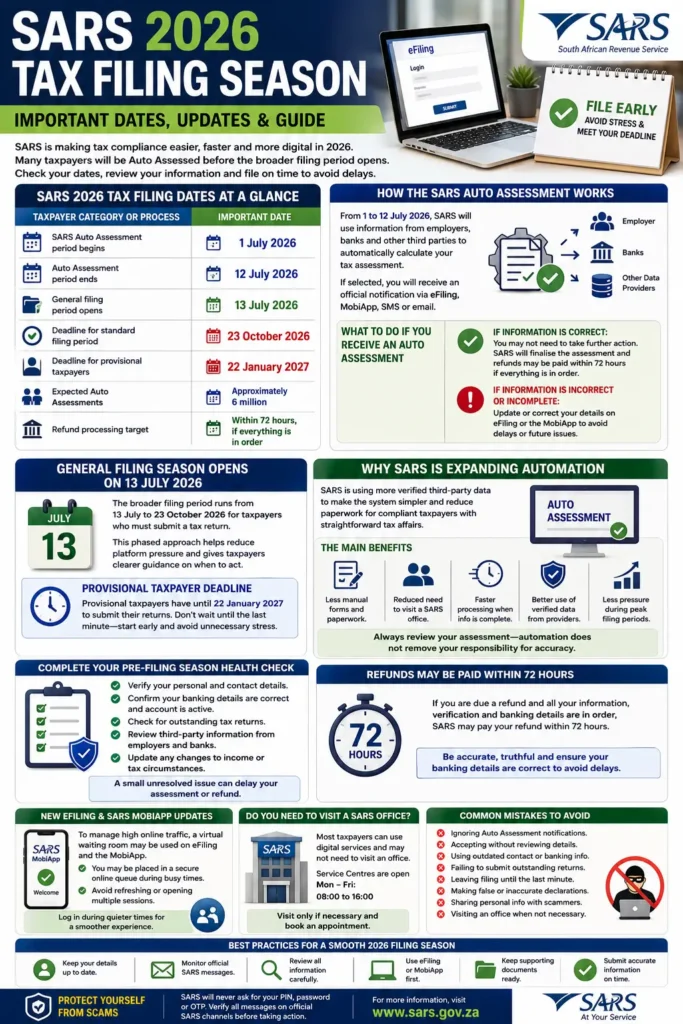
According to SARS Commissioner Dr Johnstone Makhubu, the 2026 Filing Season is designed to make tax compliance easier, faster and more digital. SARS will rely more heavily on verified information from employers, financial institutions and other third-party data providers, allowing many taxpayers to be assessed automatically without manually completing a full tax return.
SARS 2026 Tax Filing Dates at a Glance
The most important change taxpayers need to understand is that the filing season will not open to everyone on the same day. SARS is using a phased schedule based on the taxpayer’s circumstances and the complexity of their tax affairs.
| Taxpayer Category or Process | Important Date |
|---|---|
| SARS Auto Assessment period begins | 1 July 2026 |
| Auto Assessment period ends | 12 July 2026 |
| General filing period opens | 13 July 2026 |
| Deadline for standard filing period | 23 October 2026 |
| Deadline for provisional taxpayers | 22 January 2027 |
| Expected Auto Assessments | Approximately 6 million |
| Refund processing target | Within 72 hours, if everything is in order |
Taxpayers should not assume they need to submit a return immediately on 1 July. If SARS has selected them for Auto Assessment, they should first wait for an official SARS notification and carefully review the information provided.
You can also read: SRD Sassa Gov Za SC19 Application
How the SARS Auto Assessment System Works in 2026
The Auto Assessment period will run from 1 to 12 July 2026. It is mainly intended for taxpayers with simpler tax affairs whose relevant information has already been submitted accurately to SARS by employers and other third-party institutions.
SARS can use available data to reconcile income and tax information and automatically calculate a taxpayer’s assessment. Taxpayers selected for this process will receive an official notification through SARS communication channels, such as the SARS eFiling system, MobiApp, SMS or email, depending on their registered details.
What to Do if You Receive an Auto Assessment
Taxpayers who receive an Auto Assessment should not automatically accept or ignore it. The first step is to review the information carefully and confirm that the assessment reflects their actual tax position.
If the information is complete and correct:
- You may not need to take further action.
- SARS can process the assessment automatically.
- A refund may be processed if one is due and all requirements are met.
- There is generally no need to visit a SARS Service Centre.
- Keep your tax records available in case SARS requests supporting documents later.
If information is missing or incorrect, taxpayers should take action through the appropriate SARS digital channels. Accepting an incorrect assessment without checking the details can create problems later.
General SARS Filing Season Opens on 13 July 2026
The broader SARS filing period will open on 13 July 2026 and continue until 23 October 2026. This period is for taxpayers who need to actively submit a tax return and whose tax affairs are not fully resolved through the automated assessment process.
The phased system is intended to reduce pressure on SARS platforms and service channels. Instead of millions of taxpayers attempting to file on the same day, SARS can manage demand more effectively while giving taxpayers clearer guidance about when they need to act.
Provisional Taxpayer Deadline
Provisional taxpayers will have additional time to submit their returns, with a filing deadline of 22 January 2027. However, taxpayers should not wait until the final days to prepare their information.
Submitting information early can provide more time to correct errors, respond to SARS queries and resolve missing third-party information. Last-minute filing can increase the risk of technical delays, incomplete returns or missed deadlines.
Why SARS Is Expanding Its Automated Tax System
SARS is continuing its move towards a more data-driven tax administration system. The goal is to reduce unnecessary paperwork and manual intervention for taxpayers whose income and other tax information can already be verified using reliable third-party data.
This approach supports SARS’s broader vision of making tax compliance more seamless. For eligible taxpayers, the process can become simpler because SARS already receives information from sources such as employers and other registered data providers.
You can also read: SC19 Status Check Online 2026
The Main Benefits of Automation
The 2026 automated system could make the filing experience more convenient for taxpayers with straightforward tax affairs.
Key benefits include:
- Less manual completion of tax forms.
- Reduced need to visit a SARS Service Centre.
- Faster processing where information is complete.
- Better use of verified third-party data.
- Reduced pressure on taxpayers during peak filing periods.
- A simpler process for compliant taxpayers with straightforward records.
However, automation does not remove the taxpayer’s responsibility to ensure that their tax information is accurate. Every assessment should still be reviewed carefully.
Complete Your Pre-Filing Season Health Check
Before the 2026 Filing Season begins, taxpayers are encouraged to check that their personal and financial information is up to date. A small unresolved issue can delay an otherwise smooth assessment or refund.
Important information to review includes:
- Personal and contact details.
- Current banking particulars.
- Whether the registered bank account is still active.
- Outstanding tax returns from previous years.
- Missing information submitted by employers or other third parties.
- Any changes to income or tax-related circumstances.
A closed bank account is one of the issues that can delay a refund. Similarly, an outstanding return from a previous tax year may need to be resolved before a taxpayer’s current tax affairs can be processed smoothly.
SARS Refunds May Be Paid Within 72 Hours
One of the major points highlighted for the 2026 Filing Season is SARS’s ability to process qualifying refunds quickly. If a taxpayer is due a refund and all information, verification requirements and banking details are in order, SARS says the payment can be issued within 72 hours.
This does not mean every taxpayer will automatically receive money within three days. Refund timing can depend on whether the tax assessment is complete, whether banking details are valid and whether SARS requires additional verification or supporting documents.
How to Avoid Refund Delays
Taxpayers can reduce the risk of delays by checking their information before filing or accepting an Auto Assessment.
Best practices include:
- Use an active bank account registered in your own name where required.
- Keep your banking details current.
- Do not submit incorrect or estimated income figures.
- Resolve outstanding returns from previous years.
- Check that third-party information is reflected correctly.
- Respond promptly if SARS requests additional information.
- Never assume a refund is guaranteed before the final assessment is processed.
Being truthful and accurate is especially important. Incorrect declarations can lead to delays, verification requests and possible compliance consequences.
You can also read: South Africa Fuel Price Inflation Check
New eFiling and SARS MobiApp System Updates for 2026
SARS has strengthened its digital capacity for the 2026 Filing Season, including measures to manage periods of extremely high online activity. A virtual waiting room will be used on SARS eFiling and the SARS MobiApp when necessary.
If a large number of users attempt to access the systems at the same time, some users may be temporarily placed in a secure online queue. This system is designed to protect platform performance and prevent excessive traffic from disrupting access for everyone.
What the Virtual Waiting Room Means for Taxpayers
A temporary online queue should not be treated as a system failure. It is a traffic-management measure that may appear during periods of high demand.
Taxpayers should avoid repeatedly refreshing the page or opening multiple sessions if they are placed in the waiting room. Where possible, logging in during quieter periods may also provide a smoother experience.
Do You Need to Visit a SARS Service Centre?
For many taxpayers, a physical visit may not be necessary. SARS is encouraging people to use its digital channels first, particularly during the Auto Assessment period when taxpayers who are satisfied with their automatically calculated assessment may not need to take any action.
SARS Service Centres and Contact Centres will still provide support where necessary, with normal weekday operating hours of 08:00 to 16:00. Taxpayers who genuinely need in-person assistance are encouraged to arrange an appointment before visiting.
Ways to Book a SARS Appointment
Taxpayers can book a Service Centre appointment through several official channels:
- Book online through the SARS website.
- Call 0800 00 7277 and select option 0.
- Send an SMS to 47277 using the word “Booking”, followed by the required ID or passport number.
People without appointments may still receive assistance, but booked taxpayers are generally served first. Booking ahead can therefore help reduce unnecessary waiting time.
Common Mistakes That Can Cause Problems During Filing Season
Many filing problems are preventable and are caused by outdated details, incomplete information or rushing through the process. Taxpayers should prepare early rather than waiting until the final filing deadline.
Common mistakes to avoid include:
- Ignoring an official SARS Auto Assessment notification.
- Accepting an assessment without reviewing the information.
- Using outdated contact or banking details.
- Failing to submit outstanding returns from previous years.
- Assuming missing third-party information will correct itself.
- Leaving filing until the final deadline.
- Making false or inaccurate declarations.
- Visiting a Service Centre when the issue can be resolved digitally.
Taking a few minutes to review your tax profile before the filing season can prevent far more complicated problems later.
Best Practices for a Smooth SARS 2026 Filing Season
The best approach is to prepare before SARS contacts you. Taxpayers should make sure their profile is accurate, monitor official communications and keep supporting records organised.
If you are selected for Auto Assessment, carefully check the assessment before deciding whether action is required. If you need to file manually, start preparing early and avoid waiting until October or January when online demand may increase.
A Simple 2026 Filing Season Checklist
Before and during the filing season, focus on the following steps:
- Confirm your SARS personal details are correct.
- Check your registered email address and mobile number.
- Verify that your banking details are current.
- Resolve outstanding tax returns.
- Watch for official SARS Auto Assessment notifications.
- Review all tax information before accepting an assessment.
- Use eFiling or the MobiApp before considering an in-person visit.
- Keep supporting documents and records available.
- Submit accurate and truthful information.
- Meet the deadline that applies to your taxpayer category.
This preparation can make the difference between a quick, smooth outcome and a delayed filing process.
You can also read: SASSA September 2026 Payment Schedule
Important Warning About SARS Scams and Fake Notifications
Taxpayers should remain cautious about suspicious SMS messages, emails and links claiming to come from SARS. Filing Season often creates opportunities for scammers to send fake refund notices or requests for personal and banking information.
Always verify communications through official SARS channels before clicking a link or providing sensitive information. A genuine-looking message is not automatically legitimate, so taxpayers should independently access their SARS profile when checking important tax information.
Conclusion
The SARS 2026 Tax Filing Season will begin with Auto Assessments from 1 July to 12 July 2026, followed by the general filing period from 13 July to 23 October 2026. Provisional taxpayers have until 22 January 2027, giving them a separate and longer filing window.
The biggest update for 2026 is the continued expansion of automated, data-driven tax administration. Approximately six million taxpayers are expected to receive Auto Assessments, while enhanced eFiling and SARS MobiApp systems, including a virtual waiting room, are intended to manage heavy online demand. The key message for taxpayers is simple: update your information early, wait for official SARS communication, review every assessment carefully and use digital services whenever possible.