What Digital ID do You need to Get to Save R390 SASSA Grant? New Details for 2026

South Africa is moving toward a fully digital identity system, and this change is no longer optional. If you are still using the old green barcoded ID book, you need to act now. The government has set a firm deadline of 31 December 2026 to phase it out completely.
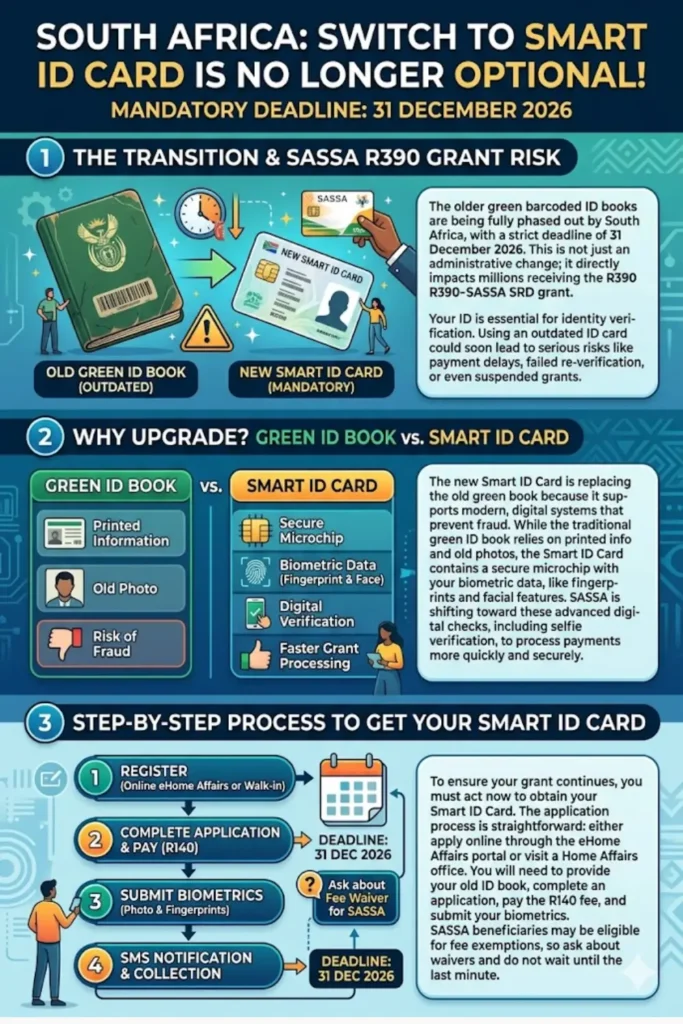
For millions of people depending on the R390 SASSA SRD grant, this is not just an administrative update. Your ID is directly linked to how you receive and verify your grant. Without the correct digital ID, there is a real risk of delays, failed verification, or even suspended payments.
The Big Change: Green ID Book vs Smart ID Card
The traditional green ID book is being replaced by the Smart ID Card, which is designed for a digital future. The new card contains a microchip with your biometric data, making it more secure and compatible with modern systems.
The older ID book simply cannot support biometric verification systems used today. As SASSA upgrades its processes, the gap between the two systems is becoming a serious problem for beneficiaries.
Key differences:
- The green ID book uses printed information and old photos
- The Smart ID Card stores digital and biometric data
- New systems require real-time identity verification
- Fraud prevention is stronger with the Smart ID
You can also read: SRD SC19 and How Apply SASSA SRD R370 Grant
Will You Lose Your R390 Grant Without a Smart ID?
As of April 2026, SASSA has not officially stopped payments for green ID users. However, all signs point toward stricter requirements soon. The system is shifting toward digital verification, and the Smart ID is becoming essential.
If your account is flagged for review or re-verification, using an outdated ID could cause serious issues. Your application may fail simply because your ID cannot match modern biometric checks.
Possible risks if you don’t upgrade:
- Failed biometric verification
- Delays in payment processing
- Rejected re-verification requests
- Suspension of your grant
Why the Smart ID Card Is Now Essential
The Smart ID Card is not just a replacement—it is a requirement for accessing digital government services. It connects directly with systems that confirm your identity using fingerprints and facial recognition.
This is especially important for SASSA’s newer verification methods, such as selfie checks. These systems compare your live image with the official photo stored in government databases.
Benefits of the Smart ID Card:
- Accurate biometric verification
- Faster processing of grants
- Reduced risk of fraud
- Better compatibility with digital platforms
The Cost Challenge: Can You Afford the Upgrade?
The Smart ID Card costs R140, which may not seem like much to some, but for someone living on a R390 grant, it is a significant expense. It represents more than one-third of monthly income.
While there are talks about fee waivers for low-income individuals, the process is still unclear. Many people are unsure if they qualify or how to apply for assistance.
| Item | Cost (2026) | Notes |
|---|---|---|
| Smart ID Card | R140 | Standard fee for adults |
| First-time ID (age 16) | Free | Only for first application |
| Replacement (lost/stolen) | R140 | Same as new card |
| Processing time | 2–4 weeks | May vary by location |
What you can do:
- Visit Home Affairs with proof of your SASSA grant
- Ask about possible fee exemptions
- Save gradually if you cannot pay at once
Step-by-Step: How to Get Your Smart ID Card
Getting your Smart ID Card is a straightforward process, but it requires planning. You can choose between applying online or visiting a Home Affairs office.
Option 1: Online Application
This is the fastest and most convenient method if you have internet access.
- Register on the eHome Affairs portal
- Fill in your personal details
- Upload required documents
- Pay the R140 fee online
- Book an appointment for biometrics
Option 2: Walk-in Application
If you prefer in-person service, you can go directly to a Home Affairs office.
- Bring your green ID book
- Carry proof of address
- Arrive early to avoid long queues
- Complete your application on-site
Final Steps
- Provide fingerprints and photo (biometrics)
- Receive SMS when your card is ready
- Collect your card with receipt and old ID
You can also read: SASSA Status Check SC19 Everything You Need to Know
The Role of Biometrics in Your Grant Payments
Biometric verification is now a key part of SASSA’s system. This includes fingerprint scans and facial recognition checks that confirm your identity.
If your photo is outdated or unclear—as it often is in older ID books—you may struggle to pass these checks. The Smart ID Card ensures your data is accurate and up to date.
Why biometrics matter:
- Prevents fraud and duplicate claims
- Ensures payments go to the right person
- Supports digital verification systems
- Improves approval success rates
What If You Can’t Upgrade Before the Deadline?
If you are unable to get your Smart ID Card before December 2026, you should still take action early. Waiting until the last moment will only increase your risk.
Even applying and keeping proof can help protect your grant in case of issues.
Action plan:
- Apply as soon as possible
- Keep your application receipt safe
- Watch for mobile Home Affairs units in your area
- Seek help from community organizations
- Use your receipt if you need to appeal a suspension
Important Tips to Stay Safe and Prepared
Staying informed and prepared is the best way to avoid disruptions in your grant payments. Small steps now can prevent bigger problems later.
Helpful tips:
- Do not wait until late 2026
- Double-check your personal details during application
- Keep copies of all documents
- Follow up if your card is delayed
- Stay updated with SASSA announcements
Conclusion
The shift to the Smart ID Card is a major change that directly affects your access to the R390 SASSA grant. While payments have not stopped yet, the risk is increasing as systems become fully digital.
You can also read: SASSA Verification Drive During Eligibility Review
Upgrading your ID is no longer optional it is necessary. By taking action now, you can avoid stress, delays, and the possibility of losing your financial support.