Check NSFAS Payment Dates for TVET Colleges April 2026 Step by Step
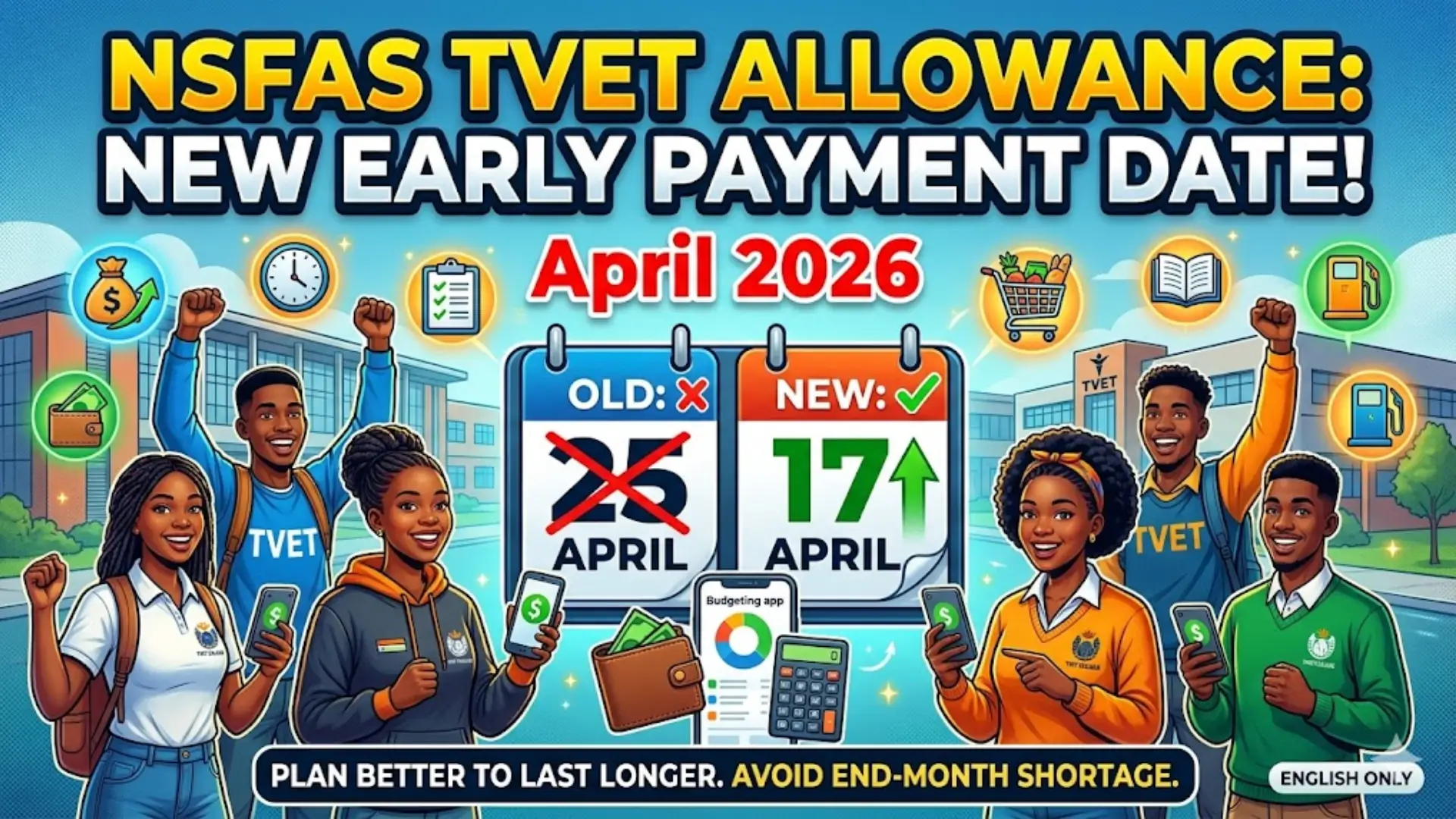
The National Student Financial Aid Scheme (NSFAS) has introduced an important update for TVET college students regarding April 2026 allowances. If you rely on this funding for your daily needs, understanding the new payment schedule is essential. This guide will walk you through the updated payment dates, what they mean for your finances, and how you can plan effectively to avoid running short before the next cycle.
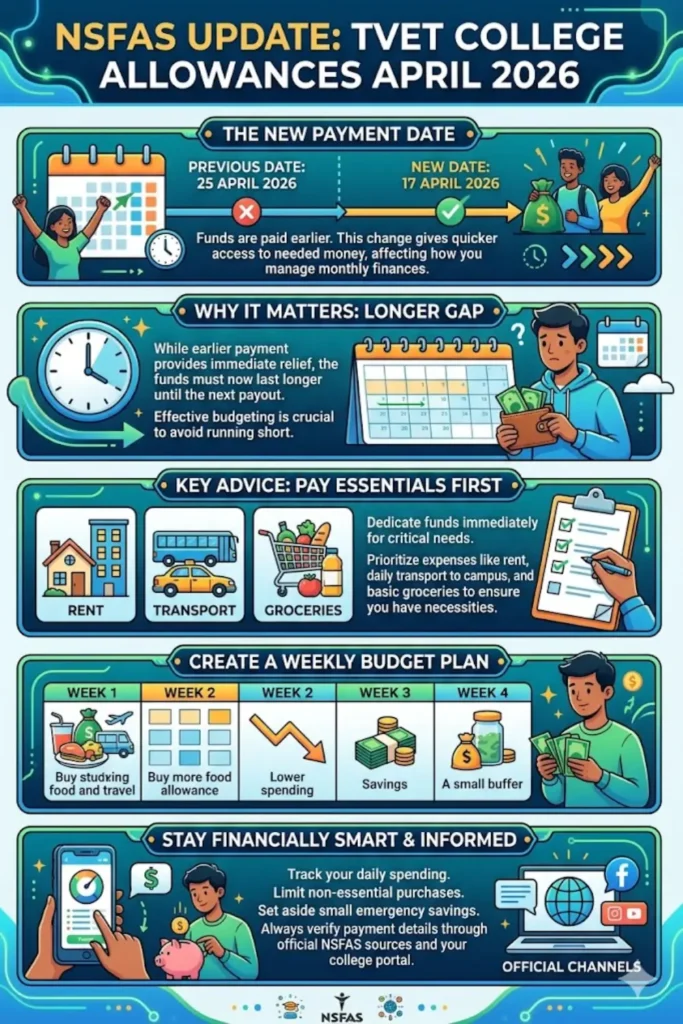
Understanding the New NSFAS Payment Date for April 2026
The April 2026 NSFAS allowance for TVET college students has been rescheduled. Instead of receiving funds later in the month, students will now get paid earlier.
This change may seem small, but it has a direct impact on how long your money needs to last. Receiving funds earlier means you gain quicker access to cash, but you also need to stretch it over more days before the next payment arrives.
Here is a quick breakdown of the change:
| Payment Detail | Previous Date | New Date | Difference |
|---|---|---|---|
| April Allowance Date | 25 April 2026 | 17 April 2026 | 8 days earlier |
This shift gives students early financial relief but requires better planning to avoid mid-month struggles.
You can also read: SASSA Grant and Track Payment April 2026 Details
Why the Early Payment Matters for Students
Getting paid earlier can feel like a financial advantage, especially if you have urgent expenses. However, the longer gap before the next payment can create pressure if spending is not controlled.
Students often depend on NSFAS allowances for essential living costs. Without a proper strategy, it becomes easy to overspend in the first few days and face difficulties later.
Key impacts of the new payment timing include:
- You receive money sooner for urgent needs
- The allowance must last longer than usual
- Poor budgeting can lead to running out early
- Planning becomes more important than ever
For many TVET students, this allowance covers critical expenses such as:
- Rent or accommodation fees
- Daily transport to campus
- Groceries and meals
- Study materials and mobile data
Managing these expenses wisely ensures financial stability throughout the month.
Step-by-Step Guide to Planning Your NSFAS Allowance
Proper budgeting is the key to making your allowance last. With the earlier payment date, students must take control of their spending from day one.
1. Pay Essential Expenses First
As soon as your allowance is received, focus on your most important needs. These are expenses that cannot be delayed.
Start with:
- Accommodation or rent payments
- Transport costs for attending classes
- Basic groceries and food supplies
Handling these first ensures you are not stuck without necessities later in the month.
Divide Your Money Into Weekly Portions
Instead of spending freely, break your allowance into smaller weekly budgets. This method helps control spending and avoids running out of money too soon.
A simple weekly plan could look like this:
| Week | Spending Focus |
|---|---|
| Week 1 | Groceries and transport |
| Week 2 | Small top-ups |
| Week 3 | Essentials only |
| Week 4 | Emergency reserve |
This structure creates discipline and ensures your money is distributed evenly.
Avoid Unnecessary Spending
Receiving money earlier can create a false sense of having extra funds. In reality, it is the same allowance that must last longer.
Try to limit:
- Buying takeaways frequently
- Spending on clothes or non-essentials
- Lending money without certainty of return
Staying focused on your needs rather than wants helps maintain financial balance.
You can also read: SASSA SRD Status Check USSD & Check SRD R350
Prepare for the Longer Waiting Period
Because of the earlier payment, you will likely face a longer gap before the next allowance. Planning ahead is essential to avoid stress during the final days.
A smart approach includes:
- Setting aside a small emergency amount
- Keeping a reserve for the last week
- Avoiding spending all funds in the first half of the month
Even a small saved amount can make a big difference when funds run low.
Track Your Daily Spending
Monitoring your expenses helps you stay aware of where your money is going. It also allows you to adjust your habits if needed.
You can track spending using:
- Notes on your phone
- Budgeting apps
- A simple notebook
Daily tracking builds financial discipline and prevents unnecessary losses.
Common Questions About NSFAS Payments
Many students have concerns about payment timing and eligibility. Understanding these answers can help you stay prepared.
What if my payment is delayed?
Sometimes payments may take extra time to reflect. This is normal due to processing delays.
- Wait 1–2 business days after 17 April
- Check your student portal for updates
- Ensure your banking details are correct
- Contact NSFAS if the issue continues
Does this update apply to university students?
No, this specific change is for TVET college students only. University students should check with their institutions for their own payment schedules.
Who qualifies for NSFAS funding?
To receive funding, students must meet certain requirements:
- Be a South African citizen
- Be enrolled in a public TVET college
- Come from a household earning R350,000 or less per year
- Be registered in an accredited program
Checking your application status regularly ensures you remain informed.
Where to Find Official NSFAS Updates
It is important to rely only on verified sources when checking payment information. Misinformation can lead to confusion and poor financial decisions.
Trusted sources include:
- The official NSFAS website
- Your TVET college student portal
- Verified NSFAS social media pages
Avoid depending on:
- Unverified WhatsApp messages
- Social media rumors
- Informal student groups
Staying informed through official channels keeps you accurate and prepared.
You can also read: SASSA Application ID UMOYA SASSA Status Check
Conclusion
The revised NSFAS payment date of 17 April 2026 offers students an early financial boost, but it also comes with added responsibility. Proper budgeting, controlled spending, and careful planning are essential to make your allowance last.
Students who manage their funds successfully are those who prioritize essentials, track their expenses, and plan ahead for longer gaps. By following these simple strategies, you can avoid financial stress and stay focused on your studies throughout the month.
Make sure to check your payment status, stay updated with official announcements, and share this information with fellow students so everyone can benefit from better planning.