Nsfas Board Member Resignations Check Reason
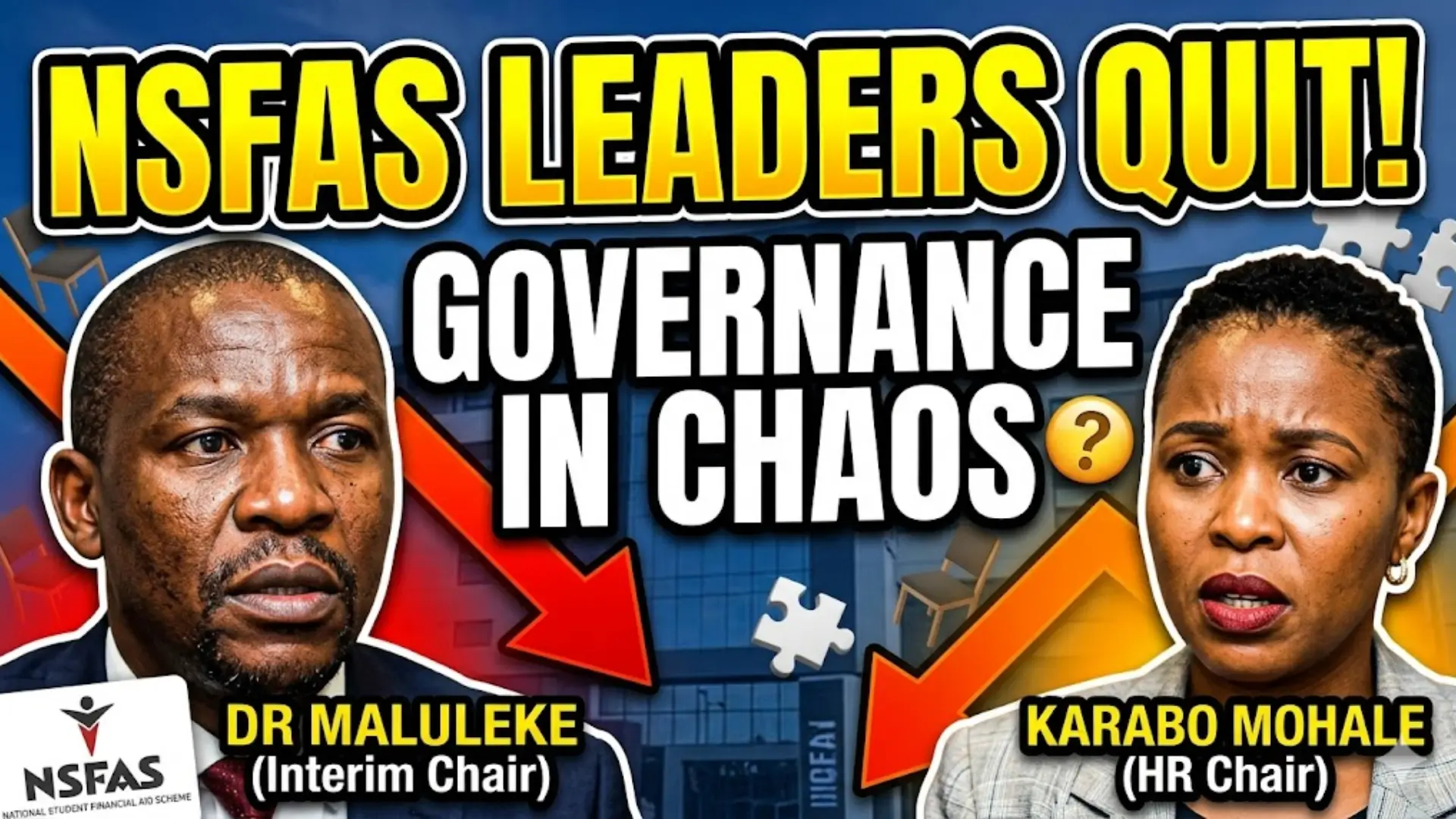
The recent resignations from the National Student Financial Aid Scheme (NSFAS) board have raised serious governance concerns. Two key members, including interim chairperson Dr Mugwena Maluleke and HR Committee Chair Karabo Mohale, have stepped down from their positions. These developments come at a time when the organization plays a critical role in supporting thousands of students with financial aid.
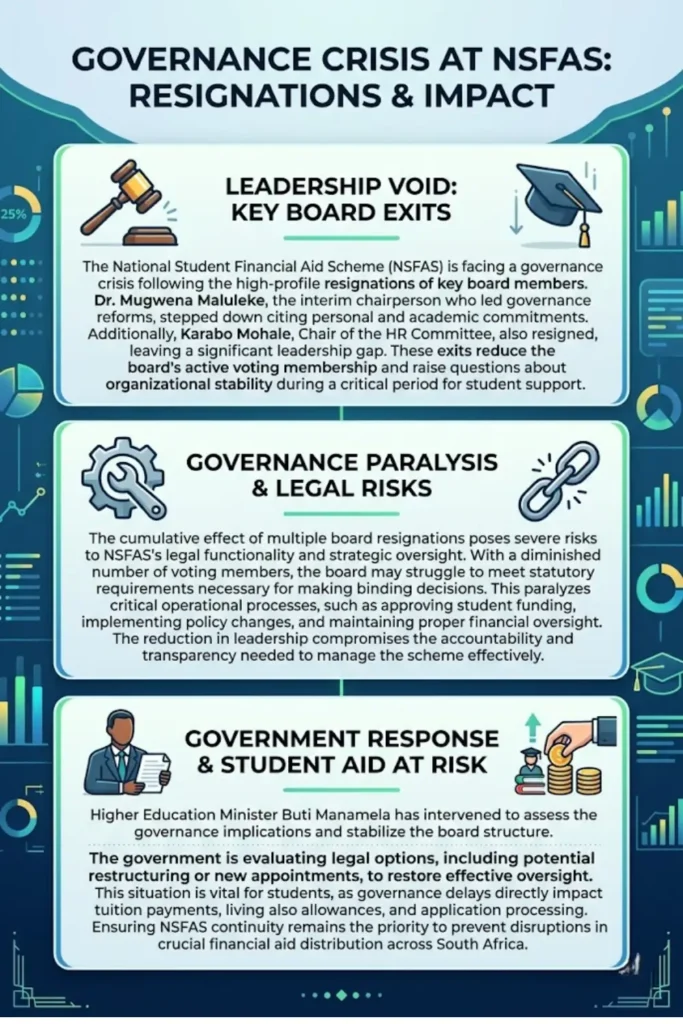
The situation has drawn attention from the Department of Higher Education and Training, with Minister Buti Manamela stepping in to assess the impact. The resignations are not just individual decisions but part of a broader issue affecting the board’s functionality and legal standing.
Key Board Members Who Resigned
The resignations involve senior figures who were central to NSFAS governance and operations. Their departure has created a leadership gap that could affect decision-making processes.
Dr Mugwena Maluleke, who served as interim chairperson, cited personal and academic commitments as the reason for stepping down. Meanwhile, Karabo Mohale, responsible for human resources and organizational development, also resigned, adding to the growing list of exits.
Important details about the resignations:
- Dr Maluleke was leading governance reforms within NSFAS
- Karabo Mohale oversaw HR policies and internal development
- Both roles were critical for strategic and operational stability
- Their exits reduce the number of active voting members
These resignations highlight how leadership changes at the top can directly impact an organization’s stability.
You can also read: Sassa May 2026 Payment Dates Check Online
Reasons Behind the NSFAS Board Resignations
The official reason provided for Dr Maluleke’s resignation is personal and academic commitments. However, the broader context suggests deeper challenges within the board structure.
According to the minister’s spokesperson, the cumulative effect of multiple resignations has weakened the board. This situation raises concerns about whether the board can continue functioning effectively and legally.
Underlying factors contributing to the situation:
- Increased pressure on board members due to governance issues
- Challenges in maintaining transparency and accountability
- Possible internal disagreements or operational strain
- Growing workload amid ongoing reforms
While not all reasons are publicly detailed, it is clear that the board is facing structural and administrative difficulties.
Impact on NSFAS Governance and Operations
The resignations have significantly reduced the number of voting members on the board. This creates a serious issue because a minimum number of members is required for legal decision-making.
Without enough members, the board may struggle to:
- Approve funding decisions for students
- Implement policy changes
- Maintain oversight of financial operations
- Meet statutory and fiduciary responsibilities
This situation could delay important decisions affecting students who rely on NSFAS funding. It also puts pressure on the remaining members to maintain operations under challenging circumstances.
Government Response and Ongoing Assessment
Minister Buti Manamela has already initiated discussions with the remaining board members. The goal is to understand the current situation and determine the next steps to stabilize the board.
The government is carefully evaluating the legal and governance implications of the resignations. This includes assessing whether the current board structure can continue or if new appointments are required.
Actions being taken by the government:
- Formal engagement with remaining board members
- Review of legal requirements for board functionality
- Assessment of governance risks
- Consideration of potential board restructuring
These steps show that the issue is being treated as a priority at the national level.
Timeline of Recent NSFAS Board Changes
| Event | Details | Impact |
|---|---|---|
| Resignation of Dr Maluleke | Stepped down as interim chairperson | Leadership gap created |
| Resignation of Karabo Mohale | Left HR Committee leadership | HR oversight affected |
| Multiple prior resignations | Reduced board size | Governance weakened |
| Minister’s intervention | Ongoing discussions initiated | Possible restructuring |
This timeline helps explain how the situation developed and why it has become a major concern.
Why This Matters for Students
NSFAS is responsible for providing financial aid to students across South Africa. Any disruption in its governance can directly affect funding distribution and student support.
Students may face uncertainty if the board cannot function properly. Delays in decision-making could impact:
- Tuition fee payments
- Allowances for living expenses
- Approval of new funding applications
This makes it essential for the government to resolve the issue quickly and ensure continuity.
You can also read: Scholarships, Bursaries, and Study Loans Explained
Possible Outcomes and Next Steps
The future of the NSFAS board depends on the outcome of the government’s assessment. Several scenarios are possible, depending on legal and operational findings.
Potential next steps:
- Appointment of new board members
- Temporary restructuring of the board
- Increased government oversight
- Policy changes to strengthen governance
Each option aims to restore stability and ensure that NSFAS continues to fulfill its mandate effectively.
Conclusion
The resignation of key members from the NSFAS board has created a significant governance challenge. While personal reasons were cited, the broader impact highlights deeper structural issues within the organization.
With Minister Buti Manamela actively involved, efforts are underway to assess and resolve the situation. The priority remains clear: ensuring that NSFAS continues to support students without disruption while strengthening its governance framework for the future.