South Africa Immigration Crackdown Johannesburg | Full Details Step by Step
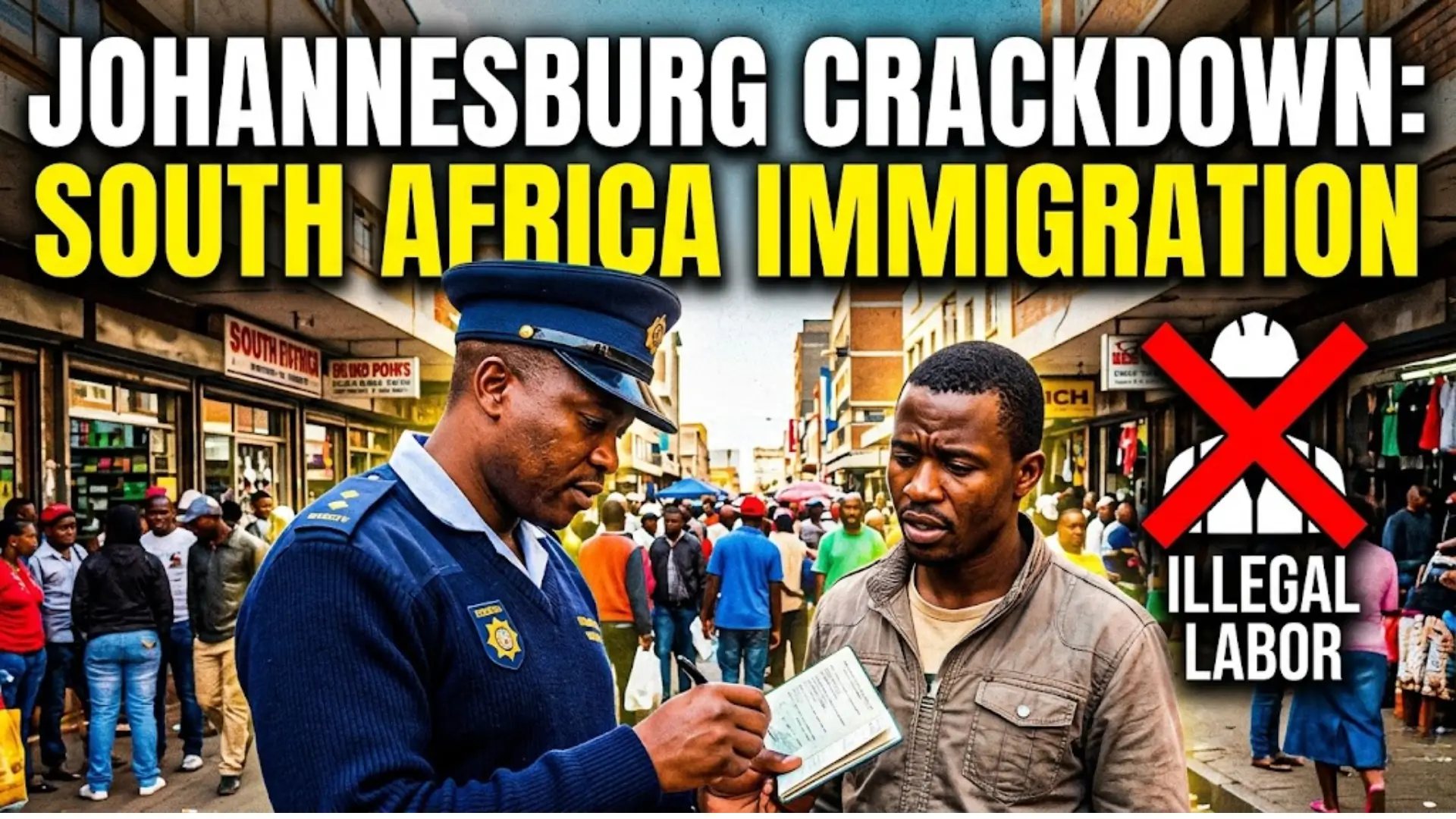
South Africa is intensifying its immigration enforcement efforts, particularly in Johannesburg, where authorities are targeting businesses that employ undocumented foreign nationals. The move comes as the government seeks to address high unemployment, strengthen labor law compliance, and reduce worker exploitation.
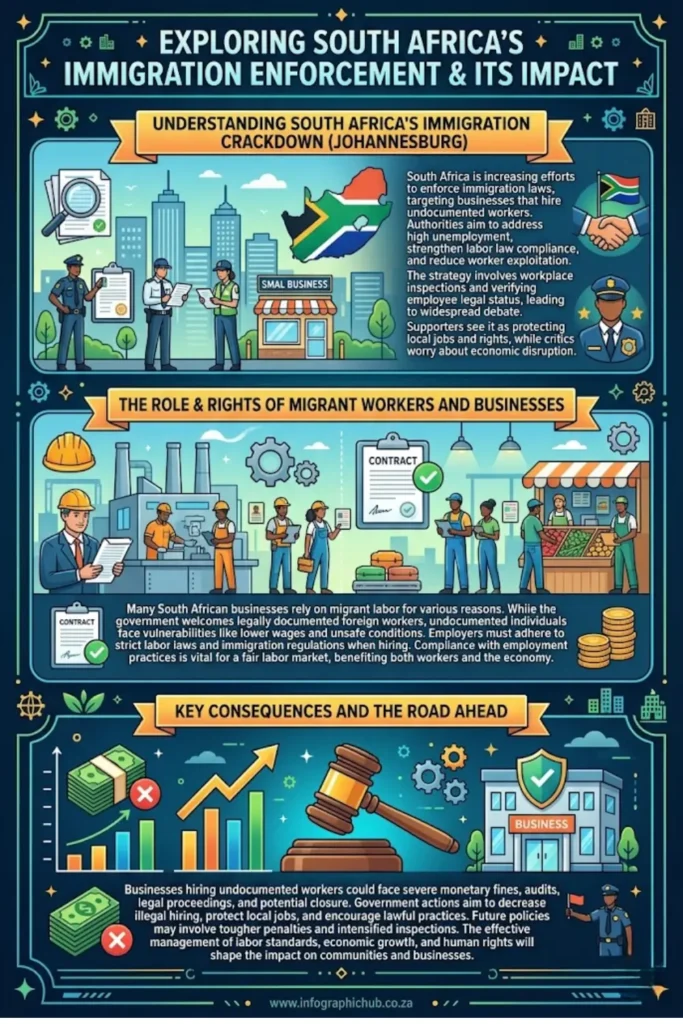
The crackdown has sparked widespread debate. Supporters argue that stricter enforcement protects local jobs and labor rights, while critics warn that it may harm businesses and disrupt parts of the economy that rely heavily on migrant labor. Understanding the full picture is essential for employers, workers, and residents affected by these changes.
Why South Africa Is Increasing Immigration Enforcement
South Africa faces one of the highest unemployment rates in the world. With overall unemployment hovering around 33% and youth unemployment exceeding 60% in some age groups, pressure has grown on the government to prioritize employment opportunities for citizens.
You can also read: Sars Auto Assessment 2026 Dates South Africa
Government officials believe some employers gain an unfair advantage by hiring undocumented migrants at lower wages and outside labor regulations. As a result, authorities are focusing on businesses that fail to comply with employment and immigration laws.
Key Reasons Behind the Crackdown
- Rising unemployment among South African citizens
- Concerns about labor exploitation
- Increased use of undocumented workers in certain industries
- Pressure from communities demanding stronger enforcement
- Government efforts to improve labor law compliance
The government maintains that the objective is lawful employment practices rather than opposition to legal immigration.
How the Johannesburg Immigration Crackdown Works
The enforcement strategy involves labor inspections, workplace investigations, and verification of employee documentation. Businesses found employing undocumented workers may face significant penalties.
Authorities are also increasing the number of labor inspectors to improve monitoring across sectors that commonly employ foreign nationals.
Step-by-Step Enforcement Process
| Step | Government Action | Purpose |
|---|---|---|
| Step 1 | Workplace inspections | Check labor law compliance |
| Step 2 | Employee document verification | Confirm legal work status |
| Step 3 | Investigation of violations | Identify unlawful employment |
| Step 4 | Penalties and fines | Enforce compliance |
| Step 5 | Possible deportation procedures | Address illegal residency cases |
This process is designed to reduce demand for undocumented labor while encouraging lawful hiring practices.
Why Some Businesses Hire Foreign Workers
Many business owners argue that economic realities have influenced hiring decisions. Small retailers and informal businesses often operate with extremely narrow profit margins.
Some employers claim foreign workers are more willing to accept temporary work arrangements, flexible schedules, and lower wages than what labor regulations require. Critics, however, argue that such practices create unfair competition and contribute to worker exploitation.
Common Reasons Employers Give
- Lower labor costs
- Flexible staffing arrangements
- Reduced administrative requirements
- Availability of workers
- Ability to hire based on business demand
Labor experts emphasize that financial pressures do not justify violating labor or immigration laws.
You can also read: Sars 2026 Return Submission Deadlines
The Government’s Position on Foreign Workers
South African authorities have repeatedly clarified that the country welcomes legally documented foreign workers. The focus of enforcement efforts is on undocumented employment rather than legal migration.
Officials argue that stronger enforcement protects both local workers and foreign nationals who may otherwise be vulnerable to abuse, underpayment, and unsafe working conditions.
The government’s position is that legal immigration can continue while unlawful employment practices are addressed through inspections and penalties.
Proposed Fines and Penalties for Employers
One of the most significant developments is the proposal to introduce tougher penalties for businesses that employ undocumented workers.
If implemented, employers could face severe financial consequences for non-compliance. The objective is to discourage illegal hiring practices by increasing the financial risks associated with violations.
Possible Employer Consequences
- Large monetary fines
- Business investigations
- Compliance audits
- Legal proceedings
- Potential business closure in serious cases
Companies are therefore being encouraged to verify employee documentation carefully before hiring.
The Role of Vigilante Groups
Alongside government enforcement, anti-immigration groups have become increasingly active in some communities. Organizations such as Operation Dudula have conducted inspections and protests targeting businesses suspected of employing undocumented migrants.
These actions have generated controversy because some operations have reportedly resulted in intimidation and violence. The South African government has publicly opposed vigilante activities and insists that immigration enforcement should remain the responsibility of state authorities.
The growing involvement of such groups has further intensified public debate around immigration policy.
Impact on Johannesburg’s Economy
Johannesburg’s inner-city economy relies heavily on informal trade, small businesses, retail operations, and migrant entrepreneurship. Many foreign nationals operate shops, logistics networks, and trading businesses that contribute to economic activity.
Some urban development experts argue that migrants play an important role in sustaining commercial areas that might otherwise struggle economically. They believe that broader investments in infrastructure, safety, and economic development may be more effective than enforcement alone.
The economic impact of stricter immigration controls remains a key area of discussion among policymakers and business leaders.
Challenges Facing Migrant Workers
Undocumented workers often face unique challenges due to their legal status. Many hesitate to report workplace abuses out of fear of deportation or legal consequences.
Common Risks Faced by Undocumented Workers
- Below-minimum wage payments
- Unsafe working conditions
- Lack of employment protections
- Fear of reporting abuse
- Limited access to legal remedies
Labor advocates argue that these vulnerabilities make undocumented workers particularly susceptible to exploitation.
You can also read: Auto Assessment Filing Period 2026
How Businesses Can Stay Compliant
Businesses operating in Johannesburg and across South Africa should take proactive steps to ensure compliance with both labor and immigration laws.
Employers should regularly review hiring procedures, verify work authorization documents, and maintain accurate employment records. Compliance not only reduces legal risks but also helps build a sustainable and lawful workforce.
Best Practices for Employers
- Verify employee identification documents
- Confirm legal work authorization
- Maintain updated personnel records
- Follow minimum wage regulations
- Provide required workplace protections
- Conduct regular compliance reviews
Early compliance efforts can help businesses avoid costly penalties and legal complications.
Common Misconceptions About the Crackdown
Many people mistakenly believe the government’s actions are aimed at all foreign nationals. In reality, officials have repeatedly stated that legal migrants are permitted to work and live in South Africa if they comply with immigration requirements.
Another misconception is that immigration enforcement alone will solve unemployment. Economic experts generally agree that unemployment is influenced by multiple factors, including economic growth, education, investment, and skills development.
Understanding these distinctions is important when evaluating the broader policy debate.
What Could Happen Next?
South Africa’s immigration enforcement strategy is likely to continue evolving. Additional inspections, stronger employer penalties, and tighter verification systems may be introduced in the coming months.
At the same time, policymakers will face pressure to balance labor protection, economic growth, human rights concerns, and immigration management. The effectiveness of the crackdown will ultimately depend on how these competing priorities are managed.
Businesses, workers, and communities should closely monitor future policy announcements and regulatory changes.
You can also read: Whatsapp Plus Subscription South Africa
Conclusion
The South Africa immigration crackdown in Johannesburg represents a significant shift in labor and immigration enforcement. Driven by concerns over unemployment, worker exploitation, and legal compliance, the government is increasing inspections and proposing tougher penalties for employers who hire undocumented workers.
While supporters view the measures as necessary to protect jobs and labor standards, critics warn about potential economic consequences and the risks of rising anti-immigrant tensions. As enforcement expands, businesses and workers alike must understand their rights, responsibilities, and the changing legal landscape to navigate the new environment successfully.