July Petrol Price Forecast South Africa Drivers are Being Given Relief
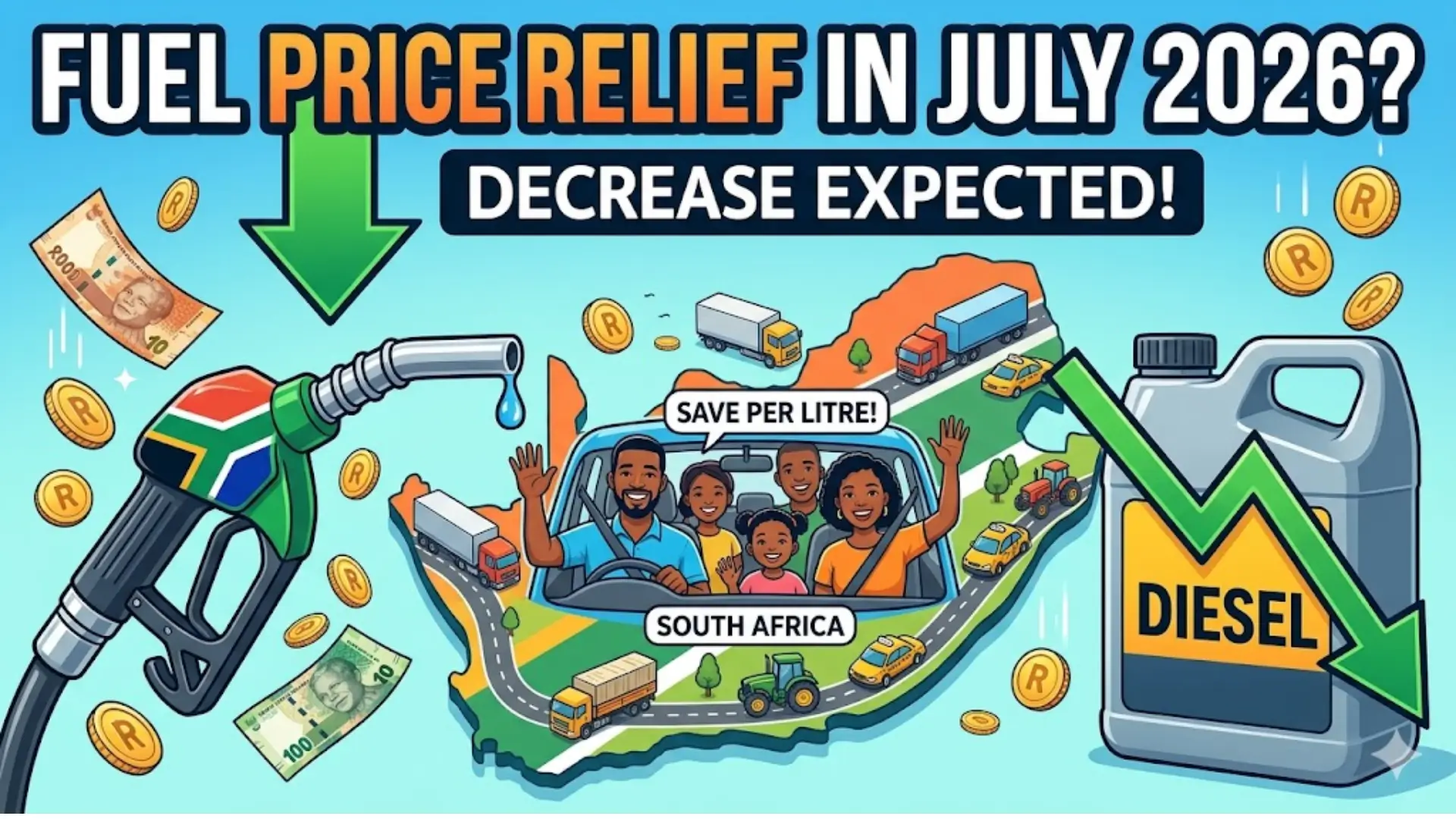
South African motorists may finally get some welcome relief in July 2026 as fuel prices are expected to decrease. Mid-month data from the Central Energy Fund (CEF) suggests that both petrol and diesel prices could be adjusted downward when the new fuel prices take effect on 2 July 2026.
The expected reduction comes at a time when households and businesses continue to face rising living costs. While the forecasted decrease may not be dramatic, it could still provide meaningful savings for drivers, transport operators, and the broader economy.
Why Fuel Prices Are Expected to Drop in July 2026
Two major factors are contributing to the anticipated fuel price decrease in South Africa. The first is a decline in global crude oil prices, while the second is the relative stability of the South African rand against the US dollar.
You can also read: July 2026 SASSA Grant Calendar
Lower international oil prices reduce the cost of importing fuel, while a stronger or stable rand helps limit the impact of dollar-denominated fuel purchases. Together, these factors have created favorable conditions for a fuel price reduction.
Key Reasons Behind the Forecast
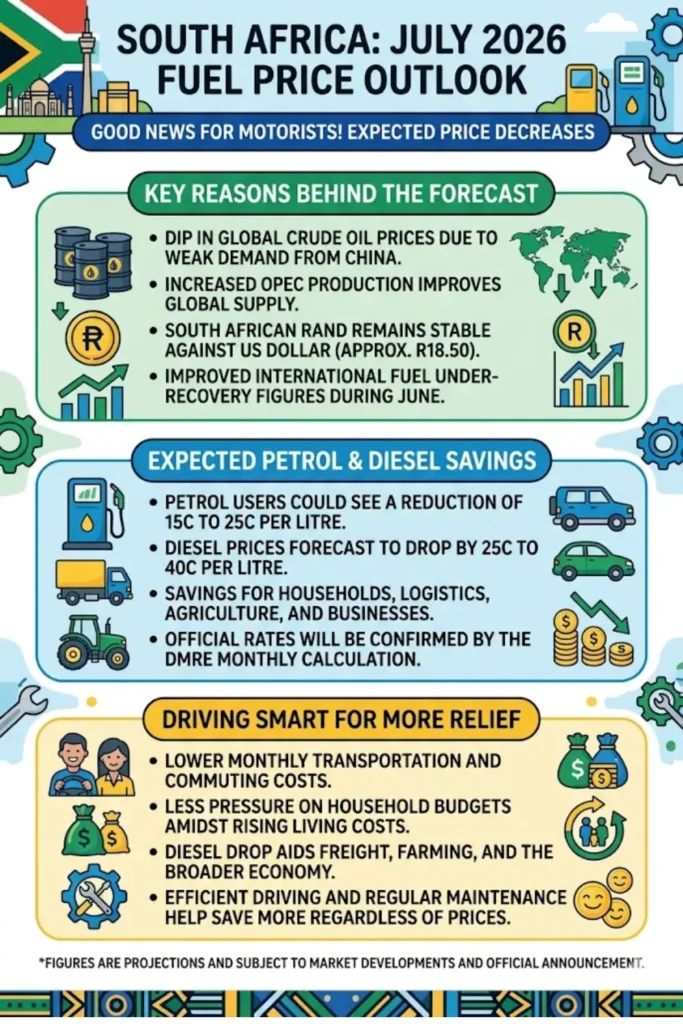
- Brent crude oil prices have weakened due to slower demand from China.
- OPEC production increases have improved global oil supply.
- The rand has remained relatively stable around R18.50 per US dollar.
- International fuel costs have shown under-recovery improvements during June.
- Market conditions have been less volatile compared to previous months.
If these trends continue through the remainder of June, South African motorists are likely to benefit from lower pump prices in July.
Expected Petrol and Diesel Price Changes
According to fuel market estimates, petrol users could see a reduction of between 15 and 25 cents per litre. Diesel prices are forecast to decrease even further, potentially dropping by 25 to 40 cents per litre.
The final adjustment will only be confirmed after the Department of Mineral Resources and Energy completes its monthly fuel price calculations and publishes the official rates.
July 2026 Fuel Price Forecast
| Fuel Type | Expected Change |
|---|---|
| Petrol 93 | -15c to -25c per litre |
| Petrol 95 | -15c to -25c per litre |
| Diesel 0.05% | -25c to -40c per litre |
| Diesel 0.005% | -25c to -40c per litre |
These figures remain projections and could still change depending on market developments during the final week before the official announcement.
How South Africa Calculates Fuel Prices
Many motorists wonder why fuel prices change every month. South Africa follows a regulated fuel pricing system that relies on several economic indicators.
The Department of Mineral Resources and Energy calculates monthly fuel prices using average international fuel prices, exchange rate movements, transport costs, and government taxes and levies.
Main Factors Affecting Fuel Prices
- International petrol and diesel prices.
- Rand-to-dollar exchange rate.
- General Fuel Levy.
- Road Accident Fund (RAF) Levy.
- Storage, transport, and distribution costs.
- Regulatory and industry margins.
Even small changes in these factors can influence the final fuel price adjustment announced each month.
What the Fuel Price Drop Means for Drivers
Although the expected reduction may appear small, it can still help motorists manage transportation expenses. Every decrease at the pump translates into lower monthly fuel costs, particularly for households that travel frequently.
For example, a 15-cent reduction per litre means a motorist filling a 50-litre fuel tank could save approximately R7.50 per fill-up. Over several refuels each month, those savings can become noticeable.
You can also read: SASSA Application Referred Status 2026
Potential Savings for Consumers
- Lower commuting costs.
- Reduced household transport expenses.
- Slight relief from broader cost-of-living pressures.
- Better budgeting opportunities for families.
- Lower fuel expenses during school and work travel.
While not a major financial breakthrough, these savings can help consumers stretch their budgets further.
Why Diesel Price Relief Is More Important for the Economy
The forecasted diesel reduction could have a wider economic impact than petrol savings. Diesel powers many sectors of the economy, including freight transport, agriculture, mining, logistics, and public transport services.
When diesel costs decrease, businesses often face lower operating expenses. This can help slow inflationary pressures and reduce transportation costs across supply chains.
Industries That Benefit Most
- Trucking and logistics companies.
- Farming and agricultural operations.
- Mining businesses.
- Bus and transport operators.
- Retail supply chains.
Lower diesel prices can indirectly benefit consumers by helping stabilize the prices of food and other essential goods.
Impact on the Taxi Industry and Public Transport
South Africa’s minibus taxi industry transports millions of commuters every day and remains heavily affected by fuel costs. Rising fuel prices often lead to discussions about fare increases that place additional pressure on passengers.
A decrease in petrol prices may ease some of these concerns. Taxi associations may face less urgency to increase fares if fuel expenses decline, providing temporary relief for both operators and commuters.
Fuel Levies and Government Charges Remain Important
Although fuel prices are expected to fall, government taxes and levies continue to make up a significant portion of the pump price. These charges can limit the size of any reduction motorists ultimately receive.
The General Fuel Levy is expected to return to its normal level after temporary relief measures earlier in the year, while the Road Accident Fund Levy remains unchanged at R2.18 per litre.
Factors That Could Still Change the Forecast
Motorists should remember that fuel price forecasts are not guarantees. Several market developments could alter the final outcome before the official announcement.
Oil markets remain sensitive to geopolitical events, supply disruptions, and economic data from major economies. Similarly, sudden weakness in the rand could quickly reduce or eliminate projected savings.
Risks That Could Affect July Fuel Prices
- Unexpected increases in global oil prices.
- Geopolitical tensions affecting energy supply.
- Sharp movements in the rand exchange rate.
- Changes in global fuel demand.
- Market volatility during the final pricing period.
Because of these risks, drivers should wait for the official fuel price announcement before making financial decisions based on projected savings.
Fuel-Saving Tips for South African Motorists
Even when fuel prices fall, efficient driving habits remain one of the best ways to reduce fuel expenses. Small changes in driving behavior can often save more money than a modest fuel price decrease.
Motorists who focus on vehicle maintenance and efficient driving techniques can improve fuel economy throughout the year.
You can also read: Sars Illicit Trade Enforcement
Practical Ways to Save Fuel
- Keep tyres properly inflated.
- Avoid harsh acceleration and sudden braking.
- Remove unnecessary weight from vehicles.
- Service vehicles regularly.
- Combine multiple trips into one journey.
- Maintain steady highway speeds.
- Reduce excessive idling.
Consistent fuel-saving habits can provide long-term savings regardless of monthly fuel price movements.
Final Thoughts
The July 2026 fuel price outlook offers encouraging news for South African motorists. Current data suggests that both petrol and diesel prices could decline, providing some relief for consumers, transport operators, and businesses facing ongoing economic pressures.
While the expected reductions are relatively modest, lower fuel costs are still welcome in a challenging cost-of-living environment. Drivers should continue monitoring official announcements from the Department of Mineral Resources and Energy and maintain smart fuel-saving practices to maximize the benefits of any price decrease.