How to Cancel Nsfas Application & Check NSFAS Living Allowance For South Africa Student
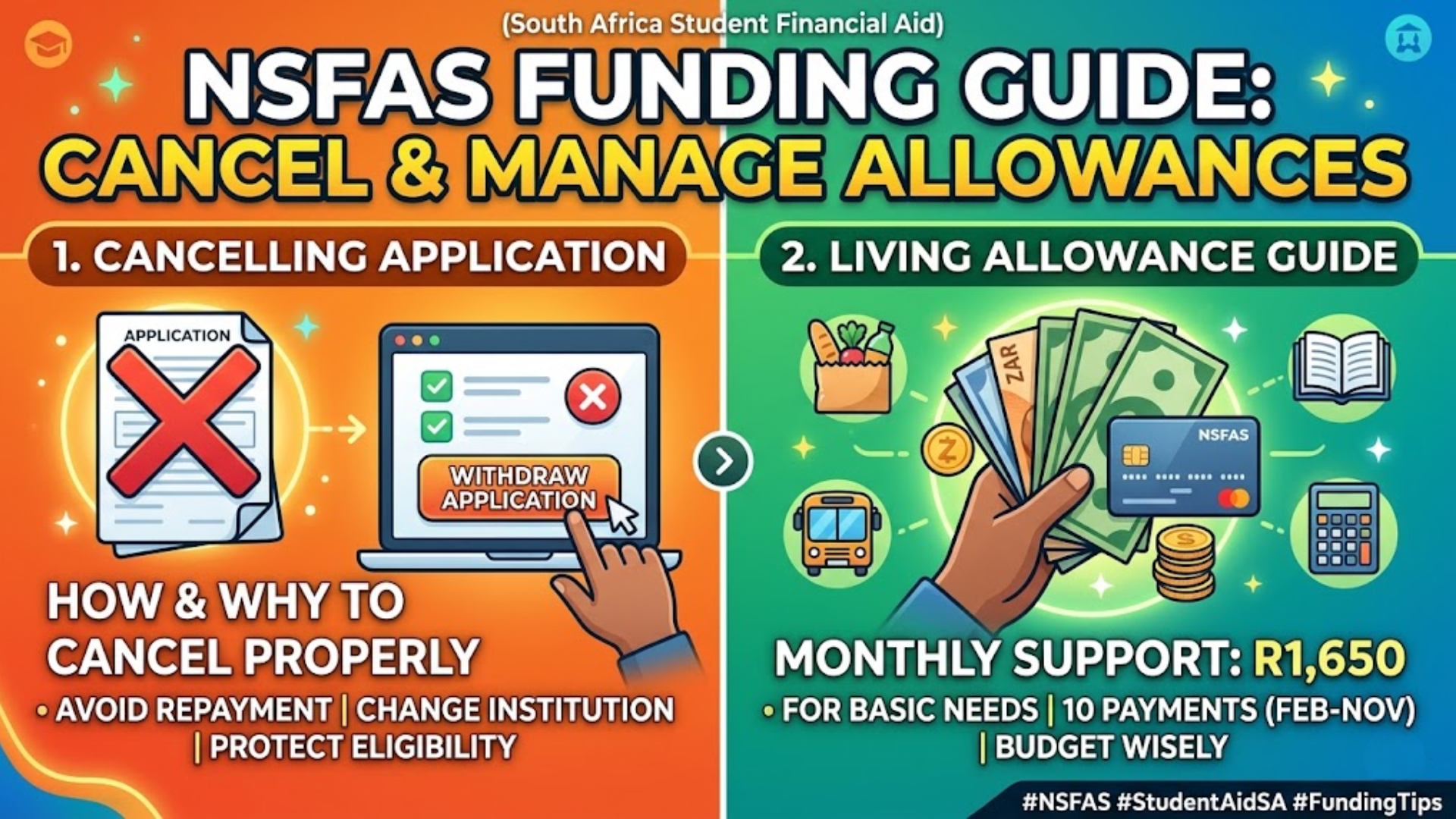
Understanding how to manage your funding with National Student Financial Aid Scheme is essential if your study plans change or if you want to make the most of your financial support. This guide explains both how to cancel your NSFAS application properly and how to understand and track your living allowance in a simple, practical way.
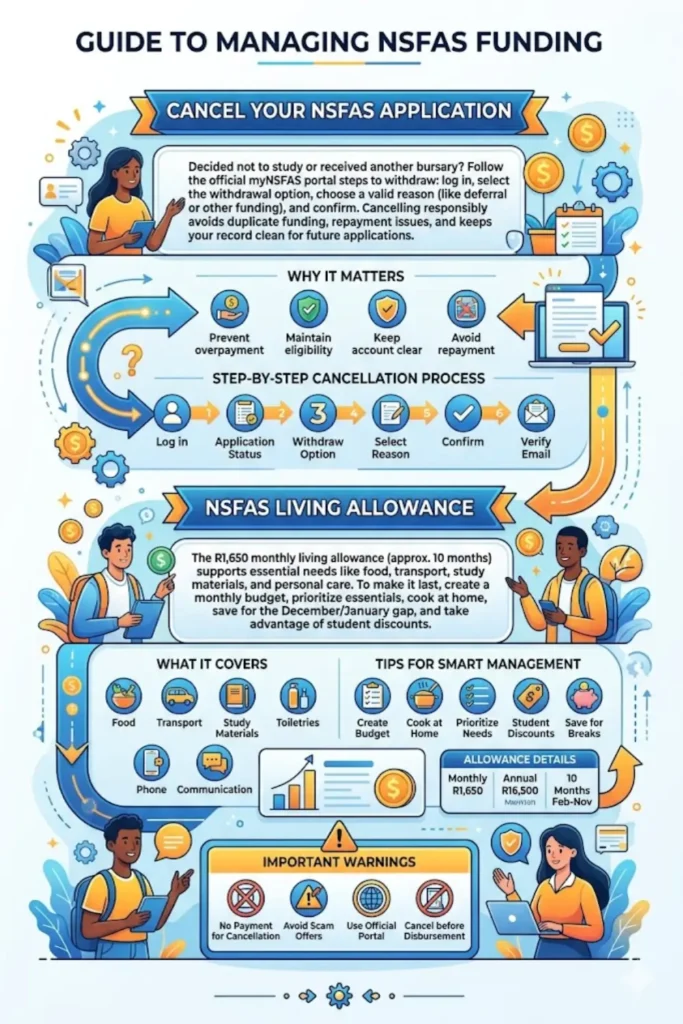
Understanding NSFAS Application Cancellation
Cancelling your NSFAS application means you are voluntarily withdrawing your request for funding through the official myNSFAS portal. This is different from rejection, because the decision comes from you not the system.
When you submit an application, NSFAS starts verifying your income, academic status, and admission details. If your plans change such as choosing a different institution, getting a private bursary, or taking a gap year you should cancel your application properly instead of leaving it pending.
You can also read: Scholarships, Bursaries, and Study Loans
Cancelling responsibly helps keep your funding record clean. It also prevents complications like duplicate funding or account restrictions when applying again in the future.
Why Cancelling Your NSFAS Application Matters
Cancelling your application is not just an administrative step—it protects your financial future as a student.
- Prevents double funding issues
If you receive another bursary, keeping NSFAS active could lead to overpayment. - Maintains eligibility for future applications
A properly withdrawn application shows responsibility. - Keeps your account clear and usable
Pending applications can block new updates or submissions. - Avoids repayment obligations
If funds are disbursed and unused, you may need to pay them back.
Taking a few minutes to cancel properly can save you from long-term complications.
Who Should Cancel Their NSFAS Application?
Not every student needs to cancel, but certain situations make it necessary.
- First-time applicants
If you change your course or institution before enrollment. - Returning students
If you decide to defer or stop studying. - Students switching institutions
Especially when moving to private or non-funded colleges. - SASSA beneficiaries
Even if automatically qualified, you must cancel if not studying.
If your academic path changes, cancelling ensures your funding status matches your situation.
Step-by-Step: How to Cancel NSFAS Application Online
Cancelling your application is done through the myNSFAS portal. Follow these steps carefully:
Step 1: Log into Your Account
Go to the official NSFAS website and access your myNSFAS profile using your ID/email and password.
Step 2: Open Application Status
Navigate to:
- “Application Status”
- “Track Application”
- “My Application”
Step 3: Find the Withdraw Option
Look for:
- “Withdraw Application”
- “Cancel Application”
This option may not appear if your application is already finalized.
Step 4: Select a Reason
Choose the correct reason, such as:
- No longer studying
- Accepted another bursary
- No longer eligible
Step 5: Confirm Submission
Click confirm and ensure the system shows a success message.
Step 6: Verify via Email
You should receive confirmation within 24–48 hours. Keep this for your records.
Common Problems and How to Solve Them
Students often face issues during cancellation. Here’s how to handle them:
- Missing cancel button
- Happens if application is approved/rejected
- Solution: Contact NSFAS support
- Portal not loading
- Try off-peak hours
- Clear browser cache or switch devices
- Forgotten login details
- Use “Forgot Password”
- Avoid creating duplicate accounts
- No confirmation received
- Check spam folder
- Log in again to verify status
If problems persist, contacting NSFAS directly is the safest option.
You can also read: Nsfas Board Member Resignations
NSFAS Living Allowance Explained
The NSFAS living allowance is monthly financial support given to students for daily expenses. It does not cover tuition or accommodation but helps with personal costs.
This allowance is designed to support your basic needs so you can focus on your studies without constant financial stress.
What the Living Allowance Covers
- Food and groceries
- Transport to campus
- Study materials (basic supplies)
- Toiletries and personal care
- Mobile data and communication
- Small emergency expenses
This money is meant for essential living not luxury spending.
NSFAS Living Allowance Payment Structure
Understanding how payments work helps you manage your money better.
| Category | Details |
|---|---|
| Monthly Amount | R1,650 |
| Annual Total | R16,500 |
| Payment Duration | 10 months |
| Payment Period | February to November |
| Excluded Months | December & January |
| Payment Method | Bank account or NSFAS wallet |
Since payments stop in December and January, students should plan ahead and save during the year.
Who Qualifies for NSFAS Living Allowance?
To receive the allowance, you must meet certain conditions:
- Income requirements
- Below R350,000 annually
- Below R600,000 for students with disabilities
- Academic requirements
- Registered at a public university or TVET college
- Maintain academic progress
- Funding approval
- Must already be funded by NSFAS
- All documents verified
Not every funded student receives the same allowance—this depends on accommodation type.
Types of Living Allowance Based on Accommodation
| Accommodation Type | Allowance Type | Details |
|---|---|---|
| Private housing | Full living allowance | R1,650/month |
| University residence | Reduced allowance | Meals covered separately |
| Distance learning | Incidental allowance | Based on needs |
Understanding your category helps you avoid confusion about payment amounts.
Tips to Manage Your NSFAS Allowance Wisely
Managing your allowance properly is key to surviving the academic year.
- Create a monthly budget
- Plan spending before the month starts
- Prioritize essentials
- Food and transport come first
- Cook instead of buying food
- Saves a lot of money
- Use student discounts
- Always carry your student card
- Save small amounts monthly
- Prepare for December and January
- Share expenses
- Split groceries and internet with roommates
Good money habits now will benefit you long after graduation.
You can also read: SRD R350 Status Check if Approved
Important Warnings for Students
- Never pay anyone to cancel your NSFAS application
- Avoid sharing login details with third parties
- Only use the official NSFAS portal
- Cancel before funds are disbursed to avoid repayment
Scams targeting students are common—stay cautious.
Final Thoughts
Managing your funding through the National Student Financial Aid Scheme requires awareness and responsibility. Whether you need to cancel your application or understand your living allowance, taking the right steps ensures your financial journey stays smooth.
Cancelling your application properly protects your future eligibility, while managing your allowance wisely helps you succeed academically. Stay informed, keep records of every action, and always rely on official channels for updates. Your education is an investment handle your funding with care.