Sasol Natref Sustainability Certification 2026 Check Complete Details
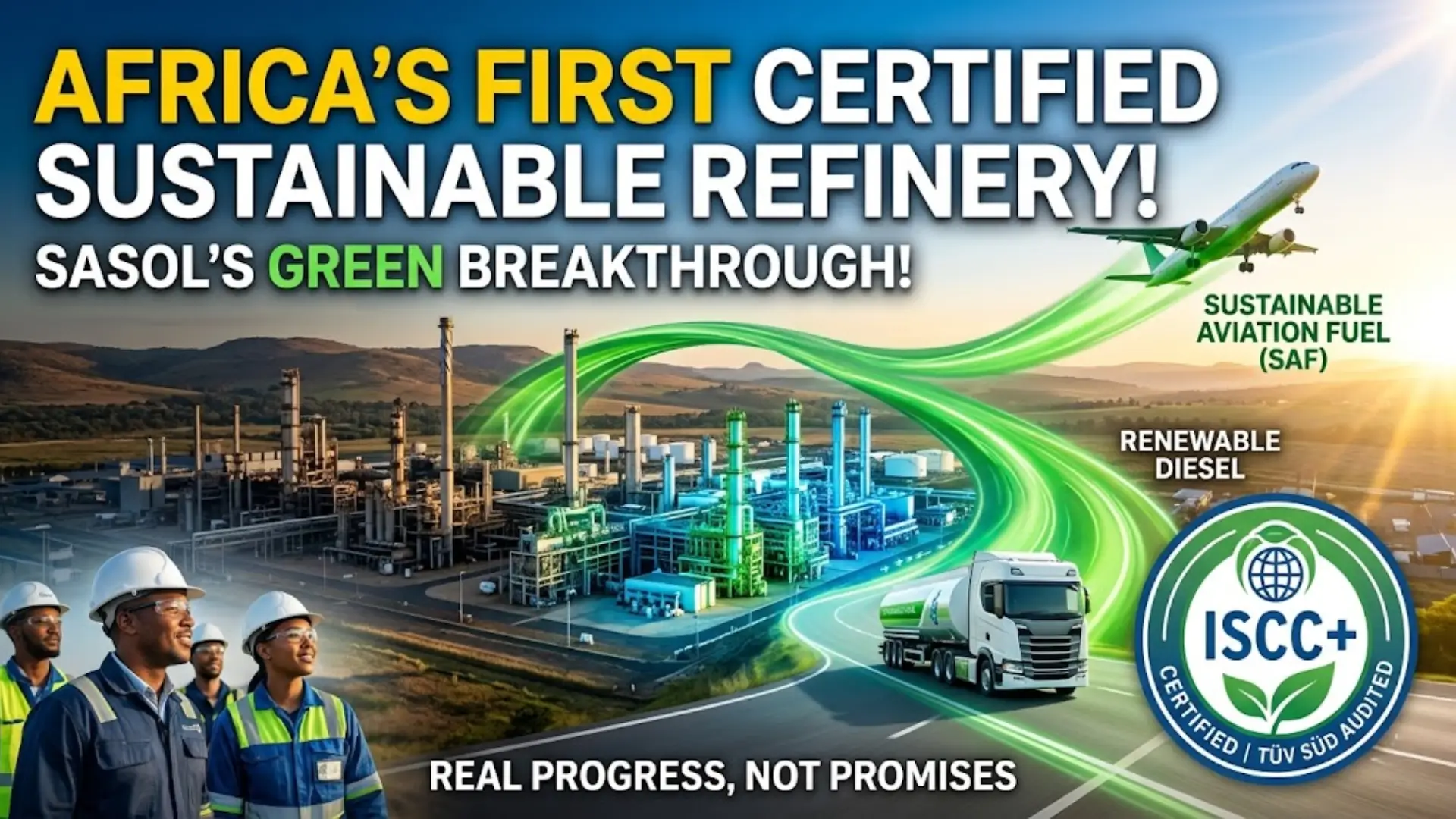
The recent achievement by Sasol marks a significant turning point in Africa’s journey toward cleaner energy and industrial transformation. With Natref becoming the first refinery on the continent to secure sustainability certification for key fuel production pathways, this milestone highlights real progress rather than future promises.
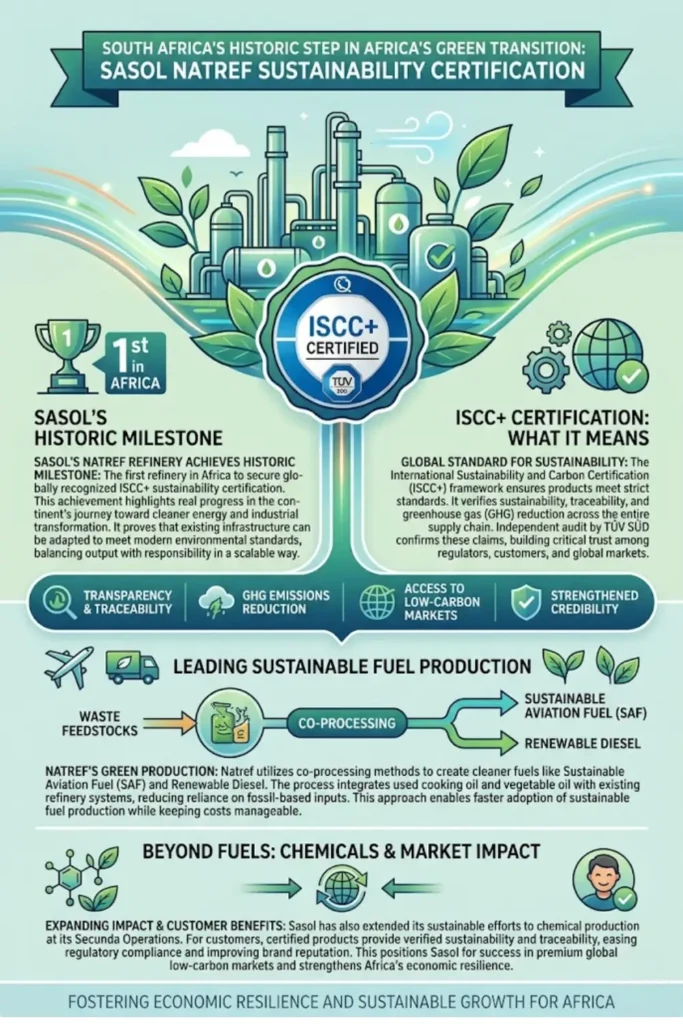
This certification is not just symbolic. It reflects how existing infrastructure can be adapted to meet modern environmental standards without waiting for entirely new systems. It also demonstrates how companies can balance industrial output with environmental responsibility in a practical and scalable way.
What Is the ISCC+ Certification and Why It Matters
The certification awarded to Sasol comes under the globally recognized International Sustainability and Carbon Certification framework. This system ensures that products meet strict sustainability, traceability, and carbon reduction standards across the entire supply chain.
The audit was conducted by TÜV SÜD, an independent organization known for its rigorous verification processes. Independent certification is essential because it builds trust among customers, regulators, and global markets.
Key benefits of ISCC+ certification include:
- Ensures transparency in sourcing and production
- Confirms reduction in greenhouse gas emissions
- Enables access to international low-carbon markets
- Strengthens credibility of sustainability claims
You can also read: R3 Million Primary Residence Exclusion
Natref Refinery: Leading Sustainable Fuel Production
Natref’s certification focuses on producing cleaner fuels such as Sustainable Aviation Fuel (SAF) and Renewable Diesel. These fuels are created through co-processing methods using used cooking oil and vegetable oil, reducing reliance on fossil-based inputs.
This approach is important because it uses existing refinery infrastructure rather than requiring entirely new plants. It allows faster adoption of sustainable fuel production while keeping costs manageable.
Key Highlights of Natref’s Achievement
- First refinery in Africa to achieve this certification
- Production of Sustainable Aviation Fuel and Renewable Diesel
- Use of waste-based and renewable feedstocks
- Integration with existing refinery systems
Secunda Operations: Expanding Into Sustainable Chemicals
In addition to fuel production, Sasol has also achieved certification for sustainable chemical production at its Secunda Operations. This expands the company’s sustainability efforts beyond energy into the chemical sector, which is traditionally carbon-intensive.
The certification ensures that chemical products are produced with verified sustainable inputs and processes. This is especially important for industries looking to reduce their environmental footprint across supply chains.
Benefits for Chemical Production
- Supports low-carbon industrial manufacturing
- Meets global sustainability requirements
- Enhances product traceability
- Opens doors to premium international markets
Key Certification Details at a Glance
| Category | Details |
|---|---|
| Company | Sasol |
| Certification Standard | ISCC+ (International Sustainability and Carbon Certification) |
| Auditor | TÜV SÜD |
| Certified Locations | Natref Refinery & Secunda Operations |
| Fuel Products | Sustainable Aviation Fuel, Renewable Diesel |
| Feedstock Sources | Used cooking oil, vegetable oil |
| Industry Impact | Energy and chemicals sustainability advancement |
Impact on South Africa’s Energy Transition
This milestone strengthens South Africa’s position in the global transition toward cleaner energy. By enabling certified sustainable production locally, Sasol supports national goals while also contributing to international climate commitments.
It also shows that developing economies can take meaningful steps toward decarbonization without compromising industrial growth. The ability to produce certified fuels and chemicals locally reduces dependence on imports and boosts economic resilience.
Broader Impacts
- Supports national decarbonization goals
- Encourages investment in sustainable technologies
- Strengthens export competitiveness
- Promotes innovation within existing infrastructure
You can also read: SRD SASSA Gov Za SC19 Application Mobile Online
What This Means for Customers and Markets
For customers, certification provides assurance that the products they use meet strict global sustainability standards. This is increasingly important as businesses face pressure to reduce emissions and ensure ethical sourcing.
Certified products also make it easier for companies to comply with international regulations and sustainability reporting requirements. This gives Sasol a competitive advantage in premium and export markets.
Customer Advantages
- Verified sustainability and traceability
- Easier regulatory compliance
- Improved brand reputation
- Access to low-carbon supply chains
Future Opportunities and Growth Potential
This certification is not the end goal but a foundation for future expansion. Sasol has indicated that this milestone supports future scaling opportunities, partnerships, and policy engagement. It aligns with commitments made during its 2025 Capital Markets Day.
Looking ahead, the company is well-positioned to expand its sustainable product portfolio and collaborate with global partners. Continued innovation and regulatory support will play a key role in maintaining this momentum.
Conclusion
The Sasol Natref Sustainability Certification in 2026 represents a practical and impactful step toward cleaner energy and sustainable industrial practices. By achieving ISCC+ certification, Sasol has demonstrated that large-scale, certified sustainable production is possible using existing assets.
You can also read: Eskilz College AI Training for Business in South Africa
This achievement not only strengthens the company’s global competitiveness but also contributes meaningfully to South Africa’s energy transition. It sets a strong example for other industries across Africa and beyond, showing that sustainability and industrial growth can move forward together.