2027 Nsfas Application Opening Date How to Apply & Check Deadlines
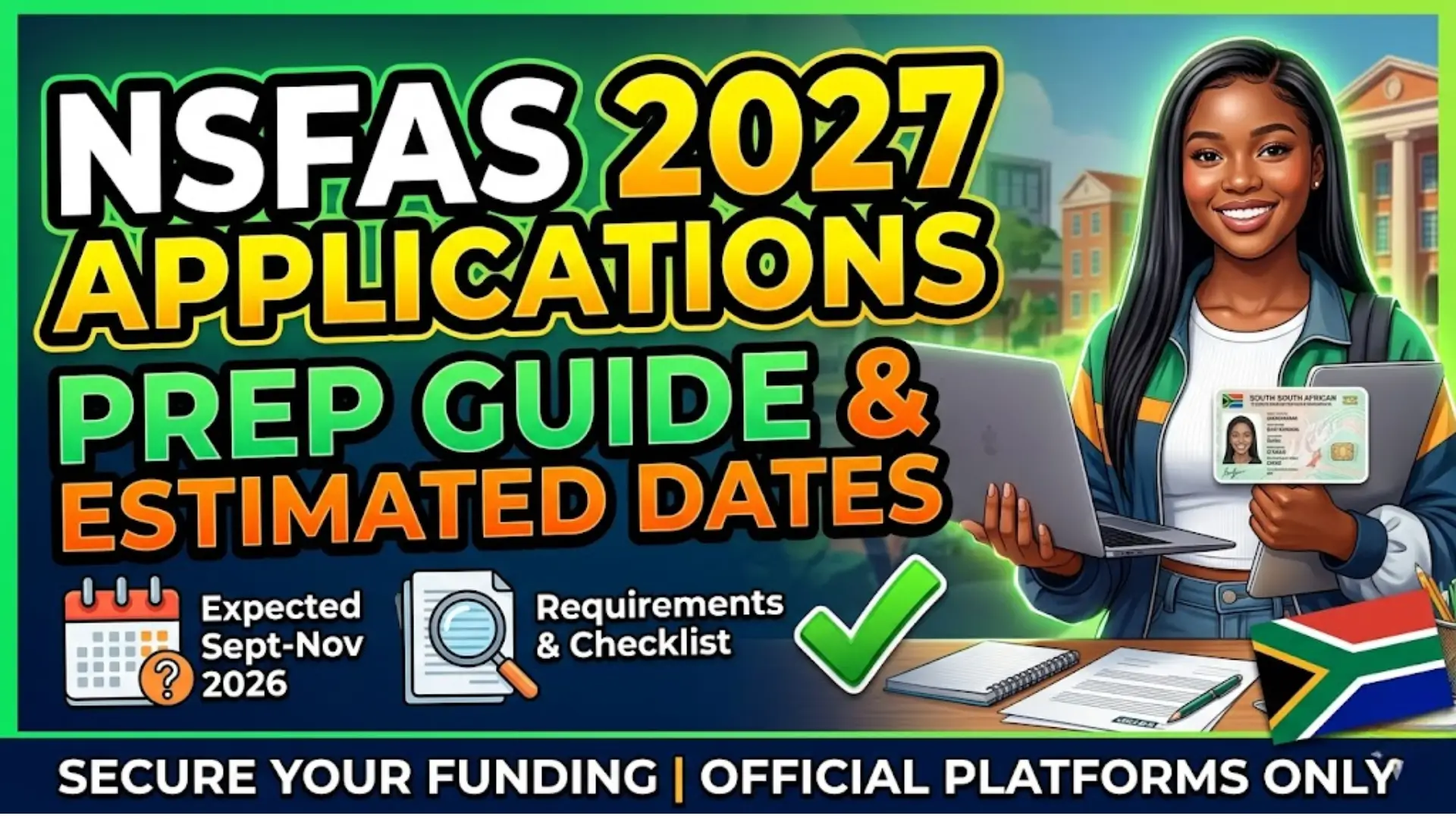
Planning to study in South Africa with financial support requires good timing and preparation. If you’re aiming for the 2027 academic year, understanding when NSFAS applications open, how the process works, and what deadlines to follow is essential.
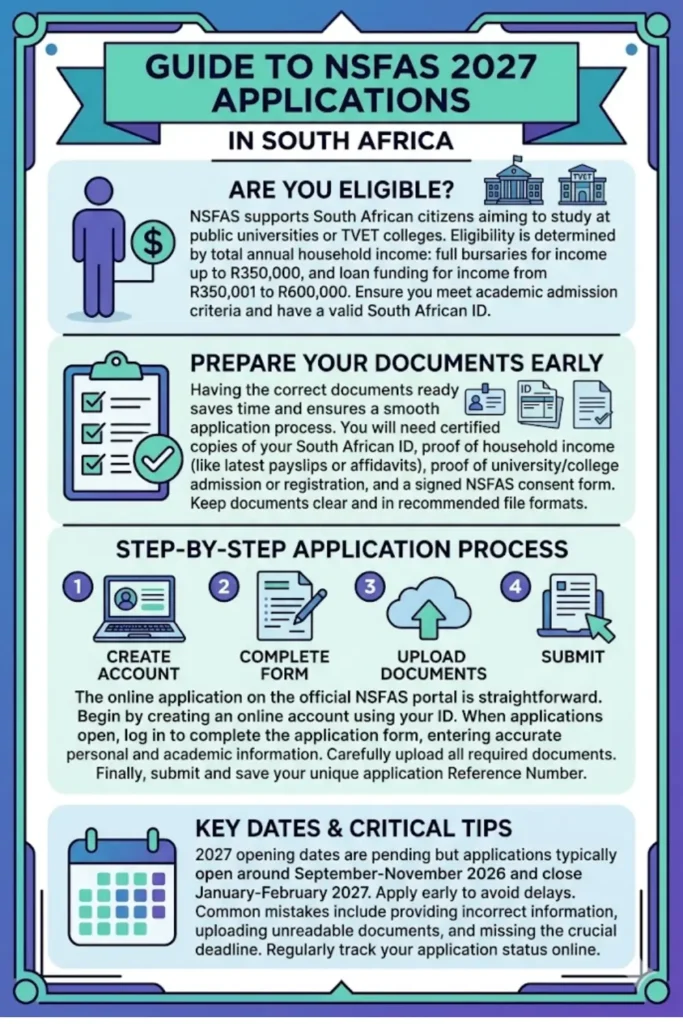
This guide explains everything in a simple, clear, and practical way so you can apply with confidence and avoid common mistakes.
Expected NSFAS Application Opening Date for 2027
The official opening date for NSFAS 2027 applications has not yet been announced. However, based on previous years, applications are expected to open between September 2026 and November 2026.
This timeline follows a consistent pattern where applications open toward the end of the year before the academic intake. The exact date will only be confirmed through official government announcements.
Students should not rely on unofficial sources. Instead, keep checking trusted platforms regularly so you don’t miss the application window.
What you should do now:
- Start preparing documents early
- Create your NSFAS account in advance
- Track announcements from official channels
- Avoid relying on social media rumors
You can also read: SRD SASSA Reapplication R370 Grants
NSFAS Application Timeline Based on Previous Years
Understanding past application cycles helps predict future dates and prepare better. NSFAS usually keeps applications open for a few months to allow enough time for submission and verification.
Historical NSFAS Application Timeline
| Academic Year | Opening Period | Closing Period | Duration |
|---|---|---|---|
| 2026 | Mid-November 2025 | Mid-February 2026 | ~12 weeks |
| 2025 | September 2024 | January 2025 | ~16 weeks |
| 2024 | November 2023 | January 2024 | ~10 weeks |
From this pattern, the 2027 cycle will likely:
- Open in late 2026
- Close between January and February 2027
- Stay open for about 10 to 16 weeks
This means you will have enough time, but early application is always better.
Who Can Apply for NSFAS 2027?
NSFAS is designed to support students who cannot afford higher education. However, not everyone qualifies.
To apply, you must meet the following requirements:
- Be a South African citizen
- Plan to study at a public university or TVET college
- Come from a household earning:
- R0 – R350,000 (full bursary)
- R350,001 – R600,000 (loan funding)
- Have a valid South African ID
- Meet academic admission requirements
Students receiving SASSA grants usually qualify automatically based on financial need.
NSFAS mainly funds undergraduate studies, with very limited support for postgraduate programs.
Documents Required for NSFAS Application
Having the correct documents ready before applications open will save time and prevent delays.
You will need:
- Certified copy of your South African ID
- Proof of household income (latest payslips or affidavits)
- Proof of admission or registration
- NSFAS consent form
- Proof of residence
Additional documents may include:
- Death certificate (if parent/guardian is deceased)
- Disability documents (if applicable)
- Divorce or guardianship papers
Important tips:
- Ensure documents are clear and readable
- Use correct file formats (PDF recommended)
- Keep copies stored safely
You can also read:
Step-by-Step Guide: How to Apply for NSFAS 2027
Applying for NSFAS is done online through the official portal. The process is simple if you follow each step carefully.
1. Create Your NSFAS Account
Before applications open:
- Visit the NSFAS portal
- Register using your ID number
- Add email and phone number
- Verify your account
Creating your account early helps avoid system delays later.
2. Complete the Application Form
Once applications open:
- Log in to your account
- Select “Apply for Funding”
- Enter personal and academic details
- Add household income information
Take your time to ensure all information is accurate.
3. Upload Required Documents
- Upload all documents clearly
- Check file size and format
- Ensure certifications are valid
Incomplete uploads can delay your application.
4. Submit and Save Reference Number
After submission:
- You will receive a reference number
- Save it for tracking your application
- Double-check that submission was successful
How to Check NSFAS Application Status
After applying, you must regularly check your application status to stay updated.
Common status updates include:
- Submitted – Application received
- Pending – Still under review
- Information Required – Additional documents needed
- Approved – Funding confirmed
- Rejected – Application unsuccessful
What you should do:
- Log in weekly to check updates
- Respond quickly to any requests
- Keep your contact details updated
You can also read: Sassa Old-Age Grants May 2026
NSFAS Closing Date and Late Applications
NSFAS usually closes applications between January and February 2027.
Missing the deadline can be a serious setback. Late applications are rarely accepted unless there are exceptional circumstances.
If you miss the deadline:
- You may need to wait for the next year
- Look for alternative funding options
- Contact your institution for support
It’s always better to apply early rather than risk missing out.
Common Mistakes to Avoid
Many students lose funding opportunities due to simple errors. Avoid these common issues:
- Entering incorrect personal details
- Uploading unclear or uncertified documents
- Missing the deadline
- Ignoring NSFAS notifications
- Not checking application status
To stay safe:
- Double-check all information
- Submit early
- Monitor your account regularly
What Happens After You Apply?
The process doesn’t end after submission. NSFAS follows several steps before funding is approved.
Typical process includes:
- Application review
- Income verification
- Document validation
- Provisional approval
- Final confirmation after registration
Funding is usually released after your institution confirms your registration.
You can also read: E-Life Certification Self-Service Portal
Conclusion
The NSFAS 2027 application process requires preparation, accuracy, and timing. While the official opening date is not yet confirmed, it is expected between September and November 2026.
If you prepare early and follow the correct steps, your chances of approval increase significantly.
Key reminders:
- Apply as soon as applications open
- Prepare documents in advance
- Use only official platforms
- Track your application regularly
Starting early gives you a clear advantage and reduces stress during the application period.