July Electricity Tariff Increase South Africa 2026
South African households are preparing for another increase in electricity expenses as mueased use of heaters, geysers, and other household appliances. For millions of consumers who receive electricity through municipalities rather than direcnicipal electricity tariff adjustments take effect from 1 July 2026.
The latest changes come during the winter season when electricity consumption typically rises due to incrtly from Eskom, the new tariffs will result in higher monthly bills. The increases follow Eskom’s tariff adjustment that became effective on 1 April 2026 and are expected to place additional pressure on household budgets already affected by rising living costs.
Why Electricity Prices Are Increasing in July 2026
Municipal electricity tariff increases are part of South Africa’s annual pricing review process regulated by the National Energy Regulator of South Africa (NERSA). Municipalities apply for tariff adjustments based on operational costs, infrastructure maintenance requirements, and electricity purchases from Eskom.
You can also read: Sassa SRD SC19 Status Check Appeal 2026
NERSA reviewed applications from 176 licensed municipal and private electricity distributors before approving the new tariffs. During the consultation process, the regulator considered public feedback and received approximately 2,000 submissions from consumers, organizations, and stakeholders concerned about electricity affordability.
Who Will Be Affected by the New Electricity Tariffs?
The tariff increases will primarily affect households and businesses supplied by municipal electricity distributors. Since roughly two-thirds of South Africans receive electricity through municipalities, the impact will be widespread across the country.
The following groups are expected to feel the effects most:
- Residential households
- Small businesses
- Low-income families
- Pensioners on fixed incomes
- Property owners managing multiple properties
- Tenants whose electricity costs are billed separately
Consumers living in colder regions may experience a larger financial impact because winter generally leads to higher electricity usage.
Electricity Tariff Increase Comparison
While tariff increases vary by municipality, most areas will see higher electricity costs from July 2026.
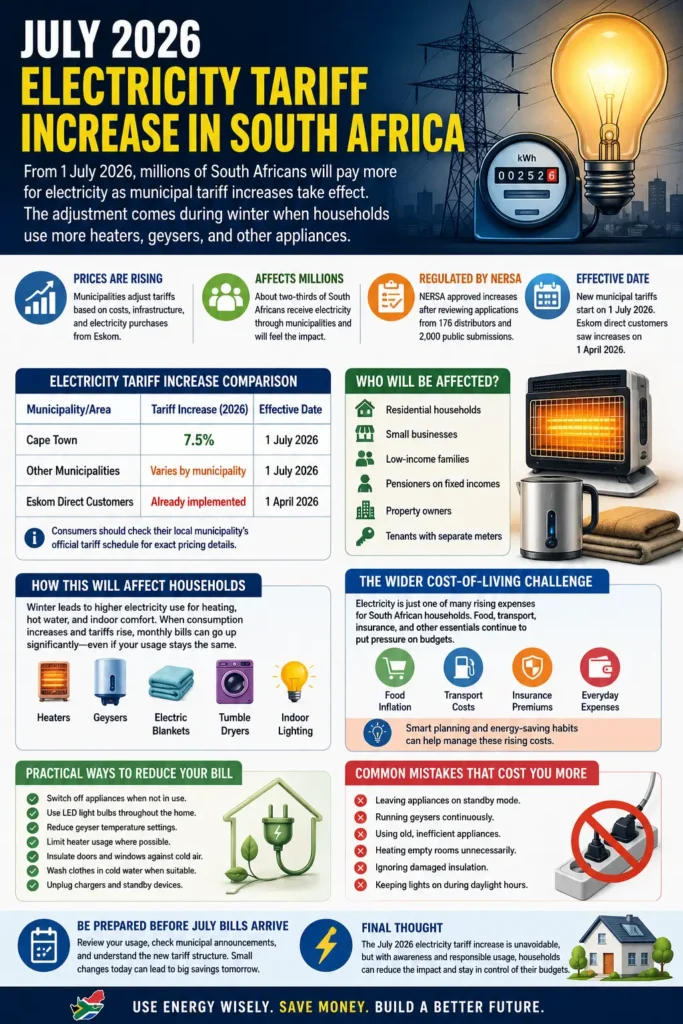
| Municipality/Area | Tariff Increase (2026) | Effective Date |
|---|---|---|
| Cape Town | 7.5% | 1 July 2026 |
| Other Municipalities | Varies by municipality | 1 July 2026 |
| Eskom Direct Customers | Already implemented | 1 April 2026 |
Consumers should check their local municipality’s official tariff schedule for exact pricing details.
Cape Town Residents Face Another Electricity Increase
The City of Cape Town is among the municipalities implementing a relatively lower increase of 7.5%. While this may appear moderate compared to some areas, residents have already experienced substantial electricity price growth over recent years.
Many consumers still remember the significant 17.6% electricity tariff increase introduced in 2023. The latest adjustment continues a trend of rising energy costs that has made electricity one of the fastest-growing household expenses in South Africa.
How the Increase Will Affect Household Budgets
The timing of the tariff increase presents a challenge because it coincides with the coldest months of the year. During winter, households typically consume more electricity to maintain comfortable indoor temperatures and heat water.
Common winter electricity expenses include:
- Electric heaters
- Geysers and hot water systems
- Electric blankets
- Tumble dryers
- Extended indoor lighting
- Cooking and baking appliances
When higher tariffs combine with increased usage, monthly electricity bills can rise significantly even if consumption patterns remain largely unchanged.
You can also read: SRD Decline Reasons Common Causes
The Wider Cost-of-Living Challenge
Electricity is not the only expense increasing for South African households. Consumers are also facing ongoing pressure from food inflation, transport costs, insurance premiums, and other essential living expenses.
As electricity costs rise, families may need to reassess spending priorities and identify opportunities to improve energy efficiency. For many households, reducing unnecessary electricity consumption has become an important part of monthly financial planning.
Practical Ways to Reduce Your Electricity Bill
Even with higher tariffs, consumers can take practical steps to limit the impact on their monthly budgets. Small changes in energy habits often lead to noticeable savings over time.
Consider implementing these energy-saving measures:
- Switch off appliances when not in use
- Use LED light bulbs throughout the home
- Reduce geyser temperature settings
- Limit heater usage where possible
- Insulate doors and windows against cold air
- Wash clothes in cold water when suitable
- Unplug chargers and standby devices
Consistent energy-saving habits can help offset part of the tariff increase.
Common Mistakes That Increase Electricity Costs
Many households unknowingly waste electricity through everyday habits. Identifying these mistakes can lead to immediate savings.
Some of the most common issues include:
- Leaving appliances on standby mode
- Running geysers continuously
- Using old, inefficient appliances
- Heating empty rooms unnecessarily
- Ignoring damaged insulation
- Keeping lights on during daylight hours
Avoiding these practices can reduce overall electricity consumption without sacrificing comfort.
What Consumers Should Do Before July Bills Arrive
Households should review their current electricity usage before the new tariffs take effect. Understanding consumption patterns makes it easier to identify areas where savings can be achieved.
Consumers should also monitor announcements from their municipalities regarding updated tariff structures, service charges, and block tariff changes. Being informed helps prevent unexpected increases when the first post-July electricity bill arrives.
You can also read: July Fuel Price Drop South Africa 2026
Final Thoughts
The July Electricity Tariff Increase South Africa 2026 will add financial pressure to millions of households already managing rising living costs. Although tariff increases vary between municipalities, most consumers can expect higher electricity bills from 1 July 2026.
With winter driving up electricity usage, energy efficiency and smart consumption habits will become increasingly important. By understanding the new tariffs and taking practical steps to reduce waste, households can better manage the impact of rising electricity costs while maintaining essential daily comfort.