South Africa Petrol Price Hikes June 2026: Record Fuel Costs Put Pressure on Motorists
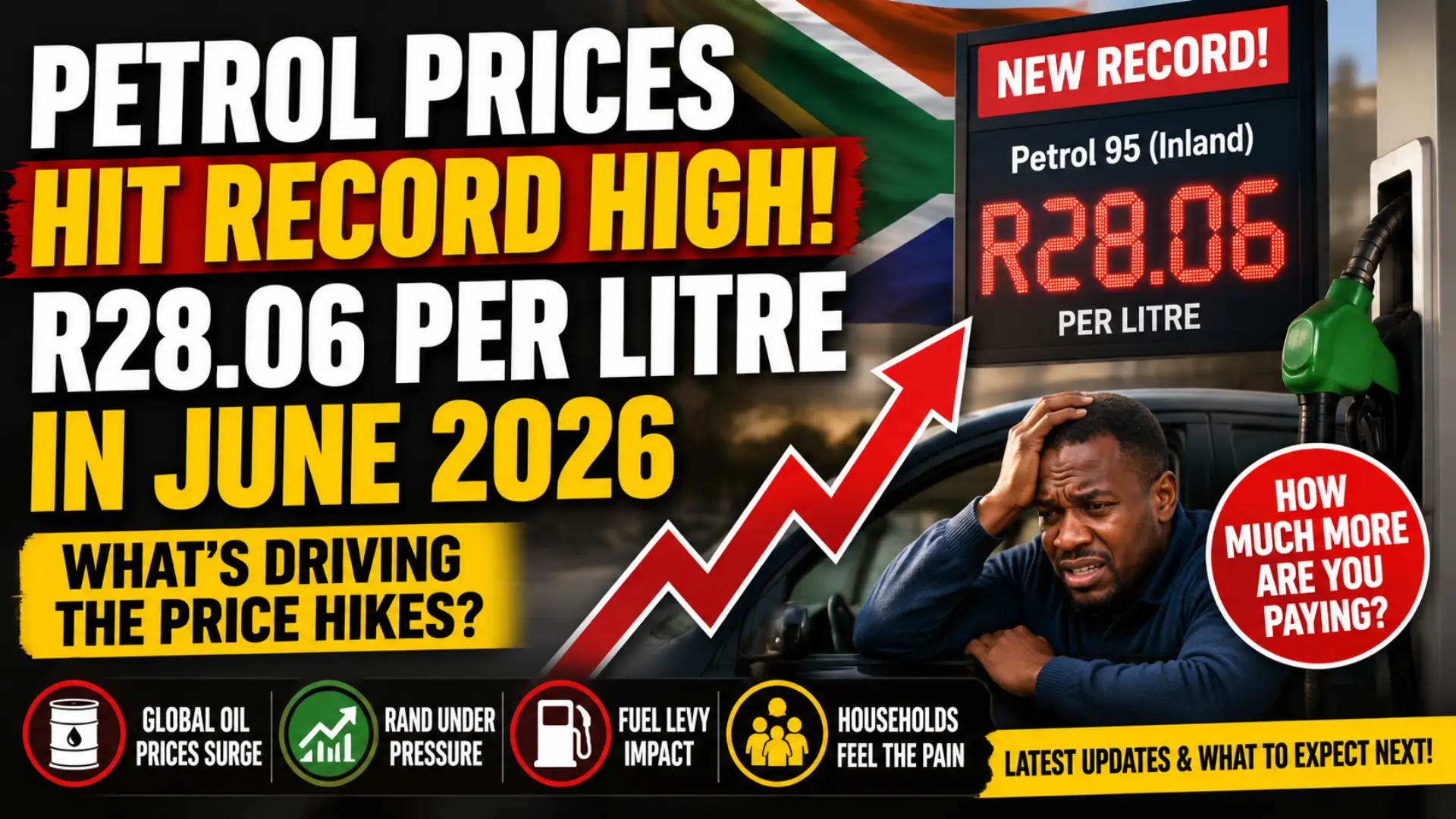
South African motorists are facing record-high fuel costs after a series of significant petrol price increases pushed inland Petrol 95 prices to R28.06 per litre in June 2026. What started as a year of relief with fuel prices reaching a four-year low quickly turned into one of the most volatile periods in recent history.
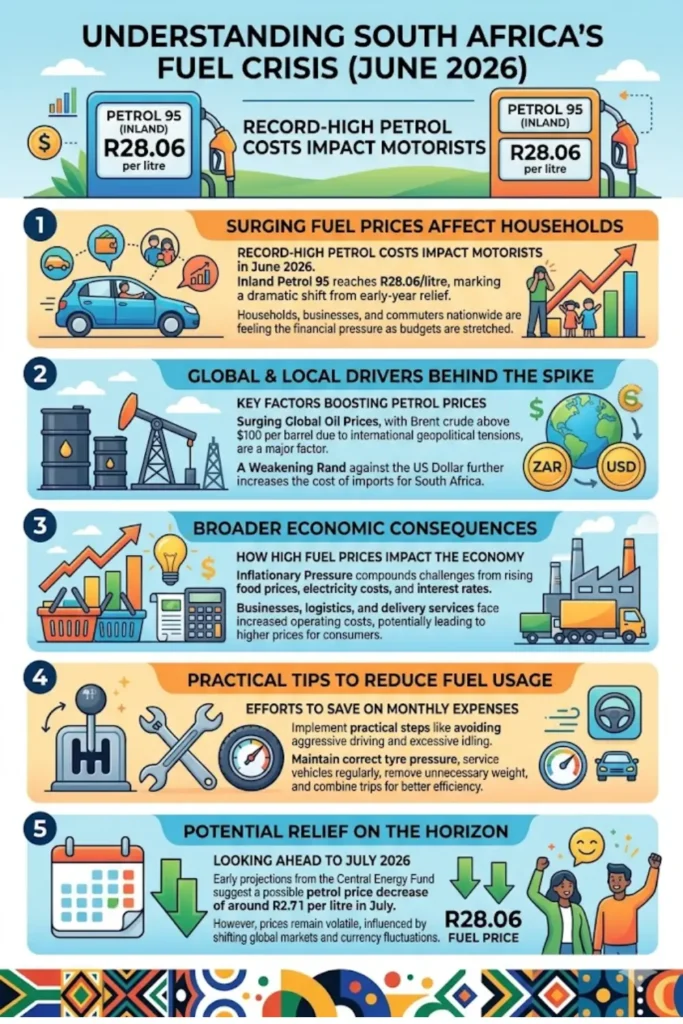
The sharp rise in fuel prices is affecting households, businesses, commuters, and transport operators across the country. As fuel expenses increase, many South Africans are finding it harder to manage monthly budgets already stretched by inflation, electricity costs, food prices, and higher interest rates.
Why Petrol Prices Increased in South Africa During 2026
The main reason behind the petrol price hikes is the sudden increase in global oil prices. International geopolitical tensions, particularly involving Iran and key oil-producing regions, pushed Brent crude oil above $100 per barrel, creating immediate pressure on fuel-importing countries such as South Africa.
You can also read: June 2026 SRD R370 Payment Dates
At the same time, fluctuations in the rand-dollar exchange rate added further pressure. Since South Africa imports a significant portion of its fuel requirements, both higher oil prices and a weaker currency contribute directly to rising fuel costs at the pump.
Fuel Price Changes From January to June 2026
The first half of 2026 saw dramatic movements in petrol prices. After substantial reductions in January and February, motorists experienced consecutive monthly increases that erased earlier savings.
| Month | Fuel Price Adjustment |
|---|---|
| January 2026 | 62c decrease |
| February 2026 | 65c decrease |
| March 2026 | 20c increase |
| April 2026 | R3.06 increase |
| May 2026 | R3.27 increase |
| June 2026 | R1.46 increase |
These increases pushed petrol prices above the previous national record reached in 2022.
How Much More Are Motorists Paying?
The impact of rising fuel prices is easy to see when comparing the cost of filling a vehicle at the beginning of the year versus June 2026.
| Fuel Tank Size | Additional Cost Per Fill-Up |
| 30 Litres | +R219 |
| 50 Litres | +R366 |
| 60 Litres | +R439 |
| 80 Litres | +R585 |
For families that commute daily, these increases can add thousands of rand to annual transportation expenses.
The Role of the Fuel Levy in Petrol Prices
Government fuel levies play an important role in determining the final pump price. Earlier in 2026, the National Treasury temporarily reduced the General Fuel Levy by R3 per litre to help shield consumers from rising international oil prices.
While the levy reduction prevented even larger fuel increases, part of the levy was reinstated in June. This contributed to higher prices and reduced some of the relief motorists had been receiving.
How Higher Petrol Prices Affect South African Households
Fuel price increases rarely affect transport costs alone. Petrol prices influence the cost of delivering goods, operating businesses, and transporting workers, which can eventually affect prices throughout the economy.
Many households are already dealing with:
- Higher food prices
- Rising electricity costs
- Increased loan repayments
- Elevated interest rates
- General inflation pressure
When fuel prices rise sharply, families often have less disposable income available for savings and essential expenses.
You can also read: Sars Tax Season 2026 Payment Dates
Impact on Businesses and the Economy
Small businesses, logistics companies, delivery services, and transport operators are among the sectors most affected by higher fuel prices. Increased operating costs often force businesses to either absorb losses or pass costs on to consumers.
Industries that rely heavily on transportation may experience reduced profit margins, while consumers may notice higher prices on goods and services. This creates a broader economic impact beyond the fuel station.
Practical Tips to Reduce Fuel Costs
While motorists cannot control fuel prices, they can take steps to improve fuel efficiency and reduce monthly fuel spending.
Some effective strategies include:
- Avoid aggressive acceleration and braking
- Maintain correct tyre pressure
- Remove unnecessary vehicle weight
- Combine multiple trips into one journey
- Service your vehicle regularly
- Use fuel-efficient driving techniques
- Consider carpooling where possible
Small adjustments can lead to noticeable fuel savings over time.
Common Mistakes That Increase Fuel Consumption
Many drivers unknowingly increase their fuel costs through everyday habits. Identifying these mistakes can help improve vehicle efficiency.
Avoid the following:
- Excessive idling
- Speeding on highways
- Driving with underinflated tyres
- Ignoring vehicle maintenance
- Carrying unnecessary cargo
- Frequent short-distance trips
Correcting these habits can reduce fuel usage and lower monthly expenses.
Could Petrol Prices Decrease in July 2026?
There is some positive news for motorists. Early data from the Central Energy Fund suggests petrol prices could decline by approximately R2.71 per litre in July 2026 if current market conditions continue.
If the projected decrease materializes, it would provide meaningful relief after several months of sharp increases. However, fuel prices remain heavily influenced by global oil markets and exchange rate movements, so final adjustments will depend on market conditions closer to the official announcement.
What Motorists Should Watch Going Forward
Fuel prices can change rapidly due to international events, currency fluctuations, and government policy decisions. Staying informed helps motorists plan their budgets and anticipate potential cost increases.
Key factors to monitor include:
- Brent crude oil prices
- Rand-dollar exchange rates
- Fuel levy adjustments
- Global geopolitical developments
- Central Energy Fund fuel projections
Monitoring these indicators can provide early clues about future fuel price movements.
You can also read: South Africa Immigration Backlash
Final Thoughts
The South Africa petrol price hikes of June 2026 have created significant financial pressure for motorists and households nationwide. After beginning the year with substantial fuel price reductions, South Africans are now paying record-high prices of R28.06 per litre for inland Petrol 95, increasing transportation costs for both individuals and businesses.
Although the recent increases have strained household budgets, early forecasts suggest a possible fuel price reduction in July 2026. Until then, motorists can benefit from fuel-saving practices, careful budgeting, and staying informed about market developments that influence future petrol prices.