How to Check South Africa Immigration Backlash
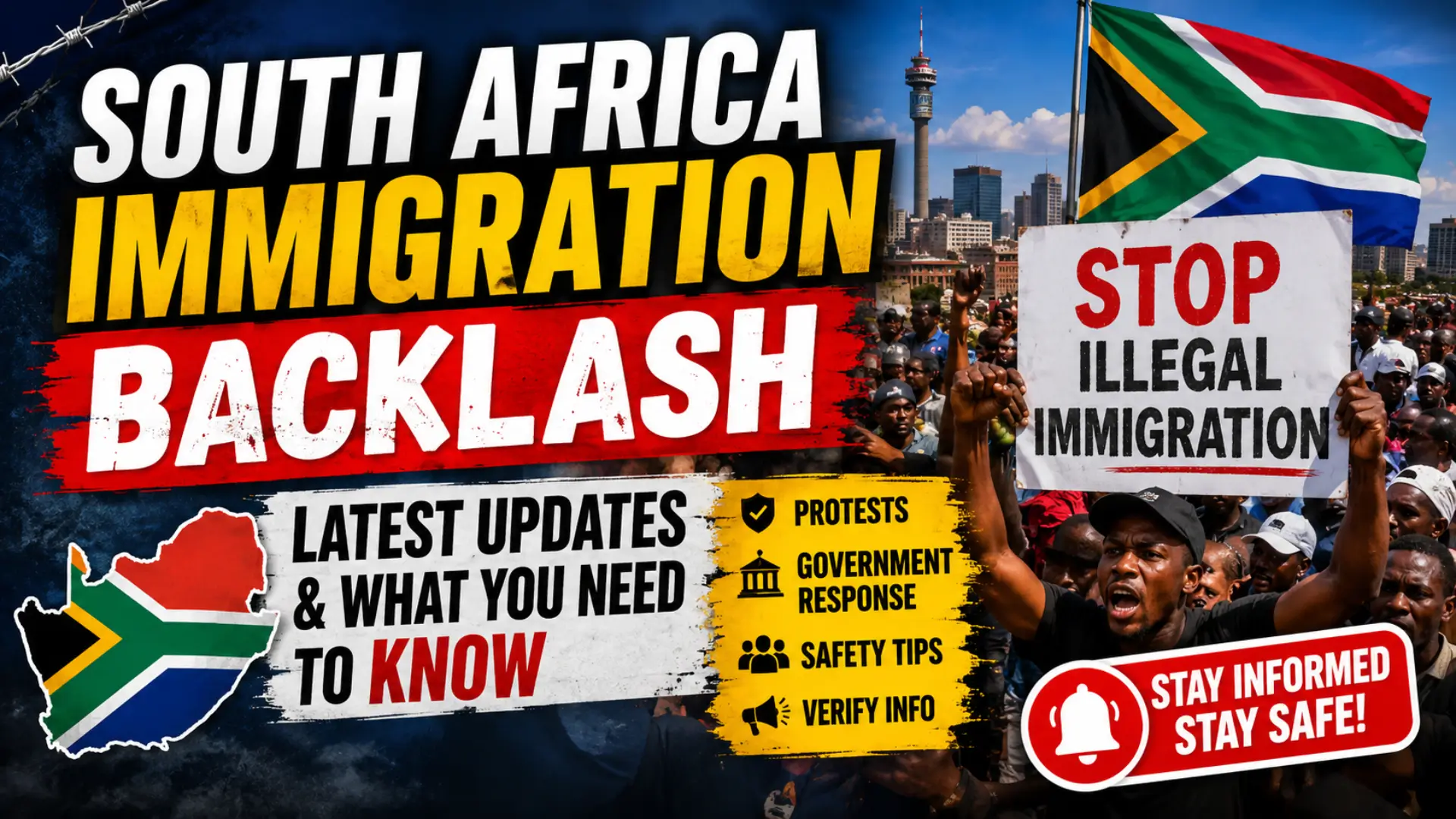
South Africa has recently witnessed growing public protests and debates surrounding illegal immigration. Several demonstrations have taken place across different cities, leading many residents, migrants, business owners, and international observers to search for reliable information about the situation.
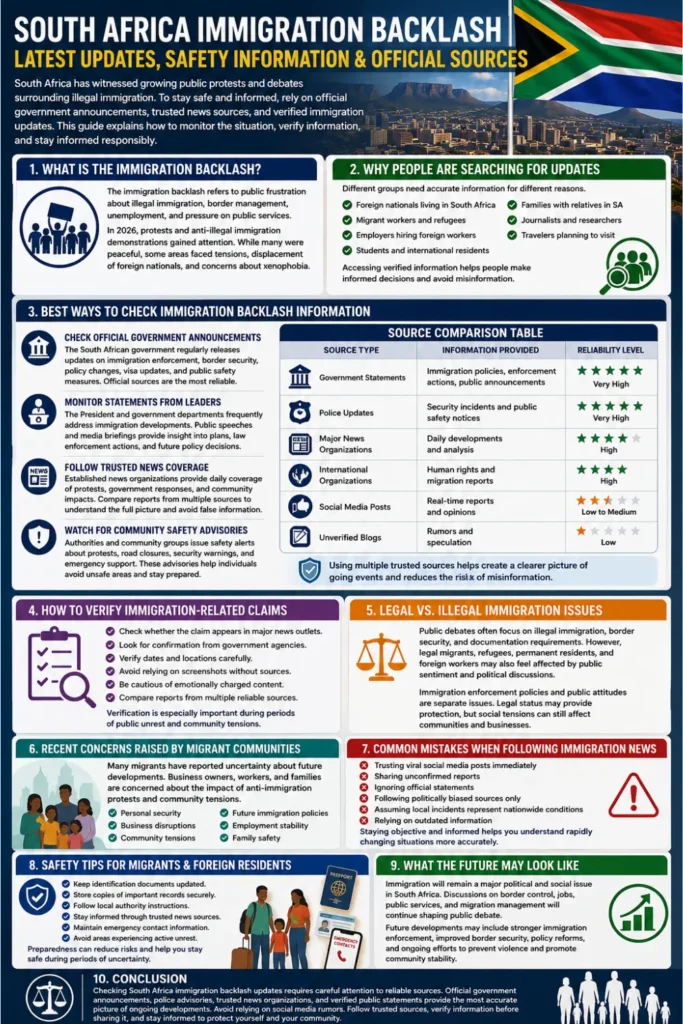
If you want to check the latest developments regarding South Africa’s immigration backlash, it is important to rely on official government announcements, trusted news sources, and verified immigration updates rather than social media rumors. This guide explains how to monitor the situation, verify information, and stay informed safely.
What Is the South Africa Immigration Backlash?
The term “South Africa immigration backlash” refers to growing public frustration among some groups regarding illegal immigration, border management, unemployment, and pressure on public services.
You can also read: SASSA Payment Dates, Status Checks, SRD R370 Payments
In 2026, several protest movements and anti-illegal immigration demonstrations gained attention across South Africa. While many protests remained peaceful, some areas experienced tensions, displacement of foreign nationals, and concerns about xenophobia. This has increased public interest in tracking developments and understanding the government’s response.
Why People Are Searching for Immigration Backlash Updates
Different groups may need accurate information for different reasons.
- Foreign nationals living in South Africa
- Migrant workers and refugees
- Employers hiring foreign workers
- Students and international residents
- Families with relatives in South Africa
- Journalists and researchers
- Travelers planning to visit the country
Accessing verified information helps people make informed decisions and avoid misinformation.
South Africa Immigration Backlash Information
The safest approach is to follow official and trusted sources.
Source Comparison Table
| Source Type | Information Provided | Reliability Level |
|---|---|---|
| Government Statements | Immigration policies, enforcement actions, public announcements | Very High |
| Police Updates | Security incidents and public safety notices | Very High |
| Major News Organizations | Daily developments and analysis | High |
| International Organizations | Human rights and migration reports | High |
| Social Media Posts | Real-time reports and opinions | Low to Medium |
| Unverified Blogs | Rumors and speculation | Low |
Using multiple trusted sources helps create a clearer picture of ongoing events.
Check Official Government Announcements
The South African government regularly releases information about immigration enforcement, border security, and public safety measures.
Important announcements often include policy changes, visa updates, border management actions, and statements from senior government officials. Official government communication should always be considered the primary source of information when checking immigration-related developments.
Monitor Statements From the President and Government Departments
Major immigration developments are frequently addressed by senior government leaders. Public speeches and media briefings may provide insight into government plans and future enforcement actions.
Pay attention to statements discussing illegal immigration, border control improvements, law enforcement operations, and measures aimed at reducing community tensions. These announcements often shape future policy decisions.
Follow Trusted News Coverage
Established news organizations provide ongoing coverage of immigration-related events, protests, and government responses. Reliable reporting can help readers understand what is happening across different regions of South Africa.
You can also read: June 2026 SRD R370 Payment Dates
When reading news reports, compare information from multiple sources rather than relying on a single article. This reduces the risk of misunderstanding events or becoming influenced by incomplete reporting.
Watch for Community Safety Advisories
Migrants and foreign residents should pay attention to local safety notices issued by authorities or community organizations.
Important alerts may include:
- Protest locations
- Temporary road closures
- Public gathering restrictions
- Community security warnings
- Emergency contact information
- Evacuation or shelter assistance updates
These advisories can help individuals avoid potentially unsafe areas.
How to Verify Immigration-Related Claims
Immigration discussions often generate misinformation online. Before sharing or acting on information, verify it through trusted channels.
Use the following verification steps:
- Check whether the claim appears in major news outlets.
- Look for confirmation from government agencies.
- Verify dates and locations carefully.
- Avoid relying on screenshots without sources.
- Be cautious of emotionally charged content.
- Compare reports from multiple reliable sources.
Verification is especially important during periods of public unrest.
Understanding the Difference Between Legal and Illegal Immigration Issues
Public debates often focus on illegal immigration, border security, and documentation requirements. However, legal migrants, refugees, permanent residents, and foreign workers may also feel affected by public sentiment and political discussions.
It is important to understand that immigration enforcement policies and public attitudes are separate issues. Legal status may provide immigration protection, but social tensions can still affect communities and businesses.
Recent Concerns Raised by Migrant Communities
Many migrants have reported uncertainty regarding future developments. Business owners, workers, and families are particularly concerned about community safety and the impact of anti-immigration protests.
Common concerns include:
- Personal security
- Business disruptions
- Community tensions
- Future immigration policies
- Employment stability
- Family safety
These concerns have contributed to increased demand for accurate information and regular updates.
Common Mistakes When Following Immigration News
Many people unintentionally spread misinformation by relying on incomplete or unverified reports.
Avoid these common mistakes:
- Trusting viral social media posts immediately
- Sharing unconfirmed reports
- Ignoring official statements
- Following politically biased sources only
- Assuming local incidents represent nationwide conditions
- Relying on outdated information
Staying objective helps improve understanding of rapidly changing situations.
Safety Tips for Migrants and Foreign Residents
Foreign nationals should remain informed while avoiding unnecessary panic.
Helpful precautions include:
- Keep identification documents updated.
- Store copies of important records securely.
- Follow local authority instructions.
- Stay informed through trusted news sources.
- Maintain emergency contact information.
- Avoid areas experiencing active unrest.
Preparedness can reduce risks during periods of uncertainty.
What the Future May Look Like
Immigration is expected to remain a major political and social issue in South Africa. Discussions surrounding border control, employment opportunities, public services, and migration management will likely continue influencing public debate.
You can also read: Sars Tax Season 2026 Payment Dates
Future developments may include stronger immigration enforcement, improved border security measures, policy reforms, and ongoing efforts to prevent violence and maintain community stability.
Conclusion
Checking South Africa immigration backlash updates requires careful attention to reliable information sources. Official government announcements, police advisories, trusted news organizations, and verified public statements provide the most accurate picture of ongoing developments.
Avoid relying solely on social media rumors or unverified reports. By following trusted sources and verifying information before sharing it, individuals can stay informed, protect themselves from misinformation, and better understand the evolving immigration situation in South Africa.