South Africa Fuel Price Inflation Check Per Litre Details
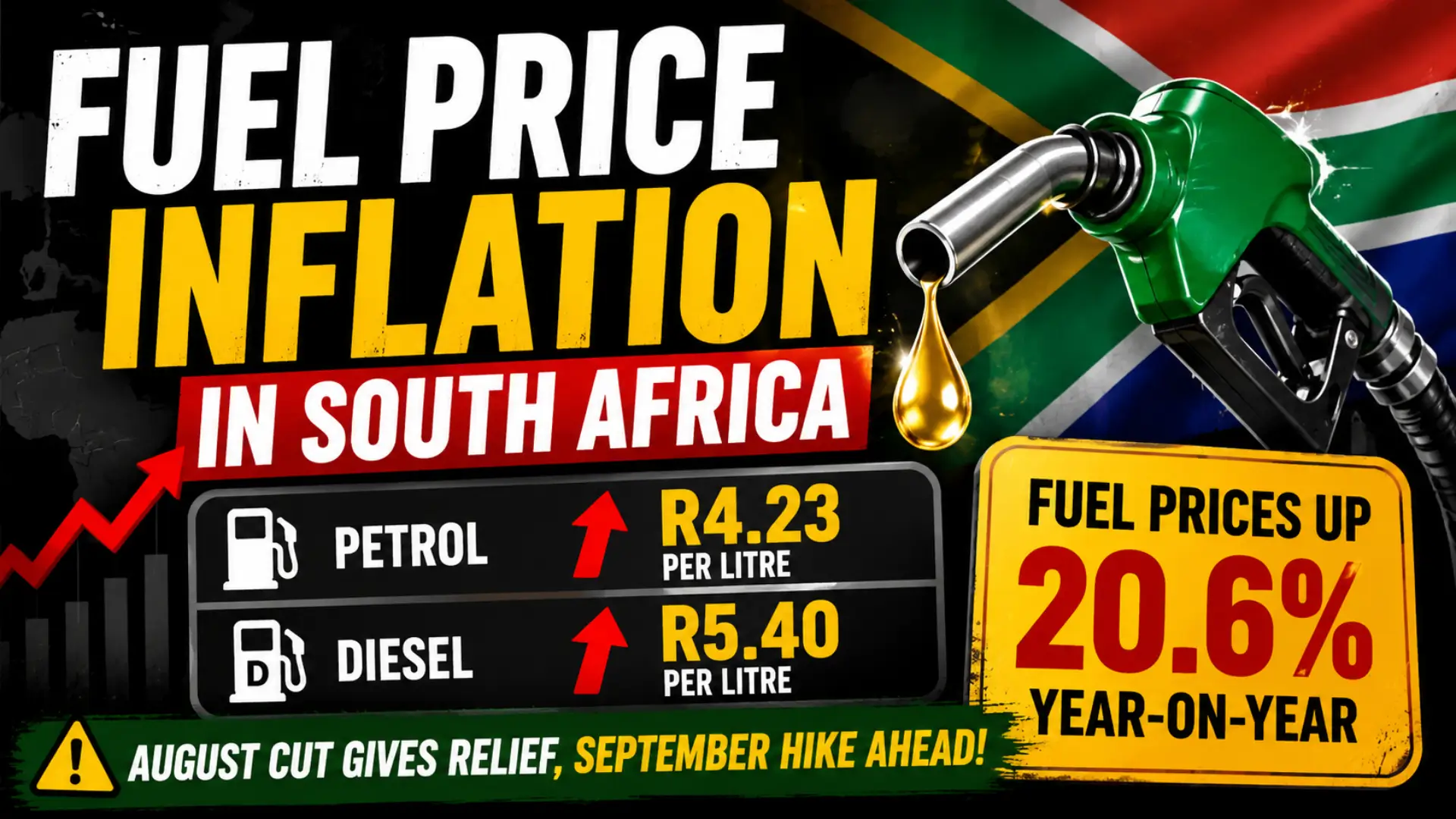
Fuel price inflation in South Africa has become a major concern for motorists and households, with petrol and diesel still costing significantly more than they did a year ago. Although a recent monthly fuel price reduction helped ease headline inflation in July 2026, year-on-year fuel costs remain high and continue to place pressure on transport, food and household budgets.
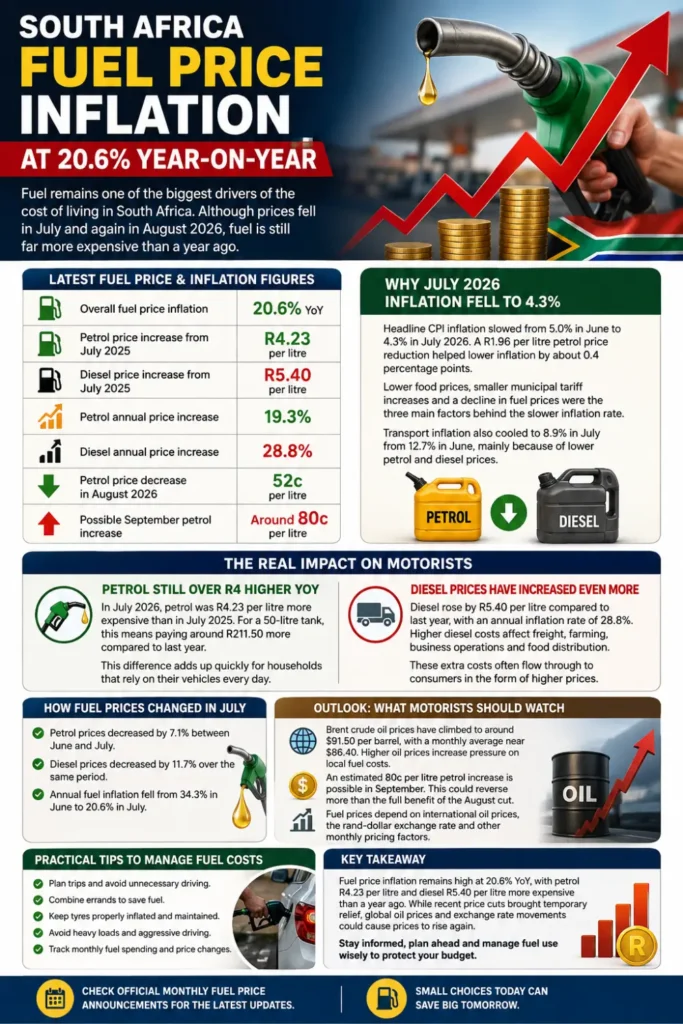
The latest data shows that South Africa’s fuel price inflation stands at 20.6% year-on-year (YoY). Compared with July 2025, petrol was R4.23 per litre more expensive, while diesel had increased by as much as R5.40 per litre. Here is a detailed look at the latest fuel price inflation figures, the per-litre changes and what motorists should watch next.
South Africa Fuel Price Inflation at 20.6%
According to the latest inflation analysis, fuel prices remain one of the most important factors affecting the cost of living in South Africa. Fuel price inflation reached 20.6% in July 2026, even though petrol and diesel prices fell during the month. This shows an important difference between monthly price movements and year-on-year inflation: prices can decrease from one month to the next while still remaining much higher than they were 12 months earlier.
You can also read: Sassa SRD SC19 Status Check Appeal
Investec chief economist Annabel Bishop highlighted the major effect of fuel prices on South Africa’s Consumer Price Index (CPI). Without the impact of fuel prices, headline inflation would have been around 3.7% YoY rather than the reported 4.3%. This means fuel costs added noticeable pressure to overall consumer inflation despite the July price relief.
Latest Per Litre Fuel Price Changes
The following figures show how fuel prices compared with the same period last year and how they affected annual inflation.
| Fuel Price Indicator | Latest Change |
|---|---|
| Overall fuel price inflation | 20.6% YoY |
| Petrol price increase from July 2025 | R4.23 per litre |
| Diesel price increase from July 2025 | R5.40 per litre |
| Petrol annual price increase | 19.3% |
| Diesel annual price increase | 28.8% |
| Petrol price decrease in August 2026 | 52c per litre |
| Possible September petrol increase | Around 80c per litre |
The figures show that diesel has experienced stronger annual price pressure than petrol. This is particularly important because diesel costs affect freight transport, agriculture and logistics, meaning higher diesel prices can eventually influence the prices consumers pay for food and other goods.
Why July 2026 Inflation Fell to 4.3%
South Africa’s headline CPI inflation slowed from 5.0% YoY in June 2026 to 4.3% in July 2026. A R1.96 per litre petrol price reduction was one of the important factors behind this decline, moderating the inflation outcome by approximately 0.4 percentage points.
Stats SA identified three main reasons for the slower inflation rate. These included softer inflation for food and non-alcoholic beverages, lower municipal tariff increases and a decline in fuel prices. Annual transport inflation also cooled from 12.7% in June to 8.9% in July, mainly because of lower monthly fuel prices.
How Fuel Prices Changed During July
Monthly fuel price reductions provided temporary relief, but the annual comparison remained much higher. According to the latest consumer inflation data:
- Petrol prices decreased by 7.1% between June and July.
- Diesel prices decreased by 11.7% over the same period.
- Annual fuel inflation fell from 34.3% in June to 20.6% in July.
- Petrol still remained 19.3% more expensive than a year earlier.
- Diesel remained 28.8% more expensive than a year earlier.
For motorists, the key lesson is not to look only at one month’s fuel price adjustment. A monthly decrease can reduce immediate costs, but the longer-term comparison may still show a substantial increase in the overall cost of driving and transport.
Petrol Prices Are Still More Than R4 Per Litre Higher YoY
The latest year-on-year comparison shows the real scale of fuel inflation for petrol users. In July 2026, petrol cost R4.23 per litre more than it did in July 2025. For households with regular commuting needs, this difference can add up significantly over a month.
For example, a motorist filling a 50-litre petrol tank would pay about R211.50 more for the same amount of fuel compared with the price difference of R4.23 per litre. The actual cost will vary depending on the vehicle, fuel grade and location, but this simple calculation shows why even relatively small per-litre increases can have a major effect on household budgets.
Diesel Prices Have Increased Even More
Diesel prices have experienced an even sharper annual increase, rising by R5.40 per litre compared with the same month last year. Diesel’s annual inflation rate of 28.8% is also considerably higher than the 19.3% annual increase recorded for petrol.
You can also read: SASSA SRD R370 SC19 Application Check
Higher diesel prices can affect more than just diesel vehicle owners. Trucks, buses, agricultural equipment and many delivery services rely heavily on diesel, so sustained increases can raise operating costs across the economy. Businesses may absorb some of these costs, but others can eventually be passed on through higher transport and product prices.
Why Higher Diesel Costs Matter to Consumers
Diesel inflation can create indirect pressure on everyday expenses through several channels:
- Higher road freight and delivery costs.
- Increased agricultural and farming expenses.
- Higher costs for businesses that use generators or diesel-powered equipment.
- Additional pressure on food distribution prices.
- Rising operating costs for some public and private transport services.
This is why fuel inflation is closely watched by economists. The impact does not stop at the petrol station; it can move through the wider supply chain and affect the prices of goods and services.
August Fuel Price Cut Brings Some Relief
Motorists received some relief in August 2026 when petrol prices decreased by 52 cents per litre. The reduction helped lower the immediate cost of filling up and followed the broader monthly easing in fuel prices seen in July.
However, motorists should avoid assuming that the lower price will continue for an extended period. Fuel prices are influenced by international oil prices, the rand-dollar exchange rate and other components used in South Africa’s monthly fuel price calculations. A monthly cut can therefore be followed quickly by a significant increase.
September Petrol Price Hike of Around 80c on the Horizon
The August reduction may be short-lived, with an estimated petrol price increase of around 80 cents per litre on the horizon for September. If this projected increase materialises, it would reverse more than the full benefit of the 52c August reduction.
Motorists should remember that projected fuel price changes can change before the official monthly adjustment is confirmed. International oil prices and currency movements can continue to shift during the pricing period, so it is best to treat early estimates as guidance rather than a final official price.
What Is Driving the Expected Fuel Price Pressure?
One of the biggest factors behind the renewed pressure is the increase in international crude oil prices. Brent Crude oil has reportedly climbed to approximately $91.50 per barrel during the week, while the monthly average is around $86.40 per barrel.
South Africa imports crude oil and petroleum products, which means global oil market movements have a direct effect on local fuel costs. When international oil prices rise sharply, the pressure can increase further if the rand also weakens against the US dollar.
Fuel Prices and the South Africa CPI Explained
Fuel is included in the transport component of the Consumer Price Index, making it an important factor in monthly inflation data. In July 2026, the decline in petrol and diesel prices helped reduce transport inflation to 8.9%, down from 12.7% in June.
You can also read: SRD Sassa Gov Za SC19 Application
At the same time, fuel prices were still substantially higher than a year earlier, which is why annual fuel inflation remained at 20.6%. This difference can sometimes confuse consumers: monthly fuel prices may fall, but the year-on-year inflation rate can remain high because the current price is still much higher than the price recorded 12 months earlier.
Housing and Utility Costs Remain the Biggest Inflation Driver
While fuel prices have had a significant impact on inflation, housing and utility costs remain a major source of pressure on the overall CPI. Rental costs increased by 4.1% YoY, while electricity prices rose by 8.3% and water costs increased by 6.4%.
These increases show why the fall in headline inflation does not necessarily mean that every household is experiencing lower living costs. Families can still face rising expenses in essential areas such as electricity, water, rent, transport and food even when the overall national inflation rate slows.
Key Areas Affecting Household Inflation
The latest figures highlight several important cost pressures:
- Fuel and transport costs remain elevated compared with last year.
- Electricity inflation is still higher than headline CPI.
- Water costs have continued to increase.
- Rental inflation remains a pressure for many households.
- Food inflation has softened, helping reduce overall CPI.
Consumers should therefore look beyond the headline inflation number and consider the specific expenses that have the biggest effect on their own monthly budget.
How Motorists Can Check the Real Cost Per Litre
The best way to understand fuel price inflation is to compare the current official fuel price with the price from the same month one year earlier. Subtracting the old price from the latest price gives the per-litre increase, while comparing the percentage change shows the annual inflation rate.
For example, a R1 increase per litre may not seem large at first, but the cost becomes much more noticeable when multiplied by a full tank or monthly fuel consumption. Motorists should also calculate their personal fuel spending rather than relying only on national averages, as the financial impact depends on how often and how far they drive.
Simple Fuel Cost Calculation
Use this basic method to estimate the impact of a price increase:
Extra cost = Per-litre increase × Litres purchased
For a 60-litre fill-up, a R4.23 increase per litre would mean an additional R253.80 compared with the previous year’s price difference. Regularly checking this figure can help households plan for changing transport expenses.
Practical Tips to Manage Rising Fuel Costs
Motorists cannot control international oil prices, but they can take practical steps to reduce unnecessary fuel consumption. Small improvements in driving habits and vehicle maintenance can make a difference over time.
- Plan trips to avoid unnecessary driving.
- Combine errands instead of making multiple separate journeys.
- Keep tyres properly maintained according to vehicle recommendations.
- Avoid carrying unnecessary heavy loads.
- Compare transport options where practical.
- Track monthly fuel spending and price changes.
- Follow official monthly fuel price announcements before making budget decisions.
The most effective approach is to focus on realistic savings rather than expecting one major change to solve the problem. Monitoring fuel use and adjusting avoidable travel can help reduce the impact when prices rise again.
Common Mistakes When Following Fuel Price Updates
A common mistake is treating early fuel price estimates as final confirmed prices. Projected increases and decreases can change before the official adjustment because oil prices and the exchange rate may still move.
Another mistake is confusing monthly fuel price changes with annual fuel inflation. A petrol price may fall during one month but still be much more expensive than it was a year earlier. For an accurate picture, motorists should check both the latest monthly adjustment and the year-on-year per-litre comparison.
Latest Outlook for South Africa Fuel Price Inflation
The latest data provides mixed news for South African motorists. July’s fuel price reduction helped bring headline CPI inflation down to 4.3% and reduced annual fuel inflation from 34.3% in June to 20.6%. August then delivered a further 52c per litre petrol reduction, offering additional short-term relief.
You can also read: SC19 Status Check Online 2026
However, rising Brent Crude oil prices and a possible September increase of around 80c per litre mean the outlook remains uncertain. Motorists should continue monitoring official fuel price announcements, because a short period of lower prices can quickly be reversed by global oil and currency movements.
Conclusion
South Africa’s fuel price inflation of 20.6% YoY shows that fuel remains significantly more expensive than it was a year ago, despite recent monthly price reductions. Petrol was R4.23 per litre more expensive year-on-year in July 2026, while diesel had increased by R5.40 per litre, creating major pressure on motorists and the wider economy.
The recent decline in CPI to 4.3% is a positive development, but households should remain cautious. With fuel prices closely linked to global oil markets and the exchange rate, future monthly adjustments can change quickly. The best approach is to track official price updates, understand the difference between monthly and annual changes, and plan household transport costs based on actual per-litre spending rather than headlines alone.